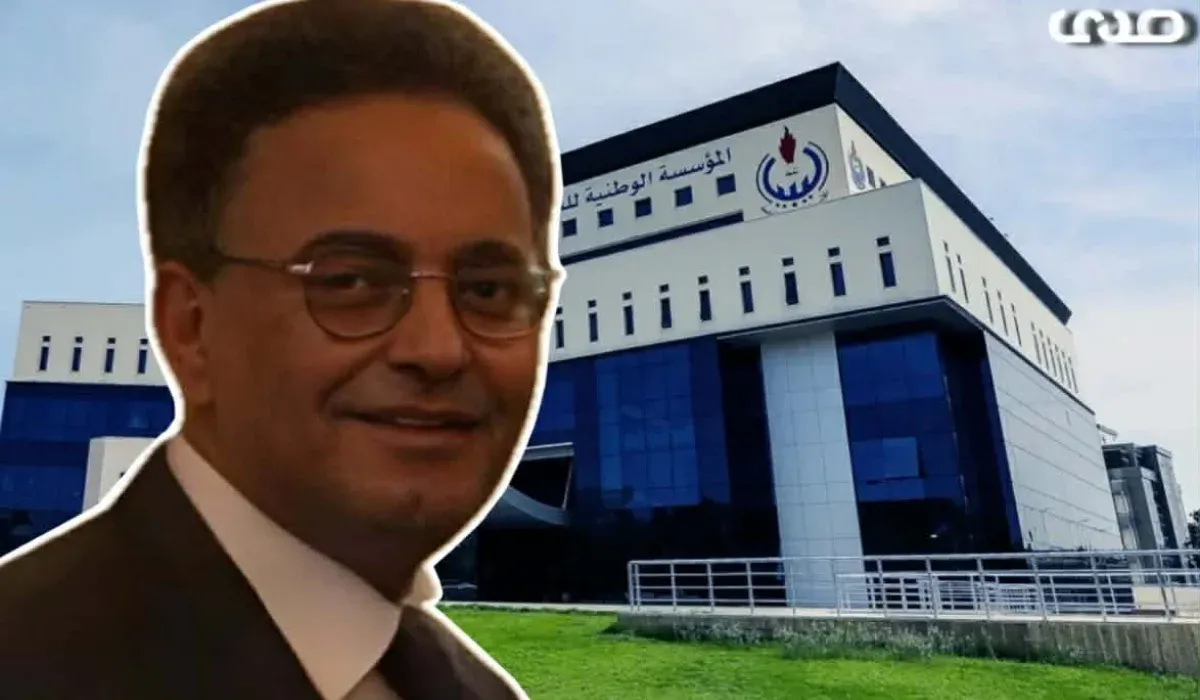
Legal expert in the oil sector, Othman Al-Hdhiri, wrote the following article:On the occasion of convening what are known as the general assemblies of oil companies, I am pleased to present the following to the reader:
First: What Is a General Assembly in the Oil Sector?
The General Assembly is the highest authority within oil companies. It represents the owner—the state, through the National Oil Corporation—and is convened to hold management accountable and to take key decisions related to public funds and the technical and financial performance of oil companies.In clearer terms, it is the meeting that is supposed to ask management:What have you done? What will you do? And have you complied with the laws and legislation governing the oil industry?Second: Why Are They Convened in Practice?In theory, general assemblies are convened to review performance, approve budgets, and hold negligent parties accountable.In the current Libyan oil sector reality, however, they are often convened:Merely to fulfill a legal formality
To record that the meeting “took place” without any real impact
To implement formal instructions from higher authorities
In many cases, they turn into nothing more than a procedural exercise.Third: What Is Their Intended Role, and What Actually Happens?The intended role:Genuine oversight of management
Taking corrective decisions
Protecting public funds
What actually happens:Reports are passed without serious discussion
Budgets are approved despite major observations and objections
Internal and external audit reports are ignored, not to mention the reports of the Audit Bureau
As for administrative oversight, it is virtually nonexistent in the oil sector for well-known reasons
In many cases, there is a complete absence of accountability for failed managements in oil companies, many of which have not achieved their targets at the technical level, whether in increasing production, meeting maintenance requirements, or making any oil discoveries
The result: no oversight, no accountability, and no correction of course.
Fourth: Why Do General Assemblies Fail?Lack of Independence
Members of general assemblies are often:Administratively appointed on regional, tribal, or political bases
Subject to political or administrative instructions
Unable to make independent decisions—what is commonly referred to in Libyan terms as “livelihood-based appointments”As a result, the member represents an authority rather than the interests of the company or the state.Weak Competence and Experienc
Some members lack oil or financial expertise
Inability to understand complex technical and financial reports
Full reliance on what management itself presents
How can management be held accountable using a language the overseer does not understand?Conflict of InterestAt times, the relationship between management and assembly members is personal or based on favoritismThus, the assembly becomes a silent partner rather than a supervisory authority.Lack of Follow-Up and Implementation Even when sound decisions are issued:There is no follow-up mechanismNo implementation timelineNo penalties for non-complianceDecisions are often written, then forgotten and left in drawers.A Culture of Fear or IndifferenceFear of accountability or exclusionOr the belief that “nothing will change”Silence prevails instead of confrontation, alongside opportunism and self-interest in pursuit of benefits.Here, I emphasize that criticism of or commentary on the presidency of the corporation’s General Assembly is prohibited, and in many cases, critics are warned or forced into silence.Fifth: The Final OutcomeGeneral assemblies of oil companies, in their current form:Do not protect public fundsDo not reform managementDo not prevent corruptionDo not improve performanceThey shift from being an instrument of reform into a legal cover for the continuation—and sometimes concealment—of dysfunction.Ultimately, the problem does not lie in the concept of the General Assembly itself, but in:Who represents itHow it is managedAnd whose interests it servesTo address these serious flaws, clear criteria must be adopted for selection, including oil, financial, and legal expertise, as well as:Preventing the appointment of individuals with no direct connection to the company’s core activitySetting a minimum threshold of qualifications and experienceIn conclusion, without qualified members, any form of oversight is meaningless.If the current situation continues, these assemblies will remain a paper exercise with no real impact, the sector will continue without oversight, and it will turn into a marketplace for draining public funds and squandering the wealth of the Libyan people.The solution lies in urgent change through competent national expertise—otherwise, the inevitable outcome will be bankruptcy.