


| Economic articles
Ibrahim Wali: “Exchange Rate Devaluation and the Imposition of Taxes and Fees on Goods”
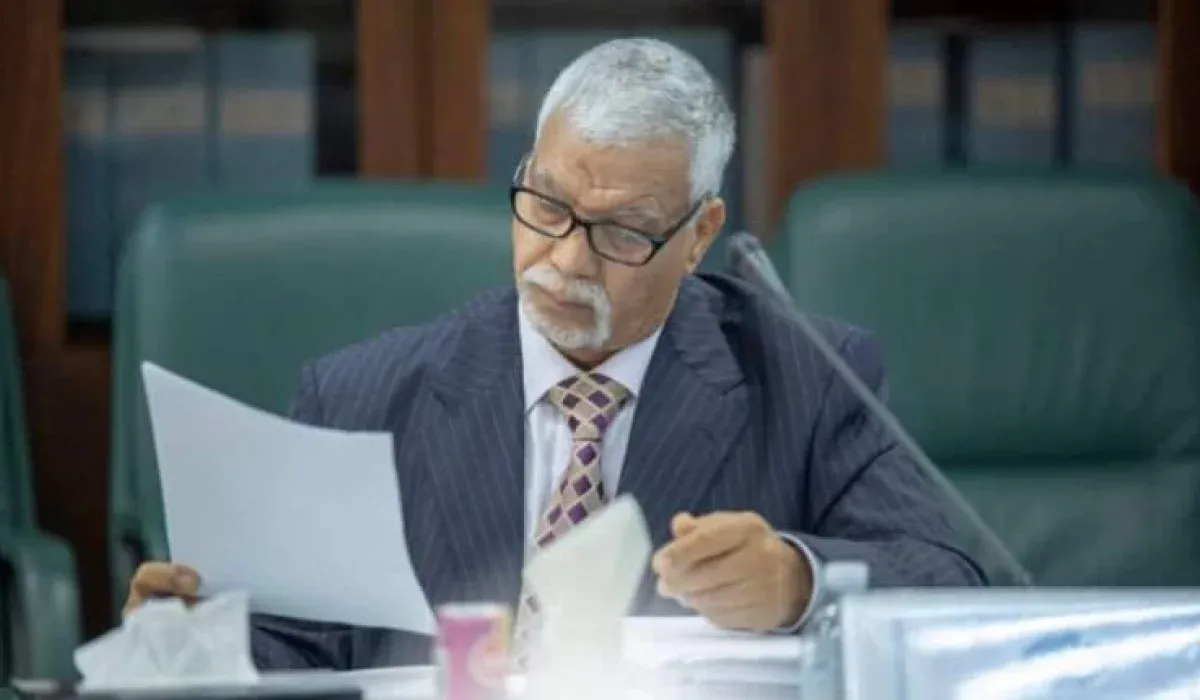
Written by economic expert Ibrahim Wali:
Unfortunately, what has been issued by the Central Bank of Libya in adjusting the exchange rate from 5.40 to 6.35, and what has been issued by the House of Representatives in imposing taxes and fees on consumer and productive goods and on foreign currency sales, represent an undeniable reality: all these taxes and fees, including the devaluation of the national currency, will ultimately be borne by the ordinary Libyan citizen.
Imposing these taxes and fees while devaluing the national currency means pushing citizens below the poverty line. The Minister of Economy himself has stated that 30% of the Libyan people are below the poverty line—so what about after devaluing the national currency and imposing fees and taxes on goods and on foreign currency sales? The percentage would rise to 40%, thereby crushing citizens and turning this approach into a revolution of the hungry.
The objective of this measure is to cover the government’s financial resource deficit, as capitalist countries often do, resorting to imposing taxes and fees when their resources face financial crises, making the people bear these costs as the sole taxpayers to the government.
Countries that respect their citizens, when faced with such financial crises—such as declining revenues—do not think of devaluing their currency, which is the last resort. Instead, they focus on reducing government expenditures, starting with high salaries, cutting spending, downsizing embassy staff, prioritizing imports, and canceling unnecessary expenses. They do not turn to citizens to impose taxes and fees, because they respect them. In Libya, however, citizens have been struck twice: their national currency has been devalued, and taxes and fees have been imposed on consumer and productive goods, as well as on foreign currency sales—simply because citizens are the weakest and have no one to defend them.
Accordingly, without controlling parallel spending, without establishing a unified budget, and without rationalizing expenditure, no reform will be achieved. One exchange rate devaluation will be followed by another and another, trapping us in a vicious cycle (“add water, add flour”), potentially reaching 1,000 dinars, as seen today in Iraq and Lebanon—God forbid.
On 28 November 2024, I published this article as a proposal entitled The Libyan Economic Crisis and How to Exit It:
First: Short-term measures
Phase One: Exchange Rate Flexibility
This entails a flexible peg for the dollar exchange rate within the limits of the amount of dollars obtained from oil sales, revenues of sovereign and investment institutions, and fees and levies imposed by the state on various activities. The exchange rate should be selected according to needs or the estimated quantity required for the state budget in order to maintain the stability of the national currency’s exchange rate.
Assuming the Central Bank sets the Libyan dinar at 6.35 per dollar, we must have sufficient dollar inflows to maintain this stability through the resources mentioned above. This can only be achieved through serious government efforts to restore trust between the banking sector and citizens, alongside stricter monetary, financial, and commercial oversight to secure sufficient and sustainable dollar inflows to meet citizens’ living needs and implement development and infrastructure projects. This, in turn, requires domestic and foreign investment flows to generate adequate revenues to sustain currency stability.
Phase Two: Relieving Pressure from Dollar Backlogs
This phase, accompanying exchange rate flexibility, involves easing pressure from dollar backlogs linked to the dollar exchange rate, global oil prices, and state revenues from sovereign institutions. These elements are not fully realized throughout the year but are settled at the end of the fiscal year, even if estimated in the budget. There will be deviations—positive or negative—but the government must strive to maximize revenues by increasing oil production efficiency, improving refinery performance, enhancing investment institutions’ efficiency, and strengthening tax, fee, and levy collection to better determine foreign exchange values.
Phase Three: Withdrawing Libyan Dinar Liquidity
If the Central Bank gradually withdraws cash liquidity from open markets across all denominations—effectively freezing it within state institutions, including banks—and introduces new coin and banknote series before reintroducing them after calming public spending and reducing expenses, the focus would shift to targeting inflation rather than the dinar’s exchange rate.
Second: Long-term measures
- Calming the Pace of Public Spending:
After withdrawing liquidity, public spending must be slowed, expenditures reduced, and essential imports prioritized to determine actual liquidity needs. The general budget should be issued by law and monitored by Parliament, the government, and the Ministry of Finance. - The State’s Effective Exit from the Economy:
This means managing state assets, supporting the private sector, reforming public assets, increasing efficiency, and generating higher returns through partial or full state withdrawal from economic activities, with the state assuming oversight and regulatory roles. - Targeting Inflation Instead of the Dollar Exchange Rate:
Inflation targeting through open market operations aimed at short-term interest rates should be adopted. Alternatively, the Central Bank could target a basket of foreign currencies or even gold. The Central Bank receives approximately USD 100 million daily from oil revenues and holds substantial reserves—USD 153 billion, including USD 70 billion frozen since 2011 and USD 83 billion in accessible reserves—providing strong support to the Libyan economy. However, speculators in the parallel market exploit mechanisms such as personal-purpose cards and letters of credit to siphon dollars, causing exchange rate pressure.
Reform must begin with fiscal policy before monetary policy, as fiscal mismanagement undermines monetary stability. Monetary, fiscal, and commercial policies must operate as a unified package to control currency, goods, and services markets, curb corruption, regulate exchange companies, enforce strict penalties, and strengthen sovereign institutions such as customs, taxation, ports, electricity, and sanitation.
Finally, supporting small and medium enterprises is essential to reduce poverty and unemployment through specialized financing institutions, not direct state intervention. I propose establishing a leading institution for industrial financing and economic and human development in Libya, supported by a Libyan Industrial Development Fund under the Ministry of Industry, to drive sustainable growth.
Unfortunately, those in power today are unreceptive to advice, as the poet said: “You have made them hear, had you called the living—but there is no life in whom you call.”


