| Economic articles
“Al-Shalwi”: Bouri Field: When Wasted Flares Become National Wealth and a Sustainable Energy Strategy
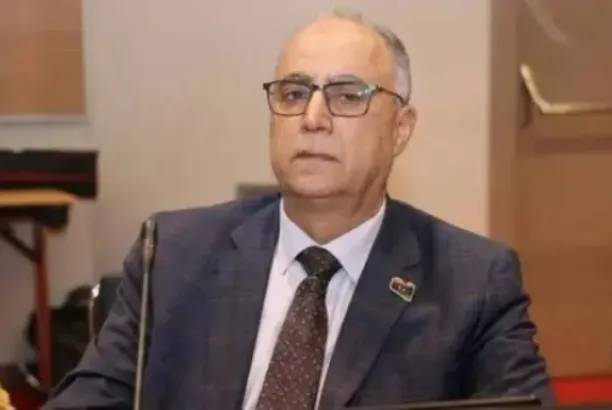
Oil and economic expert Abdulmonsef Al-Shalwi wrote an article stating that Libya’s oil and gas sector is undergoing rapid strategic transformations that are no longer limited to maintaining production rates or developing traditional infrastructure, but now extend to reshaping the relationship between the oil industry, the environment, and the national economy simultaneously.
In this context, the gas utilization project at the offshore Bouri Field, implemented by Mellitah Oil & Gas, stands out as one of the most significant technical and strategic projects reflecting the National Oil Corporation’s transition from merely managing resources to maximizing economic value, reducing waste, and achieving sustainability.
The successful lifting and installation of gas utilization units on Platform No. 4 at the Bouri Field, weighing more than 5,200 tons, should not be viewed solely as a complex engineering achievement in heavy lifting operations. Rather, it represents a qualitative shift in Libya’s philosophy of managing associated gas, especially as the project aims to utilize around 120 million cubic feet of gas per day, significant amounts of which were previously wasted through routine flaring.
Experts recognize that associated gas flaring is one of the biggest challenges facing oil-producing countries—not only because of its environmental consequences, but also because it essentially means burning a valuable national resource that could otherwise be invested, marketed, and industrialized. Gas burned in oil flares is not merely “operational waste,” but a highly valuable economic resource that can be used for electricity generation, petrochemical industries, industrial networks, and even future export plans.
This highlights the strategic importance of the Bouri project, which aligns directly with the National Oil Corporation’s commitment to achieving “Zero Flaring” by 2030. This commitment reflects an advanced awareness of global environmental challenges and the evolving demands of modern energy markets, particularly amid the increasing international push toward reducing carbon emissions and improving hydrocarbon resource efficiency.
From a technical perspective, carrying out lifting and installation operations of this scale in a complex offshore environment clearly demonstrates the development of national capabilities in marine engineering, heavy project management, and the integration of operations, maintenance, and future expansions. Utilizing scheduled shutdown periods for both platforms to conduct connection, modernization, and maintenance work also reflects a high level of operational planning and cost-efficiency.
Economically, investment in gas utilization projects is considered among the highest-return investments for the national economy, since associated gas is already available for production without requiring additional exploration costs. When Libya succeeds in recovering hundreds of millions of cubic feet of gas previously burned daily, this directly contributes to increasing revenues, reducing liquid fuel consumption in power stations, and improving the efficiency of the national energy mix.
Libya’s electricity crisis is also partially linked to insufficient gas supplies for power generation plants. Therefore, any project that increases domestically utilized gas indirectly supports the stability of the electricity grid while reducing dependence on more expensive and polluting liquid fuels.
The environmental dimension is no longer a matter of public relations or symbolic responses to international pressure; it has become a core factor in competitiveness within the global energy sector. Countries and companies that fail to demonstrate clear commitments to reducing carbon emissions will increasingly face challenges in financing, marketing, and attracting international partnerships and investments.
From this perspective, the National Oil Corporation’s move toward “Zero Flaring” by 2030 is a step in the right direction—not only to improve the sector’s environmental image, but also to ensure the long-term sustainability of Libya’s oil industry in a world gradually shifting toward a low-emissions economy.
What is also notable about the Bouri project is the clear integration between sovereign decision-making and the executive role of national companies. It reflects the National Oil Corporation’s support for infrastructure and technical development projects, alongside the ability of Libyan professionals to carry out complex engineering operations according to the highest standards of safety and efficiency.
In Al-Shalwi’s view, Libya has a genuine opportunity to become a regional model in associated gas management if these projects continue to expand and are linked to broader plans for developing gas and petrochemical industries, as well as expanding transportation and processing infrastructure. Today, the world no longer measures the strength of oil-producing nations solely by crude oil production volumes, but by their ability to maximize added value from resources, minimize waste, and balance economic growth with environmental sustainability.
What has been achieved at the Bouri Field is not merely an operational success for Mellitah Oil & Gas, but a clear message that Libya’s oil sector is capable—despite challenges—of moving from temporary problem-solving toward building long-term strategic projects that strengthen the national economy, protect the environment, and establish a more efficient and sustainable energy industry for future generations.