| Economic articles
Al-Shalwi: “Fuel Queues in Libya; Between Resource Abundance and a Dysfunctional Subsidy and Distribution System”
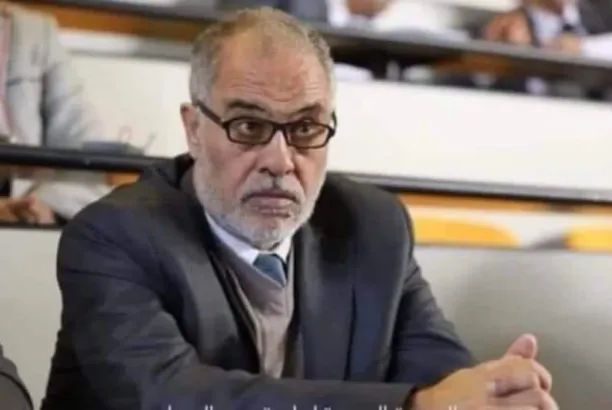
Oil and economic expert Abdulmonsef Al-Shalwi wrote an article stating:
During my visit to my hometown Derna to spend the Eid al-Adha holiday with my father, the most frequently asked question among relatives, friends, and acquaintances was related to the fuel crisis and the long queues of vehicles in front of fuel stations across Libyan cities.
Since everyone knows I work in the oil and gas sector, the question was repeated in different forms but with the same core meaning: How can a country producing more than 1.5 million barrels of oil per day suffer from gasoline and diesel queues?
My conviction about the importance of addressing this issue increased when I personally drove from the Brega area to Derna by road and witnessed firsthand the heavy congestion at fuel stations in several cities and towns along the way.
The truth that must be stated clearly and objectively is that I do not question why queues exist, because I am fully aware that the National Oil Corporation and Brega Petroleum Marketing Company are making significant and appreciated operational efforts to ensure continuous fuel supply, despite complex international and regional conditions and disruptions in global energy markets and supply chains.
However, reality cannot be ignored:
There is recurring fuel shortage and congestion at stations across Libya. This phenomenon is no longer only related to delayed shipments or seasonal demand increases; it has become a reflection of a deeper structural imbalance in the subsidy, distribution, and monitoring system.
The problem is not only supply
It is important to clarify a key point often overlooked.
Fuel shipments of gasoline and diesel are arriving regularly at Libyan ports, and the National Oil Corporation has recently announced the docking of tankers in Tripoli, Benghazi, Misrata, Zawiya, and Tobruk carrying large quantities of fuel, while several stations are operating 24 hours to ease the crisis.
Therefore, the real problem does not start at the level of import or arrival at ports and storage facilities. It begins after fuel leaves storage depots and enters transportation, distribution, and circulation phases.
Here, the issue of smuggling and illegal diversion of fuel becomes clearly visible—one of the most dangerous challenges facing Libya’s fuel distribution system.
Smuggling drains subsidies and creates a parallel market
The Libyan state spends billions of dollars annually to provide subsidized fuel for citizens, but a significant portion of these quantities never reaches their intended beneficiaries.
The large price gap between domestic subsidized fuel and prices in neighboring countries has created a fertile environment for smuggling and illegal trade, whether through land crossings, maritime routes, or desert channels.
Thus, any efforts to improve supply or increase quantities will remain under pressure unless smuggling is addressed decisively and effectively.
The key truth is that the success of the supply system is not measured only by fuel reaching ports and storage depots, but by every liter reaching the citizen through its legal designated channel.
Each liter diverted outside this system represents a direct loss of subsidies, reduces local availability, and increases pressure on stations and the distribution network.
Although Brega Petroleum Marketing Company is responsible for receiving, storing, and distributing fuel according to approved operational plans, most challenges of smuggling and leakage occur after fuel leaves depots, requiring strict and continuous security and field monitoring until it reaches the final consumer.
Increasing supply alone is not a permanent solution
Queues may temporarily disappear with new shipments or emergency measures, but they will return as long as the root causes remain.
Injecting additional quantities into an unregulated system simply means part of it will again flow into the black market or smuggling channels.
Therefore, the real solution lies not only in increasing supply, but in comprehensive system reform.
Cash subsidy reform is an economic necessity
Some may disagree, but economically this has become a necessity that cannot be postponed.
Continuing open fuel subsidies in their current form means ongoing financial leakage, smuggling, and waste.
The most realistic and fair solution is a gradual transition to direct cash subsidies, under a clear law issued by the legislative authority, ensuring citizens retain purchasing power while preventing subsidies from going to smugglers and parallel markets.
Subsidy must reach the citizen—not the smuggler.
However, this requires careful and fair implementation, supported by accurate databases, effective monitoring systems, and social safeguards for low-income groups.
Smart card system is essential
Libya’s fuel distribution system requires full digital transformation.
A smart card system—or similar electronic mechanism—has become a national necessity to regulate consumption, monitor fuel movement, reduce leakage, and ensure subsidies reach their rightful beneficiaries.
Such systems have proven successful in other countries by reducing losses, improving oversight, and preventing manipulation.
However, smart cards alone are not a magic solution; they are part of a broader reform package including:
- Strengthening security oversight over fuel movement
- Electronic tracking of fuel tankers
- Linking stations to central monitoring systems
- Combating the black market
- Enforcing strict penalties for smuggling
- Building an accurate consumption database
Libya needs a real strategic fuel reserve
It is not reasonable for a major oil-producing country to have its fuel stability depend on the arrival of a tanker or delays caused by weather or global logistics.
Any state concerned with energy security maintains a strategic reserve covering several months of consumption.
Therefore, establishing and maintaining a strategic fuel reserve must be a sovereign priority overseen by the National Oil Corporation, Brega Petroleum Marketing Company, and relevant regulatory authorities.
The structural solution starts with domestic refining
In the medium and long term, the real solution lies in reducing reliance on imported gasoline.
This highlights the importance of accelerating refinery development projects, including:
- Upgrading Zawiya Refinery to convert naphtha into gasoline
- Utilizing condensates from Mellitah and others for gasoline production
- Developing Ras Lanuf refinery to convert surplus naphtha into gasoline
It is not logical for the fate of an entire country to remain dependent on imported fuel shipments while it possesses vast oil resources and capable technical and human expertise.
Conclusion
In fairness, the fuel queue crisis cannot be attributed to a single party, nor reduced to supply shortages alone.
We have a subsidy system that drains the budget, smuggling networks benefiting from price differences, weak post-distribution oversight, heavy reliance on imports, and the absence of a smart consumption system.
Queues may decrease temporarily, but they will return again and again unless bold structural decisions are taken to address the root causes—not just the symptoms.
Libya does not suffer from lack of resources, but rather from the need for more efficient management, a clear economic vision, and genuine political will to protect public funds and ensure fair and organized distribution of subsidies.