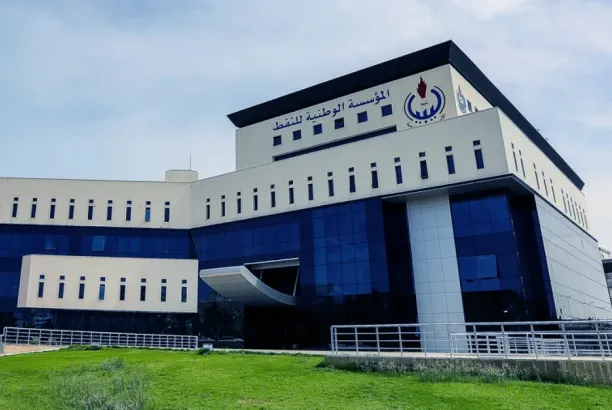
OilPrice.com reported, in an article by Cyril Widdershoven, that Libya’s upcoming oil pipeline could become a factor that reshapes the geopolitical equation.
Libya and Egypt are working to revive a project to build an oil pipeline approximately 800 kilometers long, linking the Tobruk and Al-Hariga area in eastern Libya with Alexandria, Egypt. According to current estimates, the pipeline is expected to initially have a capacity of 150,000 to 250,000 barrels per day, with the potential to increase this later to 300,000–400,000 barrels per day if Libyan production growth allows.
The project is not entirely new. In 2002, the two countries explored the construction of oil and gas pipelines between Tobruk and Alexandria through a joint venture equally owned by Libya’s National Oil Corporation and the relevant Egyptian authorities. At the time, the project was approximately 620 kilometers long, with an initial capacity of 150,000 barrels per day. The current project is therefore essentially a revival and major expansion of an earlier idea.
Cost and Financing
The initial official cost estimate exceeds $1 billion, while Blue Water Strategy estimates the realistic cost at between $1.3 billion and $2.2 billion. It could rise to around $2.5 billion if the project includes storage facilities, pumping stations, and refinery-related modifications.
However, there is still no final investment decision, and the design capacity and financing structure have yet to be finalized. No international bank, sovereign wealth fund, or international oil company has so far announced a formal commitment to finance the project.
2027 may be the earliest realistic date for a final investment decision, with construction taking place during 2028–2029 and operations likely beginning around 2030.
Why Is the Project Important for Egypt?
The report argues that geopolitical developments in 2026 have strengthened the project’s economic rationale, as Egypt faces greater risks of disruptions to maritime supplies from the Middle East, particularly amid instability surrounding the Strait of Hormuz.
Libyan oil reaching Alexandria directly by land would avoid passing through:
- The Strait of Hormuz.
- The Bab el-Mandeb Strait.
- The Suez Canal.
Egypt would therefore gain access to a nearby Mediterranean oil source that is less exposed to risks associated with strategic maritime routes.
Alexandria also has significant refining infrastructure, particularly the MIDOR refinery, with a capacity of approximately 160,000–170,000 barrels per day following an expansion costing around $2.7 billion.
A pipeline with a capacity of 150,000 barrels per day would transport around 55 million barrels annually. At 250,000 barrels per day, the volume would reach approximately 91 million barrels annually, while at 300,000 barrels per day it would approach 110 million barrels.
This would allow Egypt to use Libyan crude to operate its refineries, reduce more expensive or riskier imports, and produce gasoline, diesel, and jet fuel for the domestic market, while also exporting surplus higher-value refined products to Mediterranean markets.
Egypt could therefore turn its geographical proximity to Libya into an opportunity to generate refining margins, create jobs, secure foreign currency, and increase export revenues.
What Is the Benefit for Libya?
Libya’s interests are different. The National Oil Corporation is targeting an increase in current production, which ranges between 1.4 million and 1.5 million barrels per day. As production increases, Libya will need to develop its transportation, storage, and export capabilities.
Eastern Libya has a geographically favorable position for connections with Egypt. Oil from the Sarir fields is already transported over long distances to the Tobruk and Al-Hariga system. Connecting this system toward Egypt would create an additional export route rather than relying exclusively on tankers from Al-Hariga port.
Financing: The Real Test
The author believes that Libya’s National Oil Corporation and Arabian Gulf Oil Company, on the Libyan side, along with the Egyptian General Petroleum Corporation and Egyptian government entities, could be the key parties in the project.
The project could also eventually attract Gulf sovereign wealth funds, international infrastructure funds, export credit agencies, and financing linked to EPC contracts.
The author points to Egypt’s SUMED pipeline as an important example of energy infrastructure involving Egypt and Gulf investors.
However, financiers would demand strong sovereign guarantees and clear protection against political and security risks in Libya.
The Main Problem: Libya’s Political Division
The author argues that the real challenge facing the project is not engineering.
Tobruk and most areas of eastern Libya fall within the political and security sphere associated with Khalifa Haftar and the eastern authorities, while current discussions are focused on the Government of National Unity in Tripoli, headed by Abdul Hamid Dbeibah.
Therefore, as long as the division between Libya’s centers of power continues, the pipeline could become a tool in the political struggle for influence.
According to the author, the project cannot be allowed to be viewed as a politically affiliated asset belonging to a single Libyan party, particularly because revenues from the National Oil Corporation are an extremely sensitive national issue.
Attacks on oil facilities and protests that reached the Mellitah complex also confirm that the security risks are real. An international pipeline carrying billions of dollars’ worth of oil annually would naturally become a strategic asset and could therefore also become a target for political and security pressure or blackmail.
Economic and Geopolitical Value
The author argues that the mistake would be to assess the project solely on whether oil transportation fees are sufficient to justify an investment exceeding $1 billion.
The project’s strategic value is much greater.
Transporting 200,000–250,000 barrels per day could mean moving oil worth approximately $5–7 billion annually through the pipeline. In return, Egypt would gain greater security for its oil supplies and its Alexandria refineries would benefit, while Libya would gain an additional channel for marketing its growing production.
Alexandria’s position as a Mediterranean hub for crude oil and petroleum product trading would also be strengthened.
Report Conclusion
The project is technically feasible and strategically attractive, but politically high-risk.
The main challenge is not the ability to build an 800-kilometer pipeline, nor even to secure financing of approximately $1.5 billion to more than $2 billion.
The real question, according to the author, is:
Can Libya provide political, legal, and security guarantees that the oil entering this pipeline today will remain available for export through it for the next 20 years?