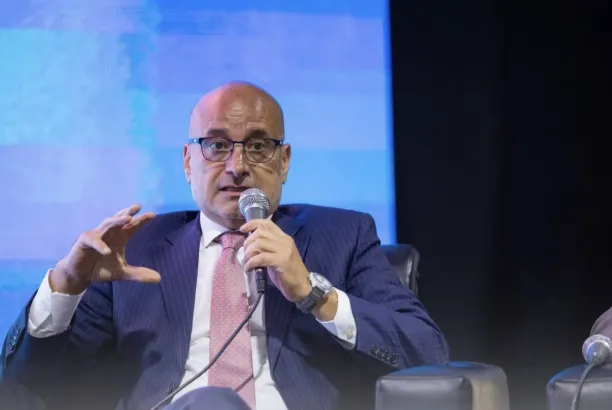
Banking expert Noaman Al-Bouri wrote an article in which he said:
I believe that one of the biggest mistakes we make in Libya is believing that changing individuals is enough to change reality.
We remove one official and bring in another, change a board of directors, appoint a new government, or replace one governor with another… and then expect different results.
But we forget the most important question:
Is the problem really with the individuals, or with the system within which they operate?
The reality is that a large part of Libya’s crisis today is not a crisis of individuals, but rather a crisis of an operational and institutional system that was designed—or evolved over the years—in a way that makes it incapable of producing sound outcomes.
Within such a system, even a good and dedicated person will find themselves unable to achieve much.
Not because they do not want reform, but because the rules of the game themselves do not allow them to do so.
The System Is Stronger Than the Individual
When you enter an institution that operates according to complicated procedures, unclear authorities, a lack of accountability, overlapping responsibilities, weak oversight, and conflicts of interest, it becomes extremely difficult for anyone to work efficiently.
In the end, one of two things happens:
Either the person gives in to the system and adapts to it, or they try to resist it and find themselves isolated and unable to implement what they want.
And this is where the danger lies.
A corrupt system does not necessarily corrupt people because they are corrupt; rather, it may push even good people to adapt to its rules so that they can survive and continue working.
Therefore, changing a single person within a dysfunctional system may give people the impression that something has changed, while in reality, nothing fundamental has changed.
The Problem Is Not Just Who Sits in the Chair
We need to stop reducing Libya’s crisis to the question:
“Who is the right person?”
And start asking:
“Is the system in which this person will operate actually designed to allow them to succeed?”
If the answer is no, then even the best person in the world will not be able to perform miracles.
We need to fundamentally reconsider how state institutions operate:
- How are decisions made?
- Who has the authority?
- Who is held accountable when mistakes are made?
- How are results measured?
- How are leaders selected?
- How are appointments made?
- How are public funds managed?
- How are conflicts of interest prevented?
- How are laws enforced?
- And how do institutions ensure their independence and transparency?
These are the questions that must lie at the heart of any genuine reform project.
You Cannot Reform a Failed System Using Its Own Tools
We cannot ask the same system that produced failure to reform itself without changing its operating rules.
Real reform does not simply mean replacing individuals; it means re-engineering the institutions themselves.
We need a system that enables good people to succeed, makes corruption more difficult, makes the right decision easier, and ensures that officials understand that their decisions carry consequences and accountability.
We need to move from a system based on individuals, relationships, and influence to one based on the law, institutions, competence, transparency, and accountability.
We Do Not Need a “Good Man” Inside a Corrupt System
Even the best officials will face limitations if the institution they lead does not function properly.
Therefore, betting on a “savior” figure can be dangerous, because it reproduces the same problem.
We do not need a superhuman individual.
We need a system that enables a competent ordinary person to perform their job properly.
That is the strength of successful states and institutions.
A successful state does not depend on the genius of a minister, governor, or director.
Rather, it depends on the institution itself functioning, regardless of who sits in the chair.
Libya Needs Redesign, Not Just Change
If we genuinely want to emerge from the crisis, we must move from a policy of “changing individuals” to a much larger project:
Redesigning the Libyan state and the way its institutions operate.
We need institutions with clearly defined responsibilities, decisions based on data, leaders selected on the basis of competence, clear performance indicators, genuine accountability, effective oversight, a respected and independent judiciary, and transparent financial management.
Only then does changing individuals become meaningful.
But changing individuals while keeping the same rules, the same procedures, the same centers of influence, and the same decision-making methods is, at best, a change of appearance—not a change in reality.
Conclusion
Libya does not suffer only from a shortage of good people; Libya suffers from a system that does not allow good people to work.
Therefore, the real battle is not against one person, official, or government.
The real battle is against an entire system that needs to be rebuilt.
If we reform the system, a good person will be able to succeed.
If we keep the system as it is, it will swallow people one after another.
We do not only need to change who runs Libya; we need to change the way Libya is governed—and this is where genuine reform begins.