| Economic articles
Al-Hdhiri: “Where Does the Real Problem Lie, Oil Revenues or the Management of Those Revenues and Resources?”
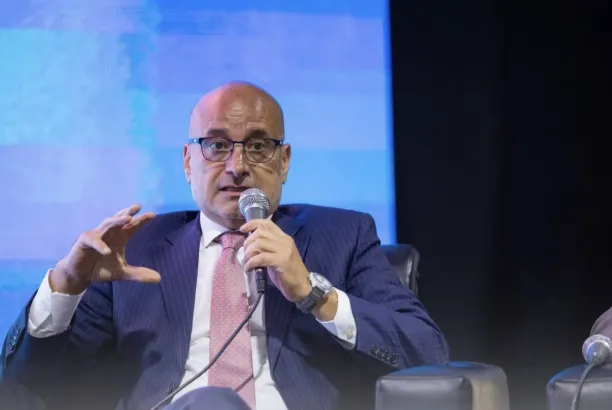
Legal expert in the oil sector, Othman Al-Hdhiri, has written an article.
Libya’s experience during years of oil revenue booms has demonstrated that higher revenues do not necessarily translate into improved economic performance. Instead, in the absence of sound governance, they can deepen structural imbalances. Public spending expanded continuously, while government obligations increased without being based on long-term financial planning. At the same time, ongoing institutional divisions weakened the management of public resources and limited the economy’s ability to achieve stability and sustainable development.
The issue, therefore, is not primarily the level of oil revenues—whether high or low—but rather how those revenues are managed. The analysis can be divided into three main areas.
First: Current Challenges
A. Institutional and Political Division
The existence of two competing governments and parallel institutions has resulted in duplicated public spending and weak coordination of fiscal and economic policies.
B. Excessive Dependence on Oil
Oil remains the country’s primary source of revenue, making the economy highly vulnerable to fluctuations in oil prices and production levels.
C. Expansion of Current Expenditure
A large share of the national budget is allocated to salaries, subsidies, and operating expenses, while development and investment spending remain insufficient.
D. Weak Financial Planning
The absence of medium- and long-term economic planning has led to continued reliance on annual oil revenues to finance government commitments.
E. Corruption and Weak Governance
Limited oversight and accountability contribute to wasteful spending and delays in implementing development projects.
F. Weak Private Sector
The continued dominance of the state over economic activity discourages private investment, production, and job creation.
G. Exchange Rate and Subsidy Distortions
These distortions encourage speculation, smuggling, and the depletion of public resources.
Second: Where Does the Core Problem Lie?
The fundamental issue is not the size of oil revenues, but rather the management of resources and institutions. This is reflected in:
- Lack of political and institutional stability.
- Weak governance and transparency.
- Poor prioritization of public expenditure.
- Failure to diversify sources of national income.
- Lack of accountability for economic outcomes.
In other words, the crisis is fundamentally a governance and management crisis rather than a resource crisis.
Third: Urgent Solutions (Within 1–2 Years)
- Unify economic and financial institutions, particularly the Central Bank and oversight bodies.
- Prepare a genuinely unified and transparent national budget subject to effective auditing by the Audit Bureau.
- Control public spending and eliminate unnecessary expenditures.
- Strengthen oversight of public funds and intensify anti-corruption efforts.
- Improve foreign exchange management and unify fiscal and monetary policies.
- Address electricity, fuel, and essential service shortages to support economic activity.
- Encourage private sector growth and remove administrative barriers to investment.
Fourth: Long-Term Solutions (3–10 Years)
- Diversify the economy by developing agriculture, manufacturing, tourism, logistics, and renewable energy.
- Gradually reform the subsidy system while ensuring support reaches those who genuinely need it, taking into account the specific circumstances of remote regions so that essential goods and services remain affordable.
- Reform the civil service and reduce reliance on public-sector employment.
- Invest in education and vocational training aligned with labor market needs.
- Establish a strong sovereign wealth fund to invest oil surpluses, protect the economy from oil price volatility, and address the current challenges facing the Libyan Investment Authority.
- Modernize infrastructure and accelerate digital transformation to improve the efficiency of public services.
- Build strong, independent institutions that uphold the rule of law, ensure continuity of reforms, and appoint qualified professionals based on merit rather than tribal or regional affiliations.
Conclusion
Overall, Libya possesses significant financial and human resources. However, achieving sustainable development requires a transition from an economy dependent on distributing oil revenues to one driven by production and investment, supported by stable institutions and effective governance.