| Economic articles
Al-Jahani: Resignation of the Governor of the Central Bank of Libya: The Citizen Pays the Price… and the “Unsustainable Economic Equation” Exposed
By: Banking Advisor Ali Al-Jahani
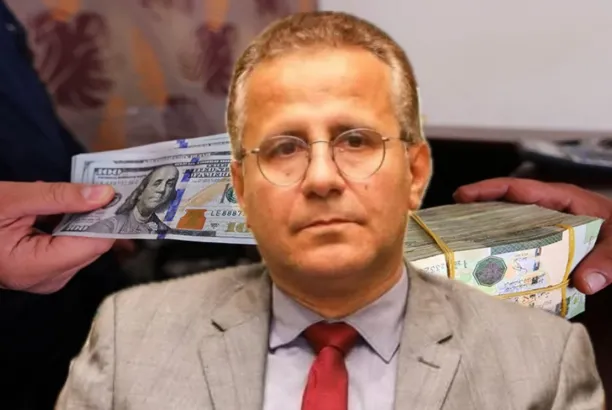
Libya’s economic and political circles witnessed a pivotal development with the submission by Central Bank of Libya Governor Naji Mohammed Issa of a letter declining to continue in his position to the Speakers of the House of Representatives and the High Council of State on August 9, 2026. The decision comes at an extremely sensitive time, as speculation intensifies and the dinar’s purchasing power declines, leaving ordinary citizens once again as the primary victims of power struggles and mismanagement over which they have no control.
The resignation has not yet been finalized. The High Council of State rejected it and called on the governor to continue carrying out all his duties—including controlling public spending and preventing abuses in the use of foreign currency—until a decision is reached, while the House of Representatives has not yet taken a position.
We are therefore facing a situation more dangerous than a vacancy, not less: a governor exercising full powers while his legitimacy is steadily eroding. The market immediately priced in this uncertainty, with the dollar surpassing nine dinars on the parallel market after remaining stable around 8.40 dinars.
Businessman Hosni Bey’s analysis placed the crisis in its proper context: the resignation is not merely an administrative event, but an indication that Libya’s economic management model has reached the limits of its ability to continue.
Nevertheless, caution is necessary. The letter did not state the reasons for the resignation, and it would be unprofessional to assert that any particular issue was the direct cause. What can be said with confidence, however, is that the environment in which the governor operated made the task impossible to perform using the tools available to him.
First: The Citizen in the Line of Fire… The Cost of Successive Crises
With every round of political conflict or institutional confusion, financial decisions immediately turn into a cost of living burden borne by Libyan citizens:
Erosion of purchasing power and rising prices. As soon as rumors of the resignation and political disputes spread, prices surge in the parallel market. As a result of weak oversight and the declining value of the dinar, exchange-rate differences are immediately reflected in waves of price increases affecting basic goods, food, and medicine—because most Libyan consumption depends on imports.
The liquidity crisis and the disruption of everyday life. Administrative uncertainty and unstable monetary policies complicate procedures for opening letters of credit and the flow of foreign currency, bringing bank queues back to the forefront and preventing citizens from accessing their salaries or savings to meet essential needs.
Bearing the cost of the price gap. When the Central Bank is asked to maintain an exchange rate it cannot sustain, an “economic rent” emerges, benefiting speculators and holders of cheap letters of credit, while citizens pay the price through inflation in the broader market.
The scale of this rent is not merely an estimate. According to a Central Bank report, banks’ foreign-currency utilization during the first five months of 2026 amounted to approximately $12.9 billion. This means that exchange-rate management is not a technical decision concerning a number; rather, it is a mechanism for distributing tens of billions of dollars annually. Every dinar of the difference between the two exchange rates represents a direct transfer from the holder of the dinar to whoever has access to official dollars.
Second: The Real Conflict… Is the Crisis Monetary or Fiscal?
As Hosni Bey’s analysis explains, the core of the problem lies in two intertwined economic conflicts that together create a vicious cycle:
The First Conflict (Fiscal): The Unrestrained Agreement
Libya receives most of its revenues in dollars from oil and gas while spending in dinars: approximately 73 billion for salaries and 37 billion for subsidies. A unified spending framework covering the entire Libyan territory was agreed upon more than thirteen years ago, according to a Central Bank statement.
But it unified the figures without unifying fiscal discipline. It established spending ceilings without an automatic mechanism to adjust them when actual oil revenues change, and without a single executive authority bearing responsibility for violations. Paradoxically, the Central Bank’s statement at the time of signing described the framework as being based on the “state’s actual financial capacity”—a principle that was not accompanied by any implementation mechanism.
The agreement therefore became unrestrained: politically approved dinar-denominated obligations, protected by consensus between two councils, versus dollar-denominated revenues subject to fluctuations in production, prices, and shutdowns.
This became evident in practice in June 2026, when the Chairman of the House of Representatives’ Unified Expenditure Committee sent a letter to the governor warning that the council might consider itself released from obligations associated with the agreement if what he described as its implementation being obstructed continued. In other words, the agreement could be unilaterally disavowed only two months after it was signed.
As a result, the Central Bank became a point of confrontation: political authorities demand that it provide dinars and liquidity, while the bank and the International Monetary Fund warn that every additional billion dinars quickly turns into additional demand for dollars and imported goods.
The Fund warned during its 2026 consultations that continued high spending would maintain pressure on the exchange rate and drain reserves, and that existing policies were unsustainable over the medium term.
The Black Hole of Fuel Subsidies
The state does not subsidize gasoline and diesel solely in dinars. It also pays a huge portion of the bill in dollars to import fuel that is sold domestically at almost negligible prices, after which a significant portion leaks into smuggling networks.
The result is a self-draining equation: the state sells energy for dollars, then buys it back with dollars, while the corresponding spending is denominated in dinars under an expenditure agreement with no effective ceiling. It is a cycle that no monetary policy can close on its own, because monetary tools address demand for foreign currency without addressing its source.
The Second Conflict (Monetary): Defending the Exchange Rate or Protecting Reserves?
When dinar-denominated obligations exceed available dollar resources, the Central Bank faces a choice in which every option is painful: either deplete reserves, impose restrictions on dollars, devalue the dinar, or allow the parallel market to expand. Refusing to choose is itself a choice of the last path—and the worst in terms of distributional fairness, because it hands the pricing of the entire economy over to speculation.
Third: What the Experiences of Other Countries Tell Us
International experience shows that changing individuals without addressing fiscal imbalances does not solve the problem. In Turkey (2019–2021), successive dismissals and resignations of central bank governors under political pressure led to the lira losing a significant portion of its value and to rising inflation, as a result of undermining the independence of the monetary institution. In Lebanon (2019–2023), financing government deficits through monetary instruments, combined with prolonged administrative disputes, led to currency collapse and the erosion of citizens’ savings.
Egypt, which is sometimes presented as a model for quickly resolving an administrative vacancy following the resignation of its central bank governor in August 2022, subsequently saw the gap between the official and parallel exchange rates widen rather than narrow. It was not closed until a comprehensive exchange-rate correction in March 2024, accompanied by fiscal tightening and external inflows.
The conclusion is the same: a currency stabilizes when spending is brought under control, not when the person in charge of the central bank changes. The governor does not possess tools that create dollars; he only possesses tools that distribute the dollars available.
Fourth: Who Bears the Cost of Adjustment? And What Decisions Must Be Taken?
As Hosni Bey pointed out, there is no cost-free option. The real question is: Will the cost of reform be distributed consciously and fairly, or will it be left to spread randomly through inflation and the erosion of citizens’ savings?
Urgent Decisions to Reassure the Public and the Market
Resolve the Central Bank’s administrative situation within a short, publicly announced timeframe through a unified decision by both councils: either accept the resignation while appointing a technocratic leadership with full powers, or reject it while providing written guarantees for the independence of monetary decision-making. The worst option is to leave the matter unresolved.
Guarantee the continued flow of foreign currency by issuing circulars and practical measures confirming the continued opening of letters of credit for basic goods and personal purposes, thereby cutting off the path for rumors in the parallel market.
Publish the technical report attached by the governor to his letter, dated August 2, concerning the performance of the Board of Directors and its assessment of risks—or publish a summary of it. The market prices uncertainty more heavily than it prices bad news.
Activate collective decision-making by the Board of Directors with its full technocratic powers, in order to avoid tying sovereign decisions to a single individual.
Structural Reform Decisions (Stopping the Bleeding)
Link the spending ceiling to actual revenues through an automatic mechanism: Conduct a publicly announced quarterly review that adjusts spending authorizations upward or downward according to realized oil revenues rather than estimates. This is the difference between a disciplined agreement and an unrestrained one.
Reform fuel subsidies: Seriously begin replacing in-kind fuel subsidies with direct cash support for citizens, according to a publicly announced timeline and with specified compensation for lower-income groups, in order to close the door to smuggling and save billions of dollars in foreign currency.
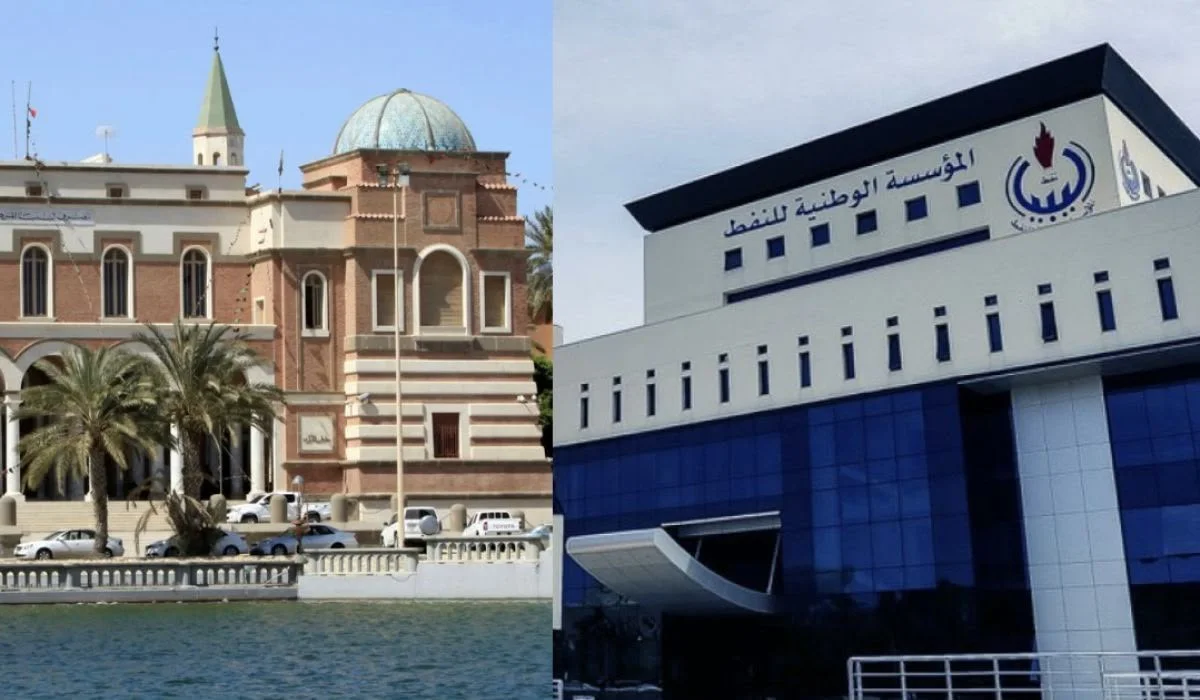
Coordinate monetary and fiscal policy: Establish a permanent committee comprising the Central Bank, the Ministry of Finance, and the National Oil Corporation to balance dinar-denominated obligations against dollar inflows before commitments are approved, not afterward.
Establish a monthly disclosure rule covering revenues, reserves, foreign-currency sales, and the volume of letters of credit opened. Transparency here is not a governance luxury; it is the cheapest available tool for reducing the risk premium in the parallel market.
Conclusion
Governor Naji Issa’s resignation confirms that politics may be able to postpone reform, but it cannot eliminate the bill. The agreement that unified spending figures without unifying the rules governing fiscal discipline did not end the financial division; rather, it transformed it from an open division between two governments into silent pressure on a single institution.
If public finances do not assume their responsibility today by adjusting spending and subsidies, tomorrow’s bill will be paid through the reserves or the dinar—and ultimately, the citizen will pay the final price from their daily livelihood.