| Economic articles
Al-Manaa: “At the Doha Forum 2025, the Government of National Unity Discusses Global Economic and Justice Agendas”
Counselor Mustafa Al-Manaa wrote:
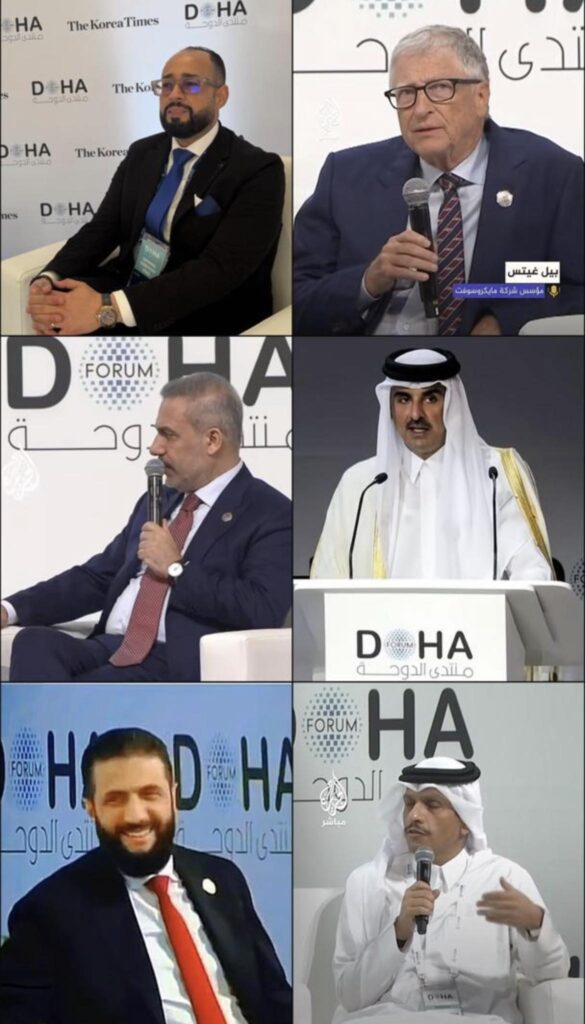
At the Doha Forum 2025, the Government of National Unity took part in discussions on global economic and justice issues, at a time when the world is witnessing profound geopolitical and economic transformations. With international trade, artificial intelligence, and the energy transition topping the global agenda, the government engaged in discussions under the forum’s theme: “Anchoring Justice: From Promises to Tangible Realities.”
Through direct dialogue sessions with global decision-makers, the government presented its vision and mapped it onto international themes, highlighting how it intersects with the national “Return to Life” program.
Key Economic Themes Discussed by the Government:
1. Reforming the Global Trade System and Economic Governance
Discussions emphasized the need to recalibrate international trade rules to achieve greater fairness, enabling developing countries — including Libya — to integrate effectively into global value chains. Participants stressed the importance of shifting from a unilateral model to a more equitable, multilateral economic governance system that allows these countries better access to financing and sustainable development opportunities.
2. Artificial Intelligence and Technology as Drivers of Development
Dialogue focused on the role of emerging technologies, particularly artificial intelligence, as a decisive lever for economic growth and digital transformation. Participants explored how to build “digital readiness” in the Middle East to enable regional economies to compete in the new global landscape, where knowledge and technological capabilities increasingly define economic power.
3. Energy Security and the Transition Toward Diversification
Given global volatility and the move toward clean energy, energy security was discussed as a pillar of economic stability. The conversations underscored the importance of planning for income diversification in countries like Libya, and investing in alternatives to balance current dependence on traditional resources with future needs and environmental pressures.
4. Linking Sustainable Development with Social Justice
Discussions went beyond abstract economic growth, focusing instead on concrete policies that connect development with equity. Emphasis was placed on addressing internal disparities through human development and inclusive infrastructure to ensure social stability and resilience in the face of crises.
Implications for Libya and the Region:
Collectively, these themes represent a historic opportunity for the Middle East and North Africa — and Libya in particular. Trade reform opens markets, technological investment diversifies the economy beyond traditional resource dependence, and a focus on social justice ensures that economic indicators translate into tangible improvements in citizens’ daily lives.
This three-pillar foundation offers a solid basis for reshaping national economic policies and building resilience against future challenges.
Conclusion
The Doha Forum 2025 was not just a diplomatic gathering; it provided a comprehensive framework for understanding the challenges and opportunities of the coming decade. For Libya, strategic investment in these pillars offers a pathway toward rebuilding the economy on solid, sustainable, and equitable foundations.
Counselor Mustafa Al-Manaa is a Libyan lawyer and legal-economic expert with more than 24 years of experience. He has worked with investment institutions, sovereign funds, and banks in Libya and abroad. He also serves as an expert for international research centers and previously worked for years as an advisor to the Central Bank of Libya. He served on the boards of the Libyan Investment Authority and the Libyan Foreign Bank, and represented Libya in meetings of the World Bank and the International Monetary Fund.
He currently heads the executive team for the Prime Minister’s initiatives and strategic projects, and has worked as an expert and lecturer with the American Bar Association. He is also a member of the Libyan-American Council for Trade and Investment and has authored several research papers and articles in Arab, American, and European newspapers. He is known for his bold views on economic and financial reform.