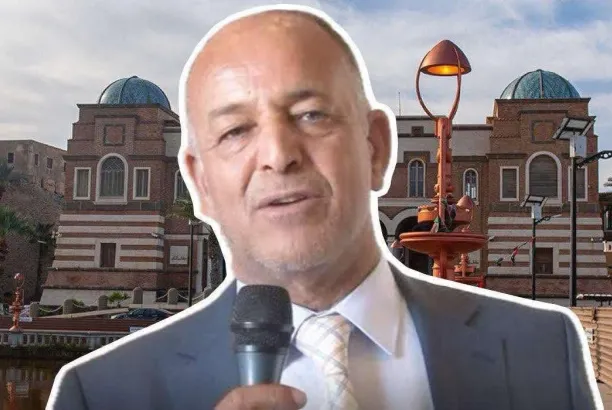
Advisor Mustafa Al-Manea wrote an article titled “How far will the Iran war push oil prices?”, which was published on the Arabi21 website.
Every time tensions escalate in the Middle East, oil returns as the most sensitive indicator of political and military developments. Today, as the scope of the war linked to Iran expands, markets are entering a phase of comprehensive risk repricing. Oil is no longer priced solely based on the current reality, but also by taking future possibilities into account.
Therefore, the fundamental question is no longer “Will prices rise?”
It has become: How long can these increases continue?
And are they driven by market fundamentals or by fear?
First: Geopolitics as a decisive factor in the equation
The danger of the current situation lies in Iran’s strategic location, not only in its production volume (Iran currently produces about 3–3.2 million barrels per day). The world does not look only at Iranian exports, but also at its position overlooking the Strait of Hormuz, through which nearly one-third of global seaborne oil trade passes (around 20–21 million barrels per day, roughly 30% of global maritime oil trade), in addition to nearly 20% of global liquefied natural gas trade.
Any real threat to navigation in this passage creates what energy markets call a “geopolitical risk premium.” This is a price increase that does not reflect an actual shortage in supply, but rather the possibility of a shortage.
Historically, every crisis approaching this strait has pushed prices sharply higher, even before any real disruption in crude flows occurs.
Second: OPEC+ as a key player in the market equation
The impact of war on oil prices cannot be analyzed without considering the role of the OPEC+ alliance, which represents about 40% of global production and more than 50% of global oil exports. Iran, as a member of this bloc, is important not only because of its production volume but also because of its position within the global supply coordination system. Its real influence lies in how the conflict might reshape the positions and decisions of other producers.
If the military confrontation escalates and affects regional supplies, attention will shift beyond Iran to the alliance’s ability to respond quickly to contain the shock, and whether other countries can pump additional quantities in a short time to reassure the market and prevent prices from spiraling out of control.
In theory, some Gulf countries possess spare production capacity estimated at 3–4 million barrels per day, which could cover part of any potential gap. However, turning this theoretical capacity into actual supply requires two key conditions: political agreement within the alliance and a stable security environment that allows increased production and exports without additional risks. In the event of open military escalation, achieving these conditions may become more complicated, placing the market in a state of cautious anticipation driven as much by geopolitics as by technical calculations.
Third: Supply as a driver of prices
From a supply perspective, current data does not indicate a wide or actual disruption in global supplies (global supply currently stands at about 101–103 million barrels per day). Production continues, and exports from most major countries have not been significantly affected.
However, Brent crude has been experiencing sharp fluctuations up and down, reflecting anticipatory market tension rather than a real shortage of available barrels.
By nature, markets do not wait for a shortage to occur; they price according to probabilities. Therefore, prices move based on perceived risks associated with possible supply disruptions in the Gulf region, not on an actual gap between supply and demand.
In previous crises, major financial institutions have typically developed scenarios based on limited declines in oil flows (1–2 million barrels per day), leading to moderate increases, and an escalation scenario assuming major disruptions in the Gulf (5–10 million barrels per day), which could push prices above $120 per barrel due to a real supply shock.
The difference between these two paths is fundamental. The most likely scenario usually assumes continued flows with a rising risk premium, while the catastrophic scenario assumes physical supply disruptions. In the early days of crises, markets tend to exaggerate the worst-case scenario, adding what could be described as “psychological insurance” against the worst expectations. This usually fades if the actual supply shortage does not materialize.
Thus, current prices are still moving under the pressure of possible supply disruptions, not an actual shortage of available quantities.
Fourth: The state of the global economy as a direct influence
Here lies an important balancing factor: the global economy is currently not in a strong expansion phase (global growth is around 2.5–3%). Chinese demand is slowing somewhat (demand growth of less than 500,000 barrels per day this year compared to increases exceeding 1 million barrels per day in previous years), European growth remains fragile, and central banks are still cautious regarding inflation.
Recent reports by the International Energy Agency suggest that global oil demand growth this year will be around 1–1.2 million barrels per day, which is less robust than during previous recovery periods.
This means that any sharp rise in prices may be temporary, because higher prices themselves weaken demand, triggering a self-correcting mechanism in the market.
Fifth: Realistic price scenarios
1. The Hormuz scenario (most likely)
If tensions continue without closing the Strait of Hormuz and without widespread attacks on oil infrastructure, prices are expected to range between $85–$100 per barrel. This scenario reflects moderate increases driven by risk premiums rather than real supply crises.
2. Escalation scenario
If the war affects facilities or tankers and causes temporary disruption to maritime shipping, prices could rise to $105–$120 per barrel. This scenario reflects a psychological shock and a volatile but manageable market.
3. Supply disruption scenario
If the Strait of Hormuz is disrupted for an extended period and Gulf supplies are cut off, prices could rise to $130 per barrel or more, reflecting a real supply shock.
Conclusion
From my analytical perspective:
- We are currently in a phase of pricing probabilities, not realities.
- The market is moving according to fear more than numbers.
- Closing the Strait of Hormuz for a long period is not a simple decision because it would harm all parties, including Iran itself. Major powers would not allow prolonged supply disruption without direct intervention.
- Any price surge above $120 would likely be temporary unless there is a major actual disruption.
- Prices may stabilize at a relatively high range, but not an explosive one.
- We are facing a tense market, not a comprehensive energy crisis—at least for now.
- Ultimately, the decisive factor for oil prices will not be the weapons used in conflict, but the extent to which supplies are actually disrupted.
In all cases, oil remains a mirror of politics, and today’s prices reflect the world’s anxiety more than a real shortage of barrels.
About the author:
Advisor Mustafa Al-Manea is a Libyan lawyer and legal and economic expert with more than 24 years of experience. He has worked with several investment institutions, sovereign wealth funds, and banks in various countries in addition to Libya. He serves as an expert for international research centers and previously worked as an advisor to the Governor of the Central Bank of Libya. He also chaired and participated in several executive teams within the Central Bank, including the Exchange Rate Committee, the Precautionary Plan Team, the Audit Team, the Confidence Restoration Team, and the Cyber Team aimed at creating a legislative environment for digital transformation. He is also a board member of the Libyan Investment Authority and the Libyan Foreign Bank, represented Libya in meetings of the World Bank and the International Monetary Fund, and heads the executive team for the Prime Minister’s initiatives and strategic projects. Al-Manea has worked as an expert and lecturer with the American Bar Association, is an accredited member of the European Lawyers Association, and a member of the Libyan-American Council for Trade and Investment. He has published numerous research papers and articles in Arab, American, and European newspapers and is known for his bold views on economic and financial transformation.