| Economic articles
Al-Shalwi: Libyan Gas Between Energy Security and Export Commitments. Is It Time to Reassess Our Assumptions?
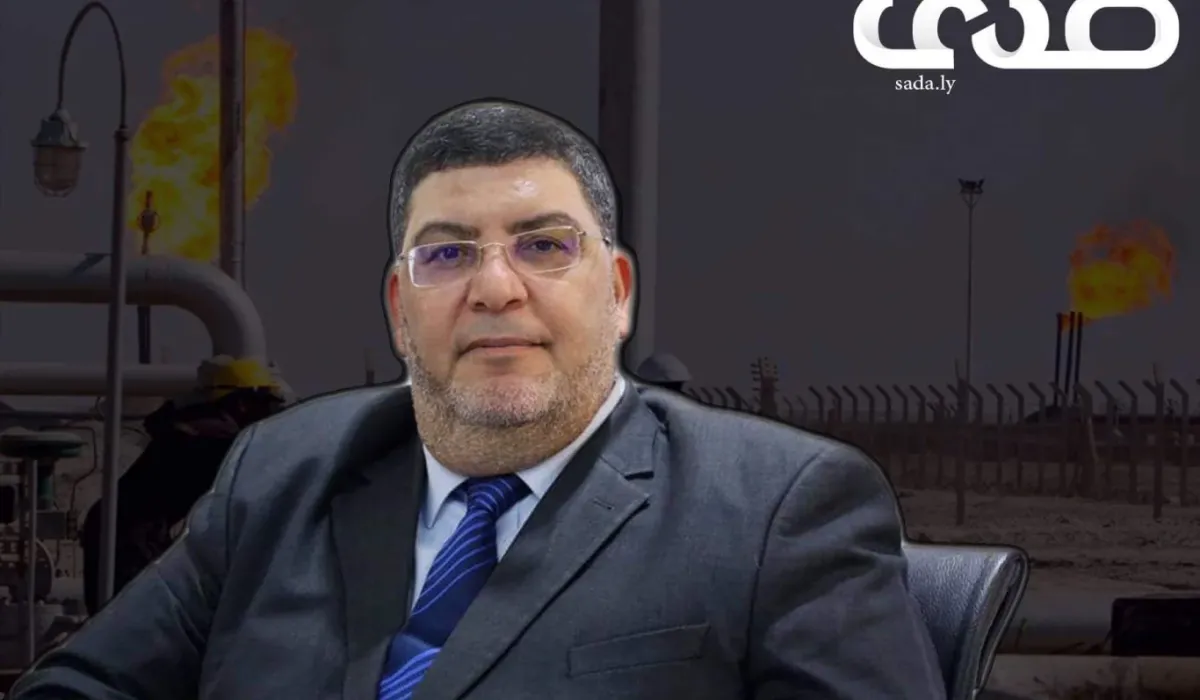
Oil expert Monsef Al-Shalwi wrote:
The ongoing debate over whether Libyan gas should be prioritized for exports or used to meet domestic market needs raises legitimate questions, particularly amid the continuing electricity crisis and growing domestic demand for natural gas. However, examining this issue solely from a short-term perspective may lead to incomplete conclusions. A technical and economic analysis requires considering the evolution of energy markets over the past decades and the transformations expected in the coming years.
Over more than four decades, the world has not moved toward abandoning fossil fuels as once expected. Instead, it has reshaped the energy mix to balance supply security, economic efficiency, and environmental considerations. Despite significant growth in solar and wind energy, natural gas continues to play a central role in electricity generation—not only in the Middle East but also across many advanced and emerging economies.
In our region, many countries have shifted from oil to gas for operating power plants because of its higher thermal efficiency, lower emissions compared with liquid fuels, and lower operating and maintenance costs, particularly with the widespread adoption of combined-cycle plants. Libya has followed the same path, with gas now serving as the backbone of electricity generation after oil was the primary source decades ago.
The issue is not limited to the nature of the fuel mix but also extends to the size of the resource itself. Libya possesses proven natural gas reserves estimated at approximately 53 trillion cubic feet, placing it among the largest countries in Africa and the Arab world in terms of reserves. However, the true value of this wealth lies not merely in the size of the reserves but in the speed at which they can be developed and converted into actual production that supports the national economy, strengthens energy security, and creates added value for current and future generations.
At the same time, Europe’s experience demonstrates that the energy transition has not involved a complete shift from conventional fuels to renewables. Rather, it has involved redistributing roles among gas, nuclear power, hydropower, and renewable energy sources. Even the world’s most advanced economies continue to rely on a diversified energy mix to ensure the stability of electricity grids. This reflects the fact that energy security remains a priority over other considerations when strategic policies are formulated.
The global gas market is expected to undergo significant changes in the coming years, with large new liquefied natural gas production capacities coming online, led by the United States, Qatar, and Canada, alongside expansions in several other countries. At the same time, demand will continue to grow in Asia and Africa, making the market more competitive and increasing the importance of producers capable of providing stable, reliable supplies at competitive costs.
From this perspective, gas is no longer merely an export commodity. It has become a strategic resource linked to energy security, industry, economic competitiveness, investment attraction, and the stability of essential services. Therefore, assessing its value should not be limited to direct export revenues. It should also include the economic value generated domestically through electricity generation, petrochemical industries, fertilizer production, iron and steel, cement, and other activities that rely on gas as a raw material and energy source.
In Libya’s case, the debate should not be reduced to a binary choice between exports and domestic consumption, as this approach overlooks the nature of international contracts and the country’s long-term obligations. Export contracts are not temporary commercial arrangements; they are legal and investment commitments that affect the country’s reputation and its ability to attract the investments needed to develop the sector.
The Greenstream pipeline is a clear example of this strategic dimension. Since entering service in 2004, the approximately 520-kilometer subsea pipeline connecting the Libyan coast with southern Italy has become one of the Mediterranean’s major energy projects and an important component of regional energy security. Therefore, any review of gas export policies should take into account contractual obligations, legal considerations, and the country’s credibility with its partners, alongside domestic needs.
At the same time, rising domestic demand for gas—particularly in the electricity sector—and slower production growth compared with rapidly increasing consumption require continuous reassessment of the assumptions underlying previous plans. This challenge is compounded by the natural decline in production from some fields and delays in developing new fields at the required pace. This calls for accelerating investment in exploration and development rather than simply redistributing the quantities currently available.
From a strategic perspective, the most sustainable solution is to expand the gas production base, accelerate the development of new discoveries, utilize associated gas, reduce gas flaring, and improve infrastructure efficiency, while simultaneously increasing the efficiency of power plants and rationalizing consumption.
Every additional cubic foot of gas produced gives policymakers greater room to balance domestic market needs with export commitments while simultaneously increasing the economic value of this strategic resource.
International experience has demonstrated that countries that have successfully managed their natural resources did not rely on reactive measures. Instead, they adopted long-term planning and linked energy policies with economic development, investment, and national security within an integrated vision. Experience has also shown that increasing production is the most sustainable way to address imbalances, rather than simply redistributing scarcity.
Therefore, the real question that should be asked today is not: Should we export gas or consume it domestically? Rather, it should be:
How can we increase gas production, accelerate the development of our resources, improve efficiency in their use, and maximize their economic value while maintaining the credibility of the state and honoring its international commitments?
The future of Libya’s gas policy will not be determined by a decision to halt or continue exports. Instead, it will depend on the state’s ability to expand its production base, accelerate investment in its gas resources, and transform this resource into a pillar of both energy security and economic development.
Successful countries do not manage scarcity—they create abundance. And this is the real challenge that Libyan energy policies should address over the coming decades.