Written by: Dr. Abdullah Wanees Al-Tarhouni, expert in maritime transport economics
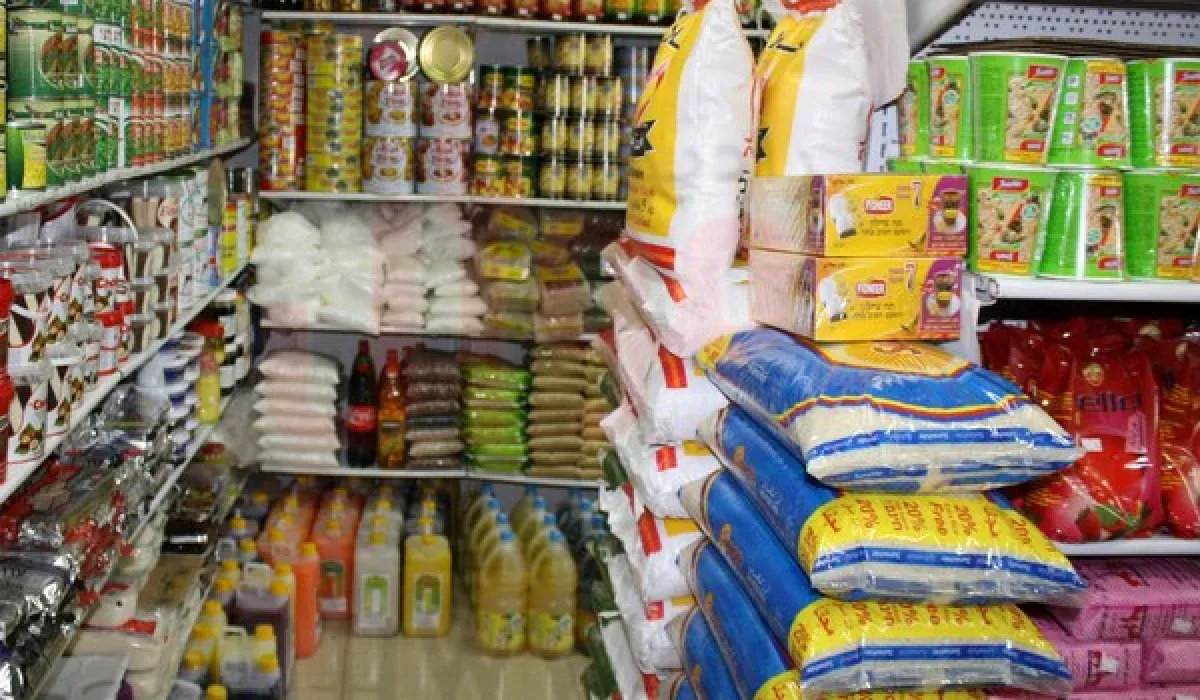
Libyans are suffering from harsh living conditions during the holy month of Ramadan, mainly due to soaring prices of goods (inflation). The price of a tray of eggs has reached 27 dinars, while the price of locally produced beef has risen to 90 dinars per kilogram. Cooking oil has reappeared on store shelves after less than a month of complete disappearance, due to a government measure that was unjustified in the first place, as well as traders’ greed. However, the price of imported cooking oil has reached 15 dinars per liter. Meanwhile, the US dollar continues to hover around 10 dinars per dollar, and unless this figure declines, the cost of imported goods will remain high.
I believe that the problem in Libya begins with the Central Bank and does not end there. The Central Bank manages monetary policy and is not subordinate to the government in any way. At best, the Libyan Central Bank lends to the government against guarantees of oil export revenues and sovereign income (taxes, customs, investments, etc.). This is the core of the issue that some fail to understand.
To trace the first threads of a solution to Libya’s cost-of-living crisis, I go back to 2020, when I pointed out in an article that the problem lies in the lack of clarity and integration of policies. This resulted in conflicting mechanisms and programs, overlapping responsibilities, and state institutions operating in isolated silos. The political division since mid-2014 has further exacerbated the crisis year after year. In addition, the policy committee of the unified (previously undivided) Council of Ministers has not convened since 2010. In the following lines, I will focus on monetary policy as it is the main cause of the current living crisis in Libya.
Monetary policy refers to the use of a set of tools and measures aimed at influencing the money supply in particular, controlling inflation, and improving overall economic performance. The Central Bank is responsible for formulating and implementing monetary policy, which aims to achieve high growth rates, stabilize the currency, and balance the balance of payments. To do so, it uses tools such as general interventions (including market operations and reserve requirements) and direct interventions (such as setting a general framework for credit). This raises the question: where does the Libyan Central Bank stand in all of this?
Monetary policy also includes managing domestic liquidity (money supply), ensuring monetary stability, measuring and managing inflation rates, controlling the exchange rate of the local currency against foreign currencies, and managing the Central Bank’s reserves. Monetary policy must align with fiscal policy, not the other way around. Fiscal policy represents government spending plans implemented through the Ministry of Finance. According to official statistics from the Central Bank of Libya, the money supply reached its highest level ever by the end of 2025, amounting to 190 billion Libyan dinars. This figure exceeds the capacity of the Libyan economy and is sufficient to absorb any amount of dollars injected into the market, leading to a continued rise in the dollar’s price on the parallel market over time. On the other hand, the Central Bank achieved only one notable success: encouraging Libyans to shift from cash to electronic payment methods.
Dr. Mohammed Abu Snena believes that the most dangerous threat to the Libyan economy—one that increases poverty and weakens the purchasing power of the dinar—is inflation, meaning the significant and continuous rise in the prices of goods and services. Its indicators have already begun to appear and will not stop as long as the same policies and procedures of the Central Bank remain in place. The situation has worsened with the licensing of exchange companies to sell US dollars, which effectively means adopting multiple exchange rates and implicitly recognizing the legitimacy of the black market. It is worth noting that since 2018, the Central Bank has relied on only one tool: the exchange rate. Abu Snena added that the continued printing of paper currency, combined with weak confidence in the banking sector under the pretext of solving liquidity issues—and alongside uncontrolled public spending—undermines any effective monetary policy aimed at stabilizing prices and fuels runaway inflation.
As for trade policy—formulated by the Ministry of Economy and implemented in cooperation with the Ministry of Finance and the Central Bank—it includes all tools and measures a state adopts in its external economic relations to achieve its goals. These include reducing imports, encouraging exports, attracting foreign investment, and providing subsidies. Among its mechanisms are trade protection systems, customs tariffs (price-based tools), quota systems (quantitative tools), subsidies for local products, and administrative measures such as import licensing.
Over the past five years, Libya’s trade policy has witnessed significant confusion. The most recent example was the imposed pricing of cooking oil, which was later reversed, leading to its return to store shelves at higher prices than before. It would have been more appropriate for the Ministry of Economy to enforce import substitution by promoting locally produced alternatives—particularly by localizing industries such as vegetable oil refining and tomato paste production. Hours before reversing the pricing decision, news spread on social media about an agreement between the Central Bank and traders to import 2.5 million boxes of oil worth $100 million. If true, this would mean the Central Bank is managing two economic policies simultaneously (monetary and trade). Even more concerning is reducing the daily suffering of Libyans to the issue of cooking oil alone.
Returning to the core issue, I believe Libya’s economic problem stems from fragmentation, resulting in multiple uncontrolled exchange channels, the absence of a unified budget law issued by the legislative authority (clarifying revenues and expenditures), random and excessive printing of local currency beyond the real size of the economy, and the absence of a clear economic model. Meanwhile, signs of runaway inflation are emerging, which could spiral out of control. Dr. Mohammed Al-Shahati believes Libya will not overcome its financial crisis this year except through borrowing—either from the Central Bank’s reserves or from the domestic market (commercial banks). Borrowing in dollars from the local market would prevent external borrowing and benefit local investors rather than foreign ones.
In conclusion, relying on reactive measures or treating only the symptoms while ignoring the root causes will produce temporary results but ultimately deepen the crisis. Therefore, solutions must be structural and comprehensive. This includes issuing a unified, approved budget law that does not exceed national income or the economy’s capacity, reducing excessive public spending, immediately stopping the printing of money and its injection into the market, restricting the sale of US dollars to commercial banks, and gradually narrowing the exchange rate gap.