| Economic articles
Al-Zantouti: “Our Economy Is Collapsing Due to the Insistence of Political, Legislative, and Executive Elites on Clinging to Their Seats and Power Struggles”
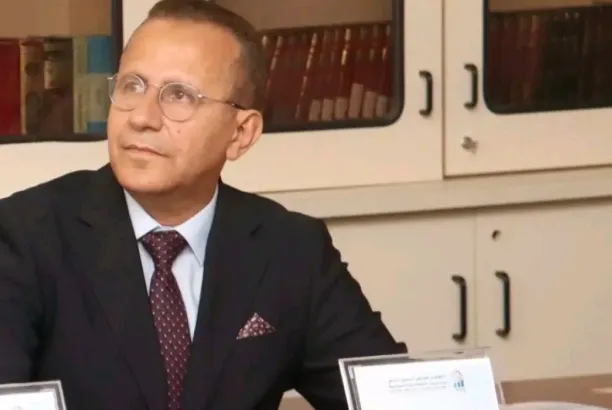
Financial analyst Khaled Al-Zantouti wrote:Many viewpoints argue that the economy drives politics, while others claim that politics drives the economy. Regardless of the intellectual frameworks used to debate this issue, what truly matters is diagnosing the Libyan situation through its political and economic realities.In the Libyan case, it is clear that the accumulation of our economic problems is the result of chronic political confusion driven by self-interest, ideology, and regionalism.
Self-interest that prioritizes personal or group benefit over the public good; regionalism based on the principle of “my share and your share,” using tribal and regional affiliations as a Trojan horse to access wealth and cling to power; and ideological motives, whereby some groups (those with ideological agendas and those who call themselves political parties) attempt to seize control of state institutions and resources.All of this is a lived reality we experience daily. The High Council of State (with some exceptions) has, for more than a decade, enjoyed privileges and salaries its members could never have imagined, not to mention credits, appointments, smuggling, and contracts, among other benefits (and I do not generalize). How can we expect them to abandon such gains? On the contrary, they must defend their continuation and regard them as untouchable pillars. How can we ask them to give up their throne? They must preserve their entity by all means. Hence, the continuation of the political crisis and the lack of agreement serve to preserve their privileges, even at the expense of national interest.The same applies to the House of Representatives. For nearly a decade and a quarter, its members have enjoyed direct and indirect material prosperity. How could they abandon such comfort? It is therefore in their interest for the political crisis to continue. They know that electing a new parliament would pull the rug out from under them, especially since new competitors would not give them another chance after learning about their privileges. Thus, they remain as long as the political crisis persists—and again, I do not generalize.Holders of sovereign positions also benefit from maintaining the current political situation. Many of them (without generalization) never dreamed of occupying such sovereign posts, for which they are neither academically nor professionally qualified. To remain in office, they resorted to buying loyalties and engaging in business dealings with members of legislative councils and executive bodies in exchange for job protection. These actors, too, have no interest in political stability.The same applies to most governments, ministers (and they are many), corrupt wealthy individuals, smugglers, and brokers. All of them are keen on preserving the political crisis, as it provides the ideal environment that guarantees their continuity and protection.
Therefore, in the current Libyan situation, it is clear that political crisis and political and security instability are what created the economic crisis. In other words, politics is the independent variable and the economy is the dependent one.We are indeed in a full-blown economic crisis, in every sense of the word:An unprecedented collapse in the value of our dinarDisguised unemployment among the highest rates in the worldBloated public-sector employment at globally extreme levelsLimited, if not zero or negative, productivity—among the worst worldwideDevelopment indicators ranking among the worst globallyInflation levels known only to GodDepletion of foreign reserves at unknown rates, especially given the unprecedented pressure currently exerted on the Central Bank to finance spending by governments and agencies amounting to tens of billions under the banner of reconstruction and “return of life” programsUnmatched consumer spending and administrative wasteDomestic public debt levels among the highest in the world relative to GDP, with no clarity on where the money went or where it came fromShocking levels of corruption and smugglingFailure to deposit the proceeds of all oil sales into Central Bank accounts as required by law, with no clarity on where those funds wentRepulsive economic regionalism based on “my share and your share”Creation of fictitious and phantom jobs in embassies that may be the most numerous and overstaffed in the world—perhaps even surpassing U.S. embassies, as if we are preparing to kidnap Trump and try him in LibyaWars among fellow citizens that destroy human capital physically and morallyAnd so onWith these indicators, we rightly sit atop the worst economic conditions a sparsely populated oil-producing country could experience in the modern world. Review global development indicators, transparency indices, corruption rankings, and similar metrics published by international institutions.Why all this? Why does the nation pay such a heavy price as a sacrifice for the interests of certain individuals or executive, legislative, ideological, or other entities that refuse to relinquish their positions and privileges—feeding their corrupt hunger for power at the expense of an entire nation? And I repeat: I do not generalize.It is a game. The persistence and deepening of security and political crises serve one purpose only: remaining entrenched in the corridors of privilege, smuggling, and theft. I would not rule out—within the framework of conspiracy theory—that all these parties tacitly agree to create, deepen, and then exploit divisions to stay in power. Frankly, anyone who clings to a seat for many years under such circumstances has an ulterior motive.It is, by God, a dirty game—one that history will always remember as a defining example of the petty tyrants of the modern era.I do not generalize. There may be sincere individuals among them with good intentions, striving to do what they can. May God grant success to the sincere among them.