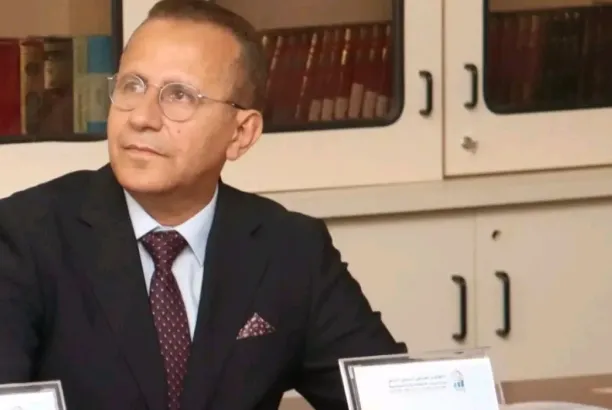
Financial expert Khaled Al-Zantouti wrote an article in which he stated:
In this brief piece, I will not address a financial or economic issue directly. Rather, I will speak in general—and succinctly—about poor management in our real Libyan environment and its negative effects on the national economy. I firmly believe that poor management is the reason behind all the financial and economic failures we are suffering from today!!!
What we learned in our early years of education is that management is both a science and an art: a science in that it consists of measurable scientific principles and theories and their application to the well-known traditional functions of management—setting objectives, organization, planning, coordination, leadership and direction, and control. And an art in terms of the manager’s ability to harness all human capabilities to achieve objectives and to create a suitable and conducive environment for teamwork.
In the Libyan case (and here I do not generalize), management has become the mobilization of all material and human resources to serve private, self-interested goals of an individual or a specific group at the expense of the public interest—indeed, the complete elimination of the public interest, trampling it underfoot in pursuit of private interest!!! The functions of management have been translated into informal organization to achieve undisclosed objectives driven solely by personal interests.
Unfortunately (and here I am speaking about state agencies and public institutions), they are fully employed to achieve a private interest for an influential individual or a specific group possessing one of the tools of hard power. The manager (any manager) is required only to achieve whatever his superior wants, by any means—starting with appointments and ending with business contracts. If he refuses, his fate is dismissal. Most of those who have remained in their positions for many years (again, without generalizing) were at the beck and call of their higher superiors (or those wielding soft and sometimes hard power); their orders were to be executed, otherwise they would find themselves “on the shelf”!!!
Many of our managers, unfortunately, apply the principle of mutual interests—“like calves,” to use a popular saying!??? Some of you may know how that saying ends!!!
He tells himself: since that’s how it is, I’ll take my share as well. Thus, management among us has descended to its worst state, becoming an administration of personal, reciprocal interests at the expense of society’s interest as a whole!!!
The art of management among us has become the manager’s ability to fulfill the wishes of his higher manager—or the one above him, or above him (whether within the formal or informal structure), all the way up to the “highest in elevation.” This is what keeps him seated in his chair!!! At the same time, he exploits the situation and employs the institution to serve his own personal interest as well!!!
Perhaps a small number refused this despicable equation (the equation of personal interests and informal organization) and voluntarily left their positions because they could not carry out their legal duties and responsibilities—especially their responsibility before God Almighty, as shepherds, and every shepherd is responsible for his flock. Perhaps they are few!!!!
In short, the mother of our problems is poor management. Poor management is responsible for all our economic and financial problems. Management among us has turned into the art of pleasing the superior manager, the boss, and the influential figures—out of fear and greed. The well-known scientific functions of management have been reduced to achieving personal-interest goals at the expense of the public interest as a whole.
In other words, informal organization has become the main driver of management, according to the interests of its members. All principles and functions of scientific management have disappeared, transforming into an interest-based management aimed at achieving private material goals at the expense of the public interest, based on a newly invented administrative model that relies on theft, plunder, favoritism, quota-sharing, and the selection of human resources that are not based on competence, professionalism, or integrity—but on the exact opposite.