


| News
Central Bank Governor Announces Unification of Public Spending: A Historic Step to Enhance Stability and Reduce the Dollar
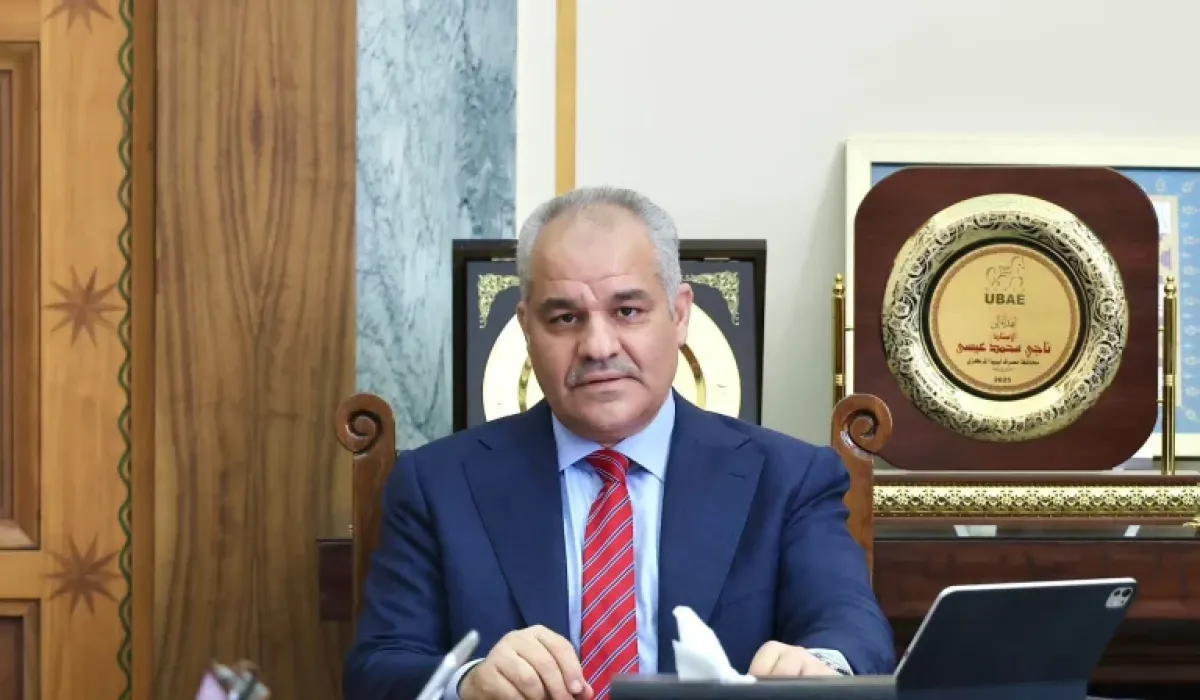
The Governor of the Central Bank of Libya, Naji Issa, stated—on the sidelines of the official announcement today, Saturday—that the bank has succeeded in unifying the public budget and controlling public spending after years of division, officially announcing the unification of public spending within a disciplined framework between the east and west.
He added that adopting a unified spending framework would ease pressure on the exchange rate and enhance the effectiveness of monetary policy, noting that this step came after significant efforts that culminated in what he described as a historic achievement. He confirmed that this step will be followed by other serious measures to strengthen financial stability and reinforce the value of the Libyan dinar.
He explained that the bank hopes all parties will adhere to this agreement to ensure the continuation of economic reform, noting that the next objective is to correct the course of trade policy to align with monetary and fiscal policies.
Issa confirmed that following the unification of public spending, the exchange rate in the parallel market is expected to decline to around 6.90 dinars per dollar, with the gap between cash and checks in various transactions nearing elimination.
He pointed out that the bank possesses a package of economic reforms and will not hesitate to implement them, explaining that public spending has been unified, the supply of dollars improved, and electronic payments developed. This is in addition to withdrawing counterfeit currency, contracting the printing of secure banknotes to eliminate liquidity shortages, and launching new initiatives within an approved plan.
He added that exchange activity has been launched in Libya for the first time, alongside efforts to regulate and control the foreign exchange market, as well as developing the foreign currency sales system and contracting with an international company to detect fake letters of credit, and reducing the misuse of personal-purpose cards. He stressed that there will be no need to travel to neighboring countries to obtain dollars.
He explained that the bank has worked quietly since assuming its duties, prioritizing citizens’ interests despite the complexities of previous challenges, noting progress in resolving bottlenecks and strengthening foreign currency reserves to exceed 100 billion dinars within one year, while continuing to review the value of the dinar without depleting reserves.
He also confirmed the success of the bank in automating salary payments through the “Ratibak Lahthi” system, which has helped recover embezzled funds, uncover corruption suspicions, and facilitate salary disbursement for citizens.
He stated that the public spending unification agreement that was signed defines expenditure and revenue levels and regulates spending across all categories within a development program worth 40 billion dinars, with the participation of all parties, under the supervision of the central bank and the approval of both the House of Representatives and the High Council of State.
He added that the agreement ensures fiscal sustainability, avoids public debt and off-budget spending, and guarantees fair distribution of resources and access to foreign currency outside the parallel market, thereby reducing pressure on the exchange rate.
He noted that the agreement enhances the bank’s ability to strengthen the dinar and reduce speculation, enabling more flexible exchange rate management. He emphasized that the success of unifying public spending represents a first step toward real economic stability and addressing imbalances accumulated over years.
He concluded by stating that the concerns that prevailed recently due to the absence of a unified budget have begun to fade, with optimism returning following this national milestone.


