


| News
Exclusive: Al-Rafadi: “13% Growth Masks Deep Fragility… Libya’s Economy on the Brink of Collapse”
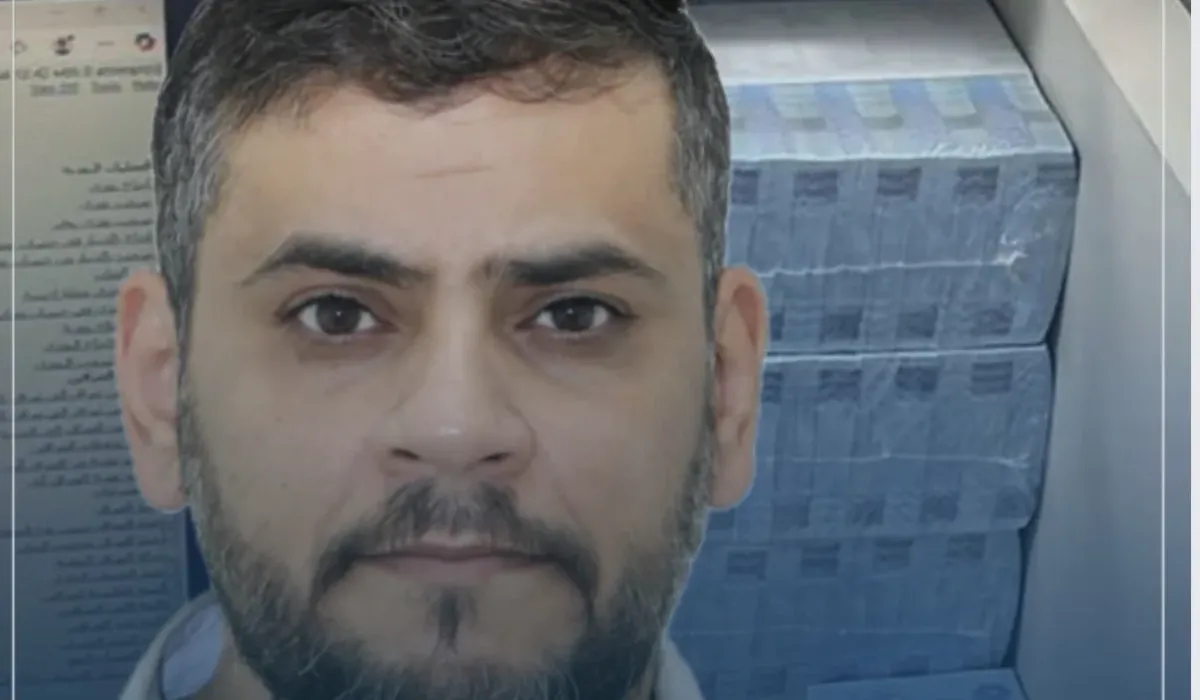
Economic expert Mohammed Al-Rafadi told our source exclusively that the Libyan economy, despite recording a growth rate estimated at around 13% according to reports issued by international institutions, remains fundamentally fragile and unsustainable in its economic substance.
He explained that this growth was driven by a relative rise in global oil prices and the stabilization of production at around 1.3 million barrels per day. However, reading positive macroeconomic indicators in isolation from internal realities presents a misleading picture that does not reflect the true state of economic performance on the ground.
Al-Rafadi added that local reports clearly show the existence of a chronic fiscal deficit that recurs almost permanently, a situation closely linked to political division and the absence of a unified economic vision in the country.He noted that this deficit is a natural outcome of accumulated failures spanning decades of mismanagement of economic resources, foremost among them oil, which is still managed with a primitive mindset and through a worn-out capital structure that is unfit for use in many respects. He pointed out that the last major oil infrastructure project dates back to 1985, in a country whose economy depends almost entirely on oil.
He further indicated that fiscal and monetary policies continue to operate in a state of isolation and disorder, without effective institutional coordination. Uncontrolled expansion in public spending is met with an almost complete paralysis in the management of monetary policy.
Al-Rafadi stressed that these policies have effectively turned into political tools used to manage conflict, rather than economic instruments aimed at achieving stability and growth.
He emphasized that the true assessment of any economy is not measured by nominal growth rates or the size of oil revenues, but by individuals’ living standards and quality of life.In the Libyan case, indicators confirm a continuous deterioration in purchasing power and real income, alongside a gradual collapse in basic services. This reflects the failure of the current growth model to translate into genuine development felt by citizens.He warned that the continuation of this situation without fundamental treatment will inevitably lead to a single outcome: full economic collapse.In conclusion, the economic expert explained that the core of Libya’s crisis is not purely economic, but primarily political. Politics shapes economic decision-making, while Libya’s decision-makers lack specialized economic expertise. This is compounded by the near absence of economists from policymaking centers, replaced instead by groups of accountants and engineers, producing fragmented technical decisions that lack a comprehensive economic vision and lead to structural distortions in the economy.
Al-Rafadi concluded by affirming that the theoretical solution lies in insulating the economy from political polarization and building an independent economic administration based on competence and expertise. However, despite its clarity, this solution remains difficult to achieve under current conditions unless preceded by a profound political transformation that reorders state priorities and restores the economy to its proper role as a tool for stability rather than a weapon in conflict.


