| News
Exclusive: An Economy Without Collapse and Without Security… Al-Barghouthi Reveals to Sada the Hidden Fragility of 2025 and the Risks and Outlook of the Dollar in 2026
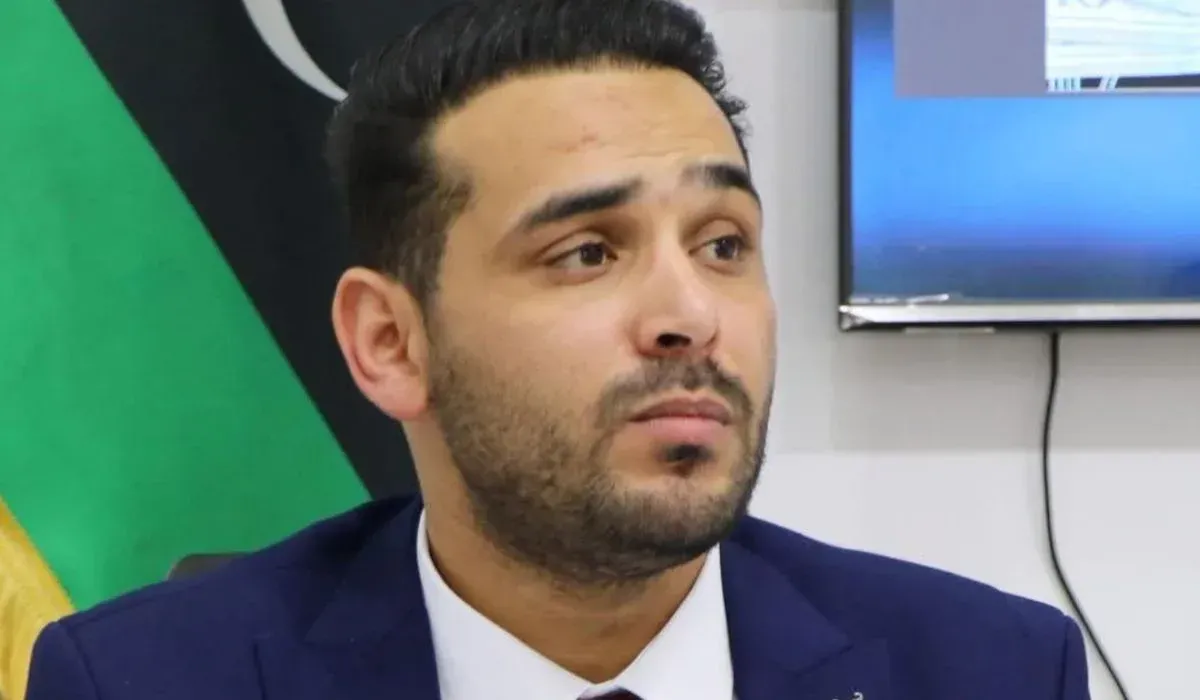
Economic expert Mohammed Al-Barghouthi said, in an exclusive statement to our source, that Libya’s economic situation during 2025 was characterized more by fragility than collapse, and by temporary stability rather than sustainability.
He explained that the economy maintained an apparent balance thanks to continued oil flows, but at its core it continued to suffer from deep structural imbalances that have not been seriously addressed.Al-Barghouthi explained that the Libyan economy still relies on oil rents as the main source of foreign currency, alongside high public spending, weak productive activity, and increasing demand for the dollar for consumption and import purposes. He noted that this contradiction makes any financial stability fragile and vulnerable to disruption with the first political or financial shock.He added that the real risk during 2025 was not a lack of resources, but poor management of them, stressing that oil revenues are available but are not fully reflected in sustained exchange rate stability or a tangible improvement in citizens’ purchasing power, due to the absence of transparency, delays in revenue collection, and the entanglement of politics with the economy.Regarding the outlook for the dollar and price levels in 2026, Al-Barghouthi affirmed that expectations are directly linked to the path the state will take in the coming months. He pointed out that continued high spending, weak institutional coordination, and the postponement of reforms could lead to renewed pressure on the exchange rate and a gradual return of inflationary waves, even if they are not sharp at the outset.
He noted that rising prices in Libya are not always linked to global factors, but are often the result of internal causes, foremost among them the exchange rate, market distortions, and the absence of preventive economic policies. He warned that any decline in the value of the dinar will be directly reflected in citizens’ living standards, even if official indicators appear reassuring.Al-Barghouthi indicated that if genuine reforms are initiated, a deterioration scenario can be avoided, and an acceptable level of stability can be maintained during 2026, and perhaps gradually improved. He stressed the need to begin three key steps without delay.He explained that the first step is to insulate the economic file from political conflict, considering that the success of any monetary or fiscal policy requires unified decision-making, even amid ongoing political disagreements.
The second step, he said, involves reforming the management of public revenues by enhancing transparency in the collection of oil revenues, regulating payment timelines, and linking public spending to actual revenues rather than expectations, given the role this plays in easing pressure on reserves and the exchange rate.He added that the third step relates to restructuring the economy, stressing that it is not possible to continue with an economic model that consumes more than it produces. He called for supporting productive sectors, encouraging non-oil exports, and redirecting subsidies from consumption toward production in order to build a sustainable economic balance.
Al-Barghouthi concluded by emphasizing that Libya’s economic crisis is not inevitable, but rather the result of postponed choices. He explained that 2026 could be an opportunity to correct the course or deepen the crisis, and that the decisive factor lies not in the size of resources, but in the quality of economic decision-making.