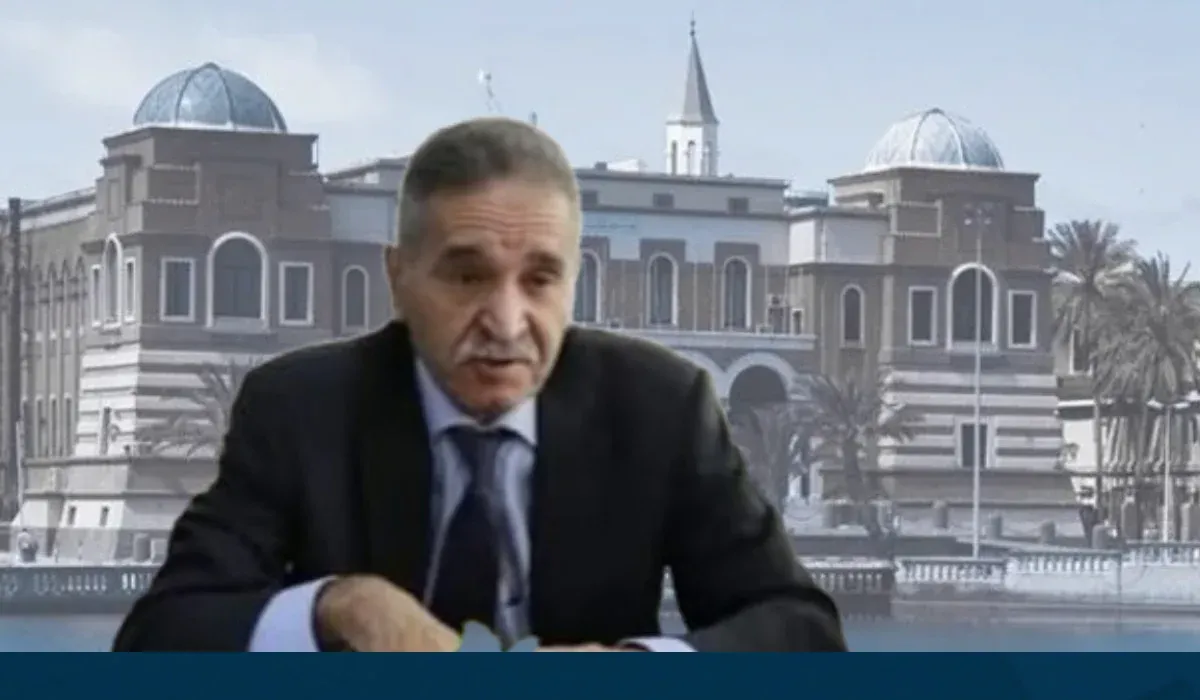
Economic expert Ezzedine Ashour said in a statement to our source that the Central Bank’s recent decision regarding the value of the dinar once again, along with the imposition of taxes on certain goods, are attempts to postpone the problem. He stressed that the Central Bank should not be blamed in this matter, as it cannot act alone without coordination with other policies, such as fiscal policy overseen by the government and trade policy. Without controlling and rationalizing public spending, demand for foreign currency will continue, and the Central Bank will be unable to meet it, especially under the current circumstances.
He added that foreign currency resources are affected by oil and have begun to decline, whether due to prices in global oil markets or because oil revenues are not fully transferred to the Central Bank. As a result, the Central Bank has no option but to proceed in this direction as long as there is no cooperation from other parties in controlling public spending and rationalizing the use of foreign currency. With what is described as runaway public spending, every dinar spent requires that 85% of it be in foreign currency, all of which puts pressure on the Libyan dinar. The Central Bank has no other solution but this one, even though it is convinced that it is not the optimal solution, but rather, as they say, the lesser of two evils.
He also said that many countries have gone through this experience, such as Egypt, where authorities resisted floating the Egyptian pound to the point that it moved from 18 pounds to around 50. The difference, however, is that Libya has reserves and a greater capacity to withstand pressure. Yet with public spending at this scale—exceeding 250 billion—of which about 80% must be in foreign currency, while annual revenues stand at around USD 22 billion and spending reaches USD 50 billion, it becomes very difficult to create balance in this manner.
He continued by saying that state institutions, including the Central Bank of Libya, must consult with one another and coordinate policies among themselves in order to reach a solution that preserves exchange rate stability, which in turn reflects on overall price levels, people’s incomes, and other aspects. Otherwise, this will not be the last instance of devaluing the dinar, as it may be followed by further devaluations at later times.