| News
Exclusive.. Husni Bey: “The Libyan Economy Between Runaway Spending and a Crisis of Confidence… Where Is It Heading in 2026?”
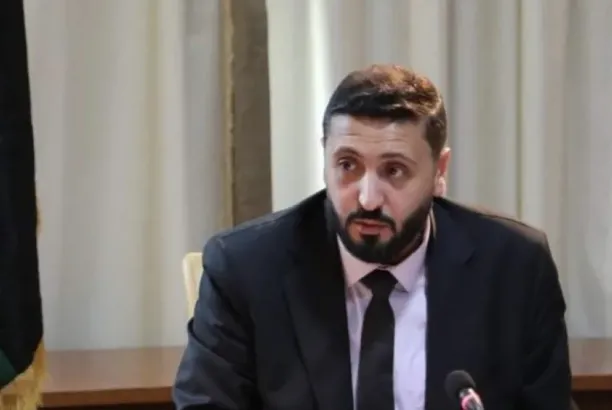
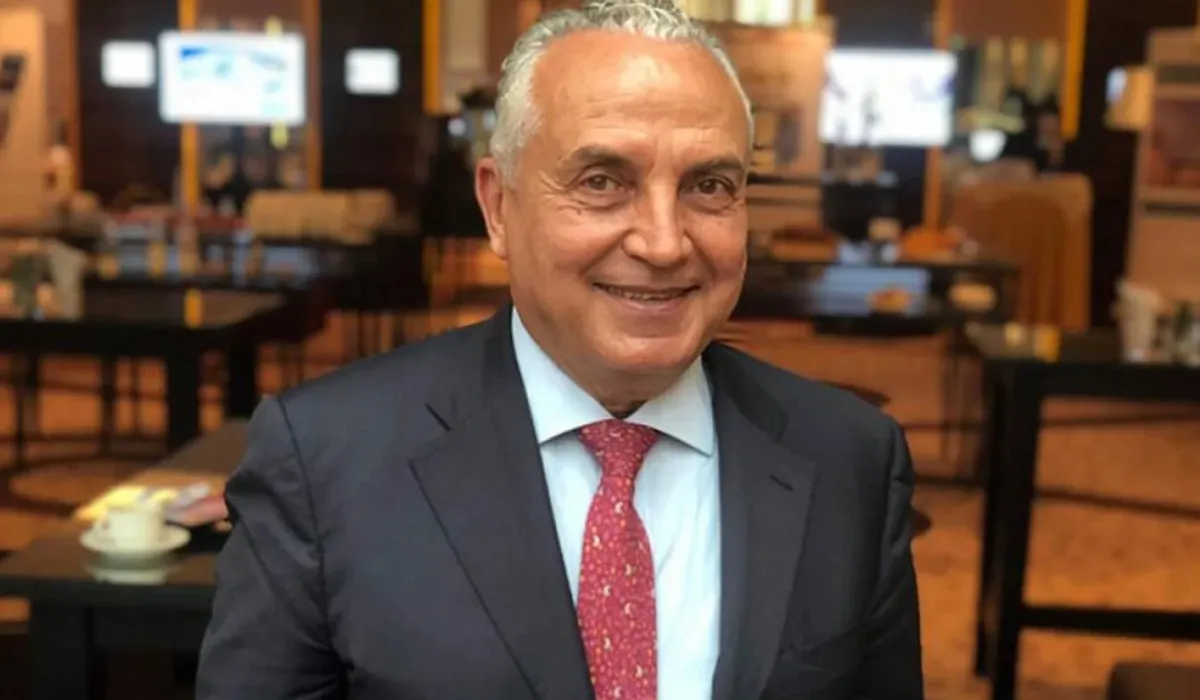
Libyan businessman Husni Bey said in an exclusive statement to our source: Despite massive oil resources, the Libyan economy continues to operate on the edge of unsustainability. Escalating spending figures, declining oil prices, the ongoing liquidity crisis, and an economic model designed not to function all point to a deeper malfunction than a mere shortage of cash or a general budget deficit.
He added: In this investigation, we present an economic diagnosis of the current situation, examine its causes and repercussions, and discuss potential scenarios for the next two years. An unsustainable economy despite revenues in 2025 reflects a deep structural crisis, as total public spending is expected to exceed 230 billion Libyan dinars, including declared and undeclared, visible and hidden expenditures, at a time when oil prices fell markedly from around $75 per barrel at the beginning of the year to below $60 in its final quarter.
He also said: This decline created a clear gap between revenues and expenditures estimated at more than 30 billion dinars, placing public finances—or the Central Bank of Libya—before a growing deficit that threatens economic stability.
He continued: Unchecked spending is the main cause of the imbalance. According to economic estimates, this fiscal distortion stems from unregulated, multi-channel public spending—especially on wages, fuel subsidies, and operating expenses—along with more than mere duplication in capital spending, without real revenues to cover such massive outlays.
He added: To cover this deficit, the Central Bank was compelled to finance a significant portion of spending through selling foreign currency and even using part of dollar-denominated reserves—an approach that weakens the state’s financial position over the medium and long term, particularly when financing consumption such as wages and fuel.
According to Husni Bey, the liquidity crisis is a crisis of confidence, not a shortage of money. Contrary to common belief, Libya does not suffer from a lack of money supply; it has exceeded 190 billion dinars—among the highest regionally relative to population. Yet commercial banks continue to face severe liquidity shortages. This contradiction confirms that the crisis is fundamentally one of trust between depositors and the banking system, driven by the absence of financial instruments and products that encourage saving and investment, and by contradictory monetary policies—such as banning interest in one area while applying it in another—deepening confusion and eroding confidence.
He went on to say: A fixed exchange rate is a failed policy repeated for decades. Libya adopts a fixed exchange rate policy, and despite its proven failure in the Libyan context, it persists. This policy created a wide price gap and strong incentives for dollar speculation, fueled the parallel market, encouraged hoarding cash outside the banking system, weakened money circulation within the economy, increased pressure on the Libyan dinar, exacerbated the liquidity crisis, and even contributed to the phenomenon of burning banknotes due to accumulation outside the banking system.
Husni Bey also said: The question is once again posed to decision-makers—hasn’t the time come to change course and adopt more flexible monetary policies, and an exchange rate that reflects economic reality instead of repeating past mistakes?
2026: Rising Pressures and Potential Inflation
If current policies continue without genuine reforms—especially regarding restructuring the relationship among oil institutions and companies and their financial ties with the government, revising exchange-rate policy toward flexibility, and controlling public spending—2026 is expected to witness increased pressure on the dollar, renewed price hikes, and higher inflation.He continued: This is due to the persistence of the budget deficit or dual spending and the erosion of confidence in economic policies, which weakens the state’s ability to absorb future shocks.What Is the Solution? Reform Begins with Changing the Model
True reform—according to the proposed economic vision—cannot be achieved by persisting with the same policies or mechanisms, including treating the oil sector as a post office rather than an independent economic institution. The solution is not to print more money, but to control and rationalize public spending—most importantly freezing hiring and raising wages to encourage private-sector work, unifying fiscal and monetary decision-making, and treating money as a free medium of exchange rather than a tool of control.
This also requires enhancing transparency and accountability, redefining the state’s role to its core functions—education, health, infrastructure, and governance—while opening space for the private sector and genuine competition.He added: In sum—this is a model crisis before it is a liquidity crisis. Libya’s crisis is not temporary but structural. The state controls about 85% of GDP through public companies and institutions that have proven their failure for over five decades. Liquidity shortages and budget deficits are merely symptoms of a deeper disease: a distorted, unmeasurable economic model and policies that hollowed out institutions and eroded citizens’ trust.He concluded: Real reform begins with changing the economic model, enforcing the law, restoring trust, unifying public spending, halting the creation of state-owned companies, liquidating those legally required, replacing subsidies with cash transfers, activating the ACI tracking system, and adopting flexible or free exchange-rate policies—treating Libya as a fully open economic zone.