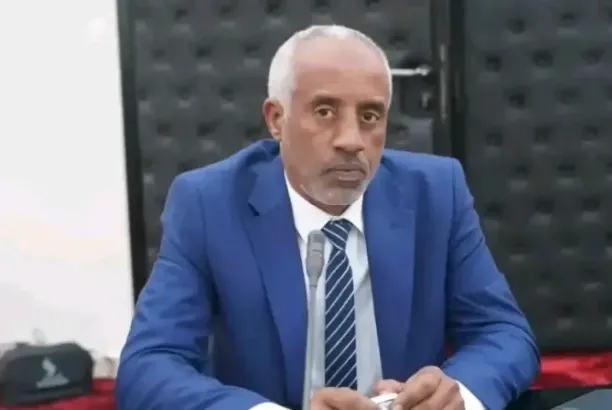
Written by Professor of Economics “Dr. Helmi Al-Gmati”.
The statement issued by the Central Bank of Libya welcoming the signing of the unified development agreement—which includes unifying public spending categories—appears, on the surface, to be a positive step. However, in reality, it represents a true test for the Libyan state. After more than 13 years of division, our problem is not the absence of solutions… our problem is implementation.
Let’s speak frankly: unifying spending (salaries, operations, development, subsidies) is an important step, but it means nothing without a clear rule that we must not spend more than we have. What has happened over the years is that spending exceeded revenues—and the difference? It is paid through the exchange rate and ultimately from the citizen’s pocket. The reality we must acknowledge is that any dinar spent without real backing is direct pressure on the currency; even if it is not immediately visible, it will appear sooner or later.
The agreement states that spending will be based on the state’s actual capacity—excellent in principle. But the key questions remain: Where is the spending ceiling? Where is transparency in the figures? Where is oversight of implementation? Without these, the agreement may turn from a solution into merely a façade.
The Central Bank can help, but it cannot fix an economy bleeding from the spending side. No level of reserves in the world can protect a currency if fiscal policy is not disciplined. As for references to the role of the United States in supporting the agreement, this indicates international interest—but in the end, the one who pays the price is the Libyan citizen.
Today, we stand at a decisive moment: either we truly begin to control spending and move toward a real economy, or we return to the same cycle, but in a more organized form. We must understand that a state that does not control its spending cannot protect its currency, and any spending beyond real capacity is simply a delayed crisis.