| News
Husni Bey: Managing Scarcity in Libya’s Economy: Turning the Dollar Exchange Gap into a Public Benefit
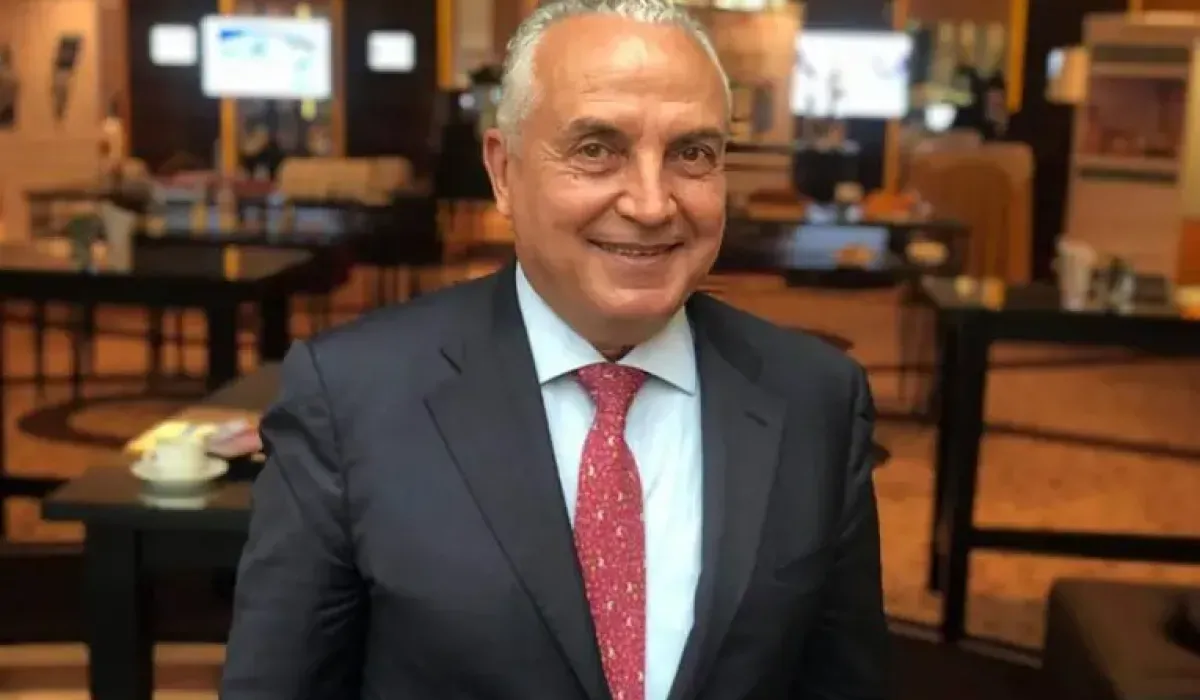
Businessman Husni Bey argues that economics is fundamentally about managing scarcity — organizing limited resources based on reality rather than wishes. For this reason, any serious economic discussion about Libya must begin with an honest reading of the country’s financial situation.
Today, Libya’s economic challenge is closely tied to the size and structure of public spending. Current estimates suggest that government expenditures reach approximately:
- 70 billion Libyan dinars for public sector salaries
- 14 billion dinars for operational expenses
- 98 billion dinars for fuel subsidies
- 18 billion dinars in direct support programs
- More than 70 billion dinars allocated to development projects
Altogether, these figures bring total public spending to roughly 270 billion dinars.
However, not all oil revenues are transferred to the state treasury, despite production revenues being estimated at about 36 billion dollars annually — including 31 billion dollars from crude oil and 5 billion dollars from natural gas. In addition, mechanisms such as barter agreements and delegated payment arrangements have complicated the financial picture, leaving public accounts incomplete and less transparent.
As a result, deficit spending has become almost unavoidable, particularly in the absence of a unified national budget and the continued reliance on fixed exchange rate policies, which decades of experience have shown to be ineffective.
Another major issue is the existence of multiple exchange rates — official, administrative, and cash market rates. In practice, the Libyan citizen ends up paying the price of this disparity through higher costs for goods and services, while government institutions themselves do not directly bear these losses.
How the exchange rate gap burdens citizens
During 2025, around 25 billion dollars were sold for imports. While the official exchange rate stands at roughly 6.30 dinars per dollar, many goods in the local market are priced using significantly higher exchange rates.
A rough estimate of the difference shows the scale of the issue:
- If goods are priced at 8 dinars per dollar, the resulting gap reaches about 42.5 billion dinars.
- At 9 dinars per dollar, the difference rises to approximately 67.5 billion dinars.
- At 10 dinars per dollar, it climbs to about 92.5 billion dinars.
- If the exchange rate reaches 11 dinars per dollar, the gap could reach 117.5 billion dinars.
In practical terms, Libyan citizens have effectively paid an indirect “hidden tax” ranging from 42.5 to 117.5 billion dinars, simply because of the difference between the official exchange rate and the market rate.
The issue is not only the existence of this gap, but who benefits from it. Instead of becoming public revenue for the state, these funds have largely turned into extra profits for those able to obtain dollars at the official rate, whether through commercial letters of credit or personal currency allocations.
A realistic approach to the problem
According to Husni Bey, the solution is not to ignore the problem but to manage it transparently and fairly through several practical steps:
First: Bringing the exchange rate closer to market reality.
Reducing the gap between official and market rates would limit speculation and prevent unjustified profits created by the large price difference.
Second: Turning the exchange rate gap into public revenue.
The state could impose an official fee on the sale of foreign currency, ensuring that the difference flows directly into the public treasury instead of private pockets.
Third: Redirecting revenues to benefit citizens.
A significant portion of these revenues could be used to provide direct financial support to citizens, while the remainder could help improve public services and infrastructure.
Husni Bey personally favors directly distributing these revenues to citizens, either through the exchange rate difference or by replacing fuel subsidies — currently estimated at 98 billion dinars — with direct cash support.
Such an approach would transform the exchange rate gap from a hidden financial burden on citizens into an economic resource that benefits the entire society.
Ultimately, managing economic reality does not mean surrendering to it. Instead, it means turning existing challenges into opportunities to design policies that are more transparent, fair, and efficient.