| News
Husni Bey: On the Priorities of Financial Reform in Libya: From Price Subsidies to Cash Transfers and Strengthening Fiscal Sustainability
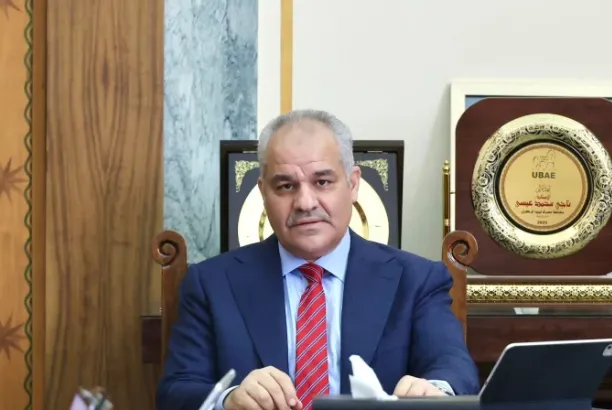
Libyan businessman Husni Bey wrote in a post: On the priorities of financial reform in Libya: from price subsidies to cash support and enhancing fiscal sustainability. In light of recent developments related to the unification of the 2026 state budget, and circulating estimates regarding the size of public spending, Husni Bey emphasizes that the current phase requires a fundamental shift in the philosophy of public financial management—one based on rationalizing expenditures, redirecting subsidies, and strengthening economic sustainability.
Estimates indicates that public spending may reach around 147 billion dinars, and could exceed 220 billion dinars when accounting for fuel and gas costs. This is a high level that reflects significant fiscal expansion compared to available revenues. Meanwhile, net usable revenues do not exceed approximately $21.4 billion, creating a financing gap that puts pressure on the exchange rate and fuels demand for foreign currency and speculation in the parallel market.
Despite the importance of unifying the budget as a step toward ending financial division and improving resource management efficiency, its success remains dependent on genuine commitment to fiscal discipline, effective oversight of spending, and the full transfer of oil and gas revenues.
Subsidies: From Financial Burden to Reform Tool
In this context, Husni Bey stresses that fuel and energy subsidies—accounting for about 33% of public spending—are no longer sustainable due to:
- Widespread financial waste
- Fuel smuggling across borders
- Unfair benefits to undeserving groups
- Distortions in local prices
Accordingly, shifting to direct cash transfers in all cases represents the most efficient and equitable option, as it:
- Reaches citizens directly
- Reduces corruption and leakage
- Enhances social equity
- Supports monetary stability by reducing artificial demand for the dollar
Local experience has already demonstrated the success of this approach through:
- Child allowance (100 dinars)
- Wife allowance (150 dinars)
These programs provide an average support of around 500 dinars per household monthly, at a total annual cost exceeding 7 billion dinars, with a direct and tangible impact on improving living standards.
He adds: “I do not recommend any price-based subsidies—not for fuel, energy, or food. If we want to support citizens, it should be through cash so that rights are not stolen in the name of the poor.”
Toward a More Effective Support System
Within the framework of developing the subsidy system, Husni Bey proposes a model based primarily on cash support. This approach aims to:
- Protect food security and citizens’ ability to cope with inflation
- Reduce smuggling driven by speculation on currency, fuel, and imported goods
He also notes that the central bank’s move to inject US dollars in cash may contribute to a temporary stabilization of the exchange market and reduce the gap between official and parallel rates by up to 21%. However, this does not represent a fundamental solution, given the continued imbalance between spending and revenues, and restrictive policies in selling foreign currency at a rate that does not reflect the free market price.
He emphasizes that achieving an equilibrium exchange rate of around 6.38 dinars per dollar requires:
- Controlling public spending
- Ending deficit financing
- Strengthening non-oil revenues
- Prudent management of foreign currency
Conclusion
The Libyan economy stands at a real crossroads, where continuing traditional subsidy policies and expanding spending without deep structural reforms is no longer viable.
Therefore, the urgent priorities are:
- Full transition to cash-based support
- Eliminating price subsidies on fuel, energy, and goods
- Rationalizing public expenditure
- Enhancing transparency and fiscal discipline
These reforms are not optional—they are necessary to ensure economic stability and achieve sustainable development that benefits all citizens.