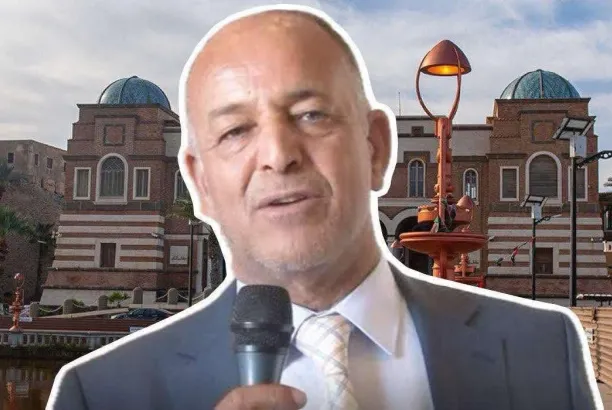
Businessman Husni Bey wrote an article:
Presenting the economic and financial problem is basically based on understanding the structure of public spending and the size of the price gaps that have emerged within the economy. Total public spending has reached approximately 270 billion Libyan dinars, distributed between salaries amounting to 70 billion dinars, fuel costs of about 98 billion dinars, in addition to 14 billion dinars in operational expenses, and 18 billion dinars allocated to various allowances such as child, women, and girls’ benefits, as well as health supply, environment, and water allowances, alongside development spending exceeding 70 billion dinars.
Excluding fuel costs, net spending amounts to around 172 billion dinars. To cover this spending, the economy needs to sell foreign currency worth no less than 160 billion dinars, which obliges the central bank to sell dollars at an exchange rate that allows covering public spending at this level.
The roots of the current crisis stem from several interrelated factors, foremost among them uncontrolled public spending, where funds are disbursed without a disciplined budget and at levels exceeding public revenues. This deficit is financed through monetary financing.
This has led to clear consequences, most notably persistent inflation and a decline in the purchasing power of the dinar. Monetary financing has also contributed to the creation of price gaps within the economy, most prominently a gap in the dollar exchange rate estimated at around 50%, in addition to a gap between cash and checks of about 20%.
One of the most dangerous aspects of the crisis is the so-called fuel gap. Fuel costs amount to around 98 billion dinars, while actual revenues from it do not exceed about 3 billion dinars, indicating a price gap exceeding 3000%. This gap has resulted in widespread smuggling and theft, as well as the continuation of a distorted subsidy system that has existed for more than fifty years.
Price gaps—whether in the dollar, the dinar between cash and checks, or fuel subsidies—have effectively turned into a hidden tax paid by every citizen through rising prices and declining real income. This tax does not enter the coffers of the central bank or the government, yet it is effectively collected from all Libyans, while benefiting only a few through speculation.
A significant portion of the dollar gap results from trading the right to obtain $2,000, a benefit granted without the need for capital, making it a tool for speculation and contributing at least 30% to the gap in the currency market. Some recent decisions, such as imposing a 12% fee on the $2,000 allocated for personal purposes—while exempting $500 designated as a family allowance—have increased the price gap instead of reducing it.
In addition, letters of credit have become a tool for speculation due to the existence of a guaranteed price gap of around 30%, particularly for personal purposes due to their ease of access and resale. As for the cash-check gap, its main cause lies in the structure of the monetary base. Until 2024, the proportion of cash was around 50%, with a legal reserve and additional precaution of the same ratio. However, after September 2025, the cash ratio dropped to about 25%, leading to a shortage of cash, the emergence of a price gap, and speculation even on the dinar itself.
In conclusion, price gaps in the dollar, dinar, and fuel have become hidden taxes paid by everyone, while benefiting only a few. These revenues are not collected for the state but are directly reflected in rising inflation and expanding poverty.
This raises fundamental questions: Can we agree that the roots of inflation and price gaps lie in uncontrolled public spending, monetary financing, distorted subsidies, and artificially created price gaps? More importantly, what should be done, and how can this hidden tax be formally collected through the central bank or the government and then redistributed fairly across the entire population—whether in cash, services, or by reducing living costs—to compensate citizens for the losses they currently bear without return?