


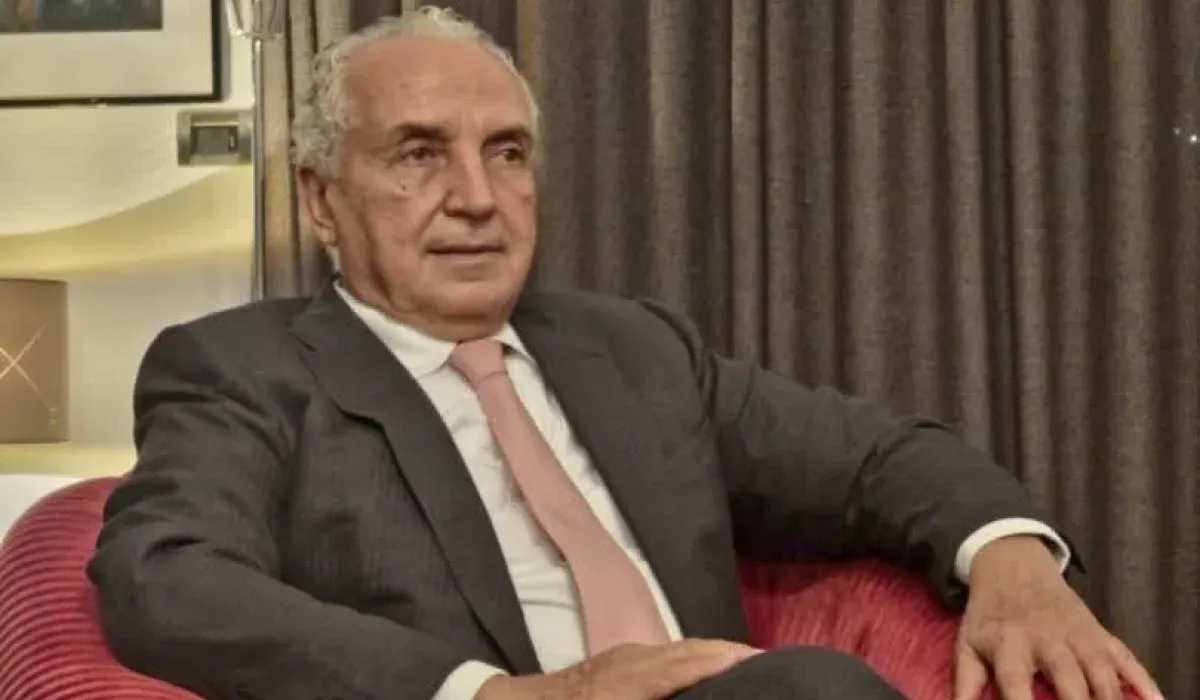
Libyan businessman Husni Bey wrote an article in which he argues that the root cause of inflation and the collapse of the Libyan dinar can be traced to a single shared factor: “three-dimensional deficit spending.” Citizens continue to ask the same questions: Why does the scenario of dinar deterioration keep repeating? And who ultimately pays the price?
For decades, Libyans have witnessed the same cycle repeat itself, as if the country is trapped in a vicious loop, failing to learn from past experiences. The erosion of purchasing power and the rise of inflation begin with money creation to finance budget deficits, followed by insistence on a fixed, administratively determined exchange rate. As the gap between the official and parallel market rates widens, speculation intensifies and demand for dollars increases. This is followed by the imposition of fees, until it becomes clear that changing the exchange rate is unavoidable. Then, instead of adopting policies of economic openness, restrictive measures are introduced.
This occurs in a country that was meant to be a free trade transit hub—one that should embrace full economic openness, not closure and suffocation without purpose or effective alternatives, other than the blanket employment of all citizens. The end result is deeper economic stagnation and shrinking horizons for growth and production.
In every oil-driven economic cycle, when oil revenues decline, deficit spending follows, triggering a financial crisis characterized by:
- A weakening dinar
- Rising prices
- A shortage of liquidity
- Salaries becoming insufficient before the middle of the month
Despite this, the same policies persist, even though Libya does not need restriction but openness. Economic policy should move counter to the cycle, not reinforce it.
The recurring question remains: Who is responsible? Why is it always the citizen who pays the price? Is there no alternative—does the government not bear any of the cost?
What actually happened?
Unfortunately, Libya has yet to define its true economic role, despite its strategic geographic location, the culture of its people, and the nature of its economy.
The Libyan citizen has not been allowed to work freely or to innovate in areas where they have a natural advantage. Instead, multiple constraints have been imposed, including hidden taxes such as speculation margins—without the introduction of clear, lawful taxes that transparently support public finances. With every new initiative, citizens face renewed pressure.
Instead of facilitation and encouragement, calls for economic diversification have become little more than luxury slogans. At the same time, hidden taxes have been imposed through daily realities, including:
- The cost of speculation
- Restrictions on freedom of choice and work
- Competition from companies financed by public funds
- The gap between dollar exchange rates and cheque burning
- Excessive inflation
- Chronic liquidity shortages
These are not natural economic phenomena or outcomes of fair competition. They are the result of deliberate decisions and policies that have constrained citizens’ economic activity and quietly drained money from their pockets—a hidden tax paid by everyone for the benefit of a few.
Who lost?
Estimates indicate that approximately 60% of Libyans are employed in the public sector, and that every Libyan household has lost around 61,000 dinars over these years due to speculation in its various forms. This amount exceeds 150% of the average annual income of a public-sector employee.
As a result of speculation and cheque burning:
- The majority of the population was impoverished
- A small minority became wealthier
- Citizens paid the cost of speculation without being told it was a tax, why it was imposed, or where the proceeds went
Is the citizen who benefits from distortions corrupt?
Citizens are often accused of:
- Exploiting the $2,000 personal-use card to earn 2,000–3,000 dinars
- Or selling their entitlement for a profit that does not exceed 2,000 dinars
In reality, these citizens lost more than they gained. Inflation caused by economic distortions consumed their income and reduced their purchasing power by at least an additional 1,000 dinars, even after receiving 2,000 dinars from selling their entitlement.
Let us be honest: Do we blame a father who sold his entitlement to pay for medical treatment? Do we blame a family that needed money to marry off a son and had no other support? And what about the factory owner or trader who obtained a letter of credit—were they the architects of the policies that created speculation? Or did they simply seize an opportunity that would have been taken by someone else?
The problem is not the people. The problem is the continued reliance on an economic system that has proven its failure by repeating the same mistakes since 1982.
The root cause: multiple dollar exchange rates
The fundamental issue lies in exchange-rate rigidity, which produces multiple dollar prices. When the dollar has:
- An administratively imposed “low” official rate
- And one or more market-based rates
The price gap does not disappear. Instead, it:
- Turns into quick profit for a small group
- Is paid for by the entire population through higher prices
The Central Bank sold billions of dollars at artificially low rates:
- Between 1982 and 2002
- Again between 2013 and 2018
- And once more in 2024
In 2025, according to the latest reports, the Central Bank sold:
- $8 billion for personal-use purposes
- $15 billion for letters of credit
What were the results?
- Prices did not fall
- Liquidity did not improve
- Citizens’ suffering increased
So where did the exchange-rate difference go? It became rent-seeking income, not a benefit to the public.
Who is really to blame?
Not the citizen. Not the trader. Not the parallel market.
Opportunistic behavior by citizens, traders, manufacturers, or the parallel market is a natural consequence, not the root cause.
The real causes are:
- Outdated and failed policies sustained by a fixed exchange rate
- Persistent insistence on administratively setting the currency price
- The creation of multiple exchange rates
- Increased demand for foreign currency
- A lack of justice and transparency
Who pays the price?
Always:
- Employees
- Retirees
- Heads of households
- Low-income earners
In short: the entire population, except for a very small minority.
What is the solution? (Simply)
The solution is neither complicated nor slogan-driven.
First: One single exchange rate
- No official rate and no market rate
- No fees and no exceptions
- One clear and unified rate for everyone
Dollars should be sold to exchange offices at a price set weekly, based on the average market rate of the previous week, discounted by 5%. Exchange offices would then sell at a service margin not exceeding 2%.
Second: Direct compensation to citizens From the additional revenue generated by adjusting the exchange rate (for example, 7.500 dinars per dollar):
- Every citizen should receive direct cash compensation equivalent to what they previously earned from selling their personal-use entitlement (2,000 dinars annually)
- Paid as a cash cost-of-living allowance over 12 months, deposited into their accounts
- Applied fairly and without exceptions
Third: A unified rate ends speculation Unifying the exchange rate would:
- Eliminate the parallel market
- Reduce demand for dollars
- Ensure availability of foreign currency through banks and exchange offices
- Provide a fair, transparent, and clearly known price
Fourth: Solving the liquidity crisis As a result:
- Cash would return to circulation
- Cheque burning would end
- Confidence in the banking system would be restored
Conclusion
What Libya has experienced in recent years was not economic reform, but the imposition of hidden taxes on citizens and the transfer of the cost of policy failures onto people who did not create them.
The solution does not lie in:
- Blaming the citizen
- Chasing the trader
- Or relying on empty slogans
It lies in:
- Justice
- Transparency
- A single exchange rate
- And a state that stands with its citizens, not against them
The dinar will not recover until Libyans feel that their state protects them—
not exhausts them by repeating the same mistakes.


