| Meeting Of The Week
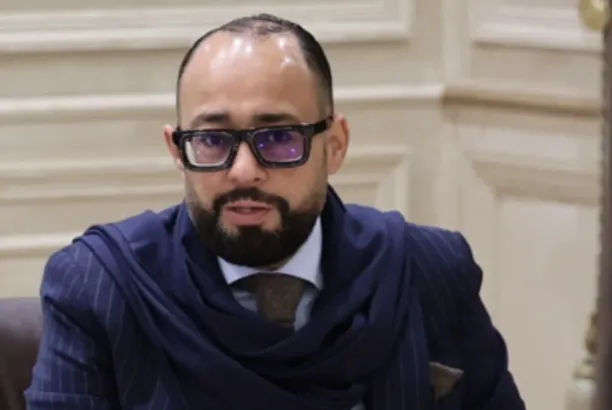
“Learn About the English Language Education Improvement Initiative”: An Interview with Advisor Mustafa Al-Manea, Head of the Executive Team for the Prime Minister’s Initiatives and Strategic Projects
Mr. Advisor, first of all, we welcome you to Sada Economic Platform. We are pleased to learn from you about the English Language Education Improvement Initiative, for which a partnership agreement was signed today in the capital, Tripoli.
It is my pleasure to be your guest, and I would like to extend my greetings through you to your platform’s audience.
The English Language Education Improvement Initiative, launched today by Engineer Abdulhamid Dbeibeh, Prime Minister of the Government of National Unity, in partnership with the British Council, is part of a package of strategic initiatives and projects adopted by the Government of National Unity under its “Return to Life” plan, specifically within its education pillar. Through this initiative, the government seeks to bring about a fundamental and sustainable transformation in the quality of educational outcomes, equip students with the language skills they need to engage with the world and compete in both the national and global labour markets, and enhance their knowledge and entrepreneurial capabilities.
The partnership agreement for the initiative was signed today in the presence of senior officials, including Prime Minister Dbeibeh; the UK Minister responsible for the Middle East and North Africa at the Foreign, Commonwealth and Development Office (FCDO), Hamish Falconer MP; the British Ambassador to Libya, Martin Andrew Longden; the Minister of Labour-designate of the Government of National Unity, Ali Al-Abed; and the British Council’s Executive Director in Libya, Faisal Al-Najah. Their attendance reflects the importance of the initiative and lends it greater credibility and commitment to its successful implementation.
What are the objectives of the initiative, and what are its main components?
The initiative is built around four main pillars:
- Improving the teaching and learning of English in schools and universities by reviewing and developing English-language curricula and learning resources.
- Enhancing the quality of pre-service teacher training and developing the skills of existing educational personnel.
- Strengthening the capabilities of educational inspectors in the field of English-language education.
- Training trainers from within the education sector through the cascade training model (Cascade Model).
Why did you choose to partner with the British Council?
Cooperation with the British Council—a world-leading institution in education and culture, with decades of experience in numerous countries—reflects the Government of National Unity’s commitment to adopting international best practices. This is reflected in the careful design of the initiative to ensure that it is suited to the Libyan context, taking into account both teachers’ capabilities and the infrastructure of educational institutions.
Under the agreement, the British Council will conduct comprehensive assessment studies of existing curricula, teacher training programmes, and educational inspection bodies, with the aim of achieving the programme’s intended objectives.
What guarantees the success of this initiative?
The Government of National Unity has adopted practical, measurable and trackable key performance indicators (KPIs) to ensure that the initiative achieves its targets. These include conducting gap analysis assessments; administering proficiency-level assessments for teachers, which serve as a key indicator for identifying gaps; establishing training centres, with three model centres planned for the first phase; and qualifying capable trainers to ensure the initiative’s sustainability. Other measures include developing an improved framework to determine the priorities of educational inspectors in English, providing the necessary technological infrastructure, such as equipment and teaching aids, and ensuring internet connectivity so that the initiative can reach all parts of Libya, as well as measuring improvements in students’ English-language proficiency.
One of the most important performance indicators the government will use to assess the initiative’s achievements is Libya’s improvement in the global English Proficiency Index. In 2024, Libya ranked 112th out of 116 countries assessed, placing it in the “Very Low Proficiency” category.
What will be the initiative’s economic impact?
There is no doubt that the economy and knowledge are inseparable. A development initiative of this kind, aimed at improving English-language learning, particularly in a country like Libya, will have an economic impact that goes far beyond simply improving language skills. Its economic benefits cannot be reduced to a single measurable outcome, as language is closely linked to individual empowerment and the advancement of the desired economic transformation.
English is the language of international business and communication with foreign companies and investors. Improving English-language education will increase investor confidence and reduce the costs of entering the Libyan market. Moreover, having a workforce capable of communicating in investors’ languages creates a more attractive investment environment.
English is also closely connected to the knowledge economy, entrepreneurship, artificial intelligence and digital transformation. All of these are drivers of an open national economy capable of competing in global markets. The labour market is also closely linked to the outcomes of the education system.
Have similar experiences from other countries been studied or used as models?
Certainly. The initiative’s team has made a point of examining successful experiences that addressed the root causes of challenges in improving English-language learning. These include the United Arab Emirates and Qatar, which adopted modern curricula designed to incorporate international education standards into public schools; Rwanda’s success in improving the skills of 30,000 teachers over five years through specialised training; Jordan’s experience in adopting EF EPI standards to qualify educational inspectors and ensure performance quality; and the cascade training model, which has enabled English-language programmes to reach a wide audience in India.
In addition, the initiative benefits from the British Council’s experience as its partner in delivering language education programmes in more than 100 countries.
Thank you for accepting our invitation.
Thank you for your coverage of such an important initiative. It forms part of the Government of National Unity’s commitment to rebuilding Libya’s education system on modern foundations. It lays the groundwork for genuine national transformation in English-language education, through an international partnership that demonstrates the seriousness of the government’s commitment to the Return to Life programme. The initiative seeks to secure a more developed and open future for our students, both girls and boys, while supporting the leading role of our esteemed female and male teachers.
Advisor Mustafa Al-Manea is a Libyan lawyer and legal and economic expert with more than 23 years of experience. He has worked with a number of investment institutions, sovereign wealth funds and banks in several countries around the world, as well as in Libya. He also serves as an expert for international research centres and has worked as a lecturer and trainer for the American Bar Association and the European Lawyers’ Association. He served for several years as an advisor to the Central Bank of Libya and as a board member of the Libyan Investment Authority and the Libyan Foreign Bank. He has also represented Libya at meetings of the World Bank and the International Monetary Fund. He currently heads the Executive Team for the Prime Minister’s Initiatives and Strategic Projects and has published a number of research papers and articles in Arab, American and European newspapers.