


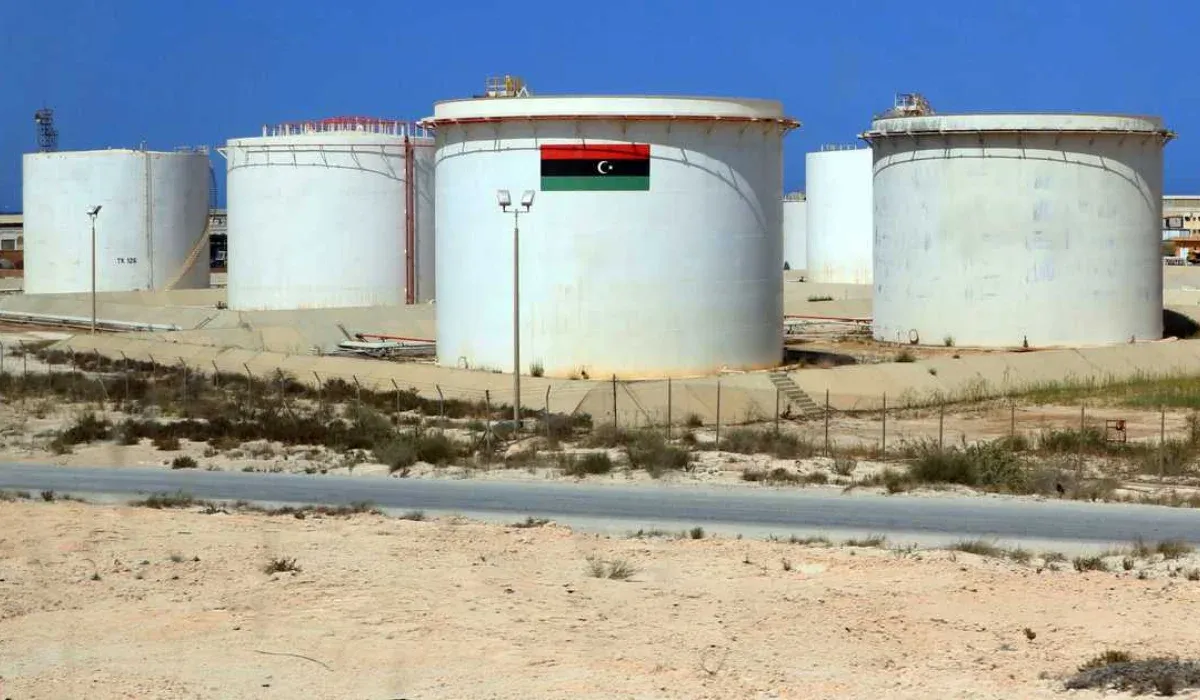
OilPrice reported on Wednesday that Western oil companies are working to strengthen their presence in Libya’s oil sector.
The website noted that the renewed interest of international oil companies and the resumption of deepwater drilling operations could be a potential signal of growing political confidence.
According to the site, Libya has significant production potential with vast reserves and strong participation from international oil companies in new licensing rounds. This is one of the objectives of the National Oil Corporation (NOC), which aims to raise production to two million barrels per day by 2028.
The site added that political instability remains the main risk, as unresolved disputes over the distribution of oil revenues continue to cause shutdowns.
OilPrice continued by saying that Libya’s oil and gas sector offers major opportunities for cooperation with the West. Before the overthrow of Gaddafi and the civil war that followed, Libya was producing about 1.65 million barrels per day, most of it high-quality light crude that is in particularly high demand in the Mediterranean region and Northwestern Europe. Libya also held Africa’s largest proven crude oil reserves, estimated at 48 billion barrels. Moreover, oil production saw steady growth in the years preceding Gaddafi’s forced departure, rising from around 1.4 million barrels per day in 2000, although this was still well below the peak production of more than three million barrels per day achieved in the late 1960s, when the Libyan National Oil Corporation was making progress on plans to implement enhanced oil recovery techniques to boost crude output in existing fields. Expectations at the time suggested that production capacity could increase by around 775,000 barrels per day through these techniques. However, at the height of the civil war, crude oil production fell to about 20,000 barrels per day. Although it has now recovered to nearly 1.3 million barrels per day—the highest level since mid-2013—multiple politically motivated shutdowns in recent years have pushed production down to just over 500,000 barrels per day for extended periods.
The site said that these efforts are part of the NOC’s broader goal of increasing Libya’s oil production to two million barrels per day by 2028, supported by the recently reactivated “Strategic Programs Office.” The office had previously focused on raising production to 1.6 million barrels per day before escalating political tensions last year delayed these initiatives. The office’s success depends partly on the outcome of the current licensing round, as it requires between USD 3 and 4 billion to reach the initial production target of 1.6 million barrels per day for 2026/2027. The 22 offshore and onshore areas to be licensed include key locations in the Sirte, Murzuq, and Ghadames basins, as well as the offshore Mediterranean area.
The site pointed out that about 80% of Libya’s currently discovered recoverable reserves are located in the Sirte Basin, which also represents the majority of the country’s oil production capacity, according to the U.S. Energy Information Administration. Smaller projects launched before the recent influx of major companies have achieved success in these drilling areas in recent months.
The Waha Oil Company, affiliated with the NOC, announced a 20% increase in its crude oil production since 2024, thanks to intensive maintenance programs, the restart of shut-in wells, and the drilling of new wells.
Recent statements by the NOC indicated that similar initiatives were a catalyst for the recent increase in production across the country, alongside new discoveries made by its subsidiary AGOCO, Algeria’s Sonatrach in the Ghadames Basin, and Austria’s OMV in the Sirte Basin, according to the site.


