| Economic articles
Al-Shalwi: Libya and the Limits of Wealth: The Battle for National Sovereignty Over Oil and Gas on Land and at Sea
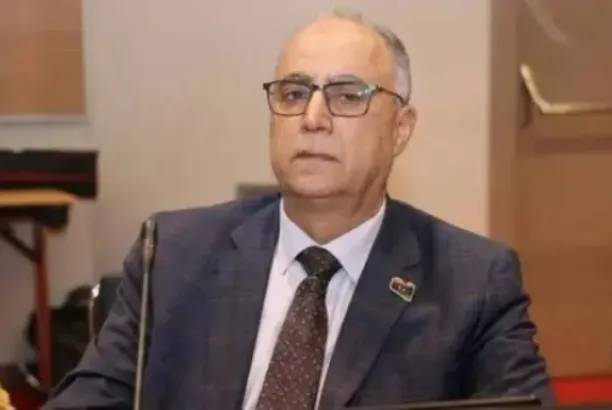
Oil and economic expert Abdulmonem Al-Shalwi has written an article examining Libya’s sovereign rights over its natural resources and the strategic importance of defining and protecting its economic borders.
In today’s world, borders are no longer merely geographical lines separating nations. They have become boundaries of economic sovereignty, national security, and the future prosperity of generations. Libya, with its strategic location, vast land and maritime areas, and significant oil and gas reserves, faces a historic challenge: safeguarding its sovereign rights and accurately defining its economic boundaries in a way that protects national wealth.
The issue of Libya’s land and maritime borders is no longer solely a legal or diplomatic matter. It has become a question of national existence, directly linked to the Libyan people’s right to their natural resources and the state’s ability to defend those resources amid growing regional and international competition for energy in the Mediterranean, North Africa, and the Sahel region.
With the rapid discovery of natural gas resources in the Eastern Mediterranean and renewed global interest in conventional energy following successive international crises, Libya finds itself facing a historic opportunity that may not come again. At the same time, it faces major challenges that require national unity and a long-term strategic vision.
Libya’s Geopolitical and Energy Significance
Libya possesses Africa’s longest Mediterranean coastline, stretching approximately 1,900 kilometers. It shares borders with six countries: Egypt to the east; Algeria and Tunisia to the west; and Sudan, Chad, and Niger to the south. It is also located at the center of some of the world’s most important and politically sensitive energy basins.
Libya’s proven oil reserves are estimated at more than 48 billion barrels—the largest in Africa—while proven natural gas reserves exceed 53 trillion cubic feet. Geological indicators also suggest the possibility of larger future discoveries, particularly within offshore economic zones and underexplored border basins.
Although current production is concentrated mainly in the Sirte, Murzuq, and Ghadames basins, modern seismic studies and geophysical indicators point to highly promising prospects in:
- Libya’s northern continental shelf.
- Offshore areas east of Libya toward the Egyptian border.
- Deep waters northwest of Libya.
- The shared Ghadames Basin near Algeria and Tunisia.
- Southern basins geologically connected to Chad and Niger.
Eastern Mediterranean: The New Global Gas Race
Over the past two decades, major gas discoveries have transformed the global energy landscape, including:
- The Egyptian Zohr field, with reserves exceeding 30 trillion cubic feet.
- The Israeli Leviathan field.
- Offshore Cypriot gas fields.
- Growing discoveries off the Turkish and Greek coasts.
These discoveries suggest that the geological basin extending north and east of Libya may contain similarly promising structures, particularly because sedimentary formations do not recognize political borders.
Many experts believe Libya’s maritime economic zone remains among the least explored areas of the Mediterranean despite geological indicators that could make it one of the region’s most important future gas-producing areas.
The Importance of Maritime and Land Border Delimitation
Border delimitation is not merely an administrative process; it is a practical declaration of national sovereignty and protection of national wealth.
Any delay, weakness, or lack of strategic vision could result in:
- Loss of Libya’s rights in shared fields.
- Depletion of transboundary resources.
- The imposition of faits accomplis by foreign states or companies.
- Loss of billions of dollars in future revenues.
- Long-term national security risks.
For this reason, countries typically rely on multidisciplinary teams including:
- International law experts.
- Geologists and geophysicists.
- Maritime boundary specialists.
- Sovereign and security institutions.
- Economic intelligence agencies.
- Strategic research centers.
What Does International Law Say?
Maritime boundaries are governed by the United Nations Convention on the Law of the Sea (1982), which grants coastal states sovereign rights within:
Territorial Sea
- Extending up to 12 nautical miles.
Exclusive Economic Zone (EEZ)
- Extending up to 200 nautical miles and granting rights to exploit natural resources.
Continental Shelf
- Covering resources located on and beneath the seabed, including oil and gas.
When maritime claims overlap, disputes may be resolved through:
- Bilateral negotiations.
- International arbitration.
- The International Court of Justice.
- The International Tribunal for the Law of the Sea.
Land boundaries are typically determined using historical maps, treaties, and geographical criteria.
Libya’s Land Borders and Energy Potential
With Algeria and Tunisia
The Ghadames Basin is one of North Africa’s most important shared hydrocarbon basins and has demonstrated substantial oil and gas potential for decades. Significant geological extensions may still remain undeveloped near the western border.
Algeria’s status as one of Africa’s largest gas producers also strengthens the possibility of cross-border gas structures requiring careful management and cooperation to preserve Libya’s rights.
With Egypt
The eastern maritime region has gained strategic importance following Egypt’s major gas discoveries. Continued offshore studies and stronger technical and legal engagement in the Eastern Mediterranean are therefore considered essential.
With Chad and Niger
Although exploration in southern Libya remains less advanced than in the north, sedimentary basins extending toward Chad and Niger show promising signs for hydrocarbons and strategic minerals, especially as global demand for energy and critical minerals continues to grow.
Oil and Gas: More Than an Economic Resource
According to Al-Shalwi, Libya’s oil and gas resources represent:
- The backbone of the national economy.
- A source of social and political stability.
- A pillar of state strength.
- A guarantee for future generations.
Protecting these resources requires:
- Securing national borders.
- Building strong institutions.
- Unifying sovereign decision-making.
- Enhancing maritime and air capabilities.
- Developing monitoring and marine survey systems.
- Updating geological databases.
- Encouraging investment under conditions that preserve sovereignty.
What Should Libya Do Today?
The article recommends:
- Launching a comprehensive national border delimitation project involving all technical and sovereign institutions.
- Establishing a Higher Council for Energy Sovereignty composed of:
- The National Oil Corporation.
- The Ministry of Foreign Affairs.
- The Ministry of Defense.
- Security agencies.
- International law and energy experts.
- Updating offshore and seismic studies using advanced technologies.
- Strengthening Libya’s maritime presence to protect its economic waters.
- Unifying the national political discourse.
- Raising public awareness so that sovereignty and resource protection become a shared national cause.
The Role of the Libyan People
Al-Shalwi argues that protecting Libya’s wealth is not solely the responsibility of the government. It is a national duty shared by:
- Politicians.
- Military personnel.
- Economists.
- Academics.
- Media professionals.
- Ordinary citizens.
He concludes that countries preserve their wealth not only through military power but also through national awareness, internal cohesion, and sound governance.
Conclusion
The article concludes that Libya stands at a historic crossroads. Its vast resources can either become a source of economic strength and national sovereignty for future generations or be lost amid division, neglect, and weak strategic planning.
Protecting Libya’s economic, maritime, and land borders, Al-Shalwi argues, is not a political luxury but a battle for sovereignty, national dignity, and long-term prosperity. With its strategic location, natural resources, and human potential, Libya has the capacity to become one of the world’s leading energy nations—provided that national unity and a clear vision prevail.