| Economic articles
Al-Shalawi: “The billion that protects billions… Funding the National Oil Corporation is not consumption spending but protection of Libya’s revenues”
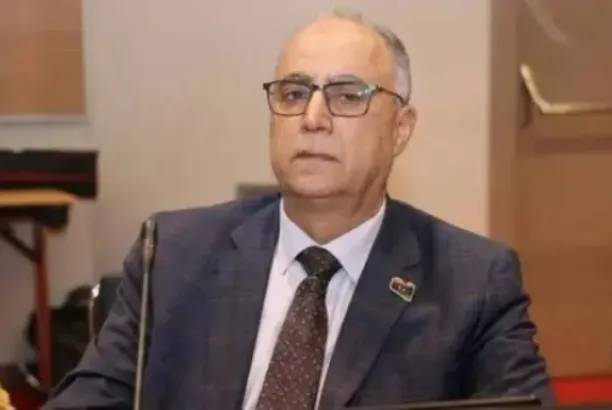
Written by oil and economic expert Abdulmonsef Al-Shalawi, the article states:
The disclosure issued by the National Oil Corporation regarding how the funds released from its approved 2026 budget were used represents an important step worthy of attention and appreciation. It is not important merely because it presents figures, but because it links each amount to its designated purpose, identifies the related entities, and clarifies to the public part of the financial and technical obligations necessary to maintain oil production and ensure operational continuity.
From nearly four decades of experience in the oil sector, and continuous monitoring of its technical and economic affairs, I believe this disclosure should not be read as a mere accounting statement. Rather, it reflects a fundamental truth: the oil sector cannot protect its production with paper allocations alone; it requires actual, regular, and timely financing.
According to the Corporation, the total approved budget for 2026 was about 13.6 billion dinars, while only 1 billion dinars was actually disbursed—equivalent to around 157 million USD, or just 7.35% of the total approved amount.
Viewed differently, around 12.6 billion dinars (92.65%) of the approved budget has not yet been disbursed.
Here lies the core issue: financial allocations do not become producing wells, operational equipment, secure pipelines, or functioning facilities unless they are actually converted into cash flows that cover obligations, projects, maintenance, and operational activities.
Where did the disbursed billion go?
The full USD-equivalent amount of 157 million dollars was allocated to specific obligations directly tied to core oil operations—not peripheral or unrelated spending.
- $119 million was allocated to the divestment and reacquisition of ownership of the Ras Lanuf refinery, representing about 75.8% of the total disbursed amount.
This is not ordinary operational spending; it is a strategic move to regain ownership of a major industrial asset. The Ras Lanuf refinery is not just another facility—it is a key component of Libya’s refining and petroleum infrastructure, and its recovery strengthens national control over a long-term strategic asset.
- $16.5 million was used to settle part of the obligations of the South Refinery in favor of Honeywell International, a global company known for refinery technologies, automation systems, and industrial engineering solutions.
- $7 million was paid to settle obligations linked to SLB, formerly known as Schlumberger.
- $4 million was allocated to obligations related to Baker Hughes.
- $7 million was used to settle debts owed to other American oil service companies, including firms active in drilling, technical services, and equipment supply.
- $3.5 million was allocated to settle part of the debts of Oil Aviation Company toward certain operating companies.
Together, these allocations account for the entire disbursed amount of $157 million, reflecting a relatively clear disclosure of spending distribution.
Major companies directly tied to production
Non-specialists may view these companies as simple creditors, but technically they are essential to modern oil operations.
Companies such as SLB, Baker Hughes, Honeywell, and others provide services related to drilling, well maintenance, reservoir evaluation, artificial lift systems, control systems, equipment supply, and production optimization.
Delayed payments to such companies do not only affect accounting records; they can lead to delays in project execution, reduced availability of equipment and spare parts, higher future contract costs, and stricter payment conditions.
Therefore, settling these obligations is not simply debt repayment—it is a safeguard for operational continuity and contractual relationships.
Oil Aviation Company, meanwhile, plays a critical logistical role due to the vast and remote geography of Libya’s oil fields, enabling rapid transport of technical crews and equipment.
What remains after the Ras Lanuf deal?
The acquisition of Ras Lanuf refinery consumed $119 million out of $157 million.
This leaves only about $38 million to cover all remaining technical and service obligations.
Thus, describing the disbursed billion dinars as broad operational funding does not fully reflect reality; most of it was directed toward a single strategic transaction, while the remainder was distributed across accumulated obligations.
This becomes even more significant given that no operational budget for 2025 was disbursed to the Corporation.
Oil does not maintain production by itself
There is a common misconception that once oil fields begin production, they can continue indefinitely without intervention. This is incorrect.
Wells naturally decline in output, equipment requires maintenance, pipelines and storage tanks need inspection and corrosion protection, and facilities require spare parts, chemicals, and control systems.
Delaying such work does not save money—it often leads to far greater production losses and higher future costs.
A relatively small repair cost, if delayed, can result in millions of dollars in lost production.
Therefore, oil sector funding should not be treated as conventional public spending, but as a direct investment in protecting the country’s primary source of revenue.
The billion that protects billions
When the state funds maintenance, services, and obligations, it is not simply spending—it is protecting its ability to generate revenue.
The disbursed billion dinars is therefore not just an expense; it is a safeguard for much larger financial flows.
The difference between timely and delayed funding can determine whether a field operates at full capacity or suffers production decline.
No oil industry in the world can sustain production without stable budgets, maintenance programs, service contracts, spare parts, and consistent cash flows.
The NOC produces oil… but does not control revenue spending
A key distinction must be made between the role of the National Oil Corporation and that of financial authorities.
The NOC is responsible for exploration, production, operations, export, and maintenance of oil infrastructure.
However, the allocation of oil revenues, budgeting priorities, and public spending decisions lie with government financial and executive institutions.
Therefore, it is incorrect to hold the NOC responsible for issues related to public services, development failure, or revenue distribution.
The deeper problem lies in governance of oil revenues, public spending efficiency, and budget structure.
Support is not an open check
Supporting the NOC does not mean unconditional funding. It must be based on:
regular financing, transparency, professional oversight, and performance-based spending.
At the same time, transparency should not become a justification for delaying funding, as reports cannot operate oil fields or purchase spare parts.
Conclusion
The recent disclosure shows that funds were not misused but allocated to strategic asset recovery, refinery support, and essential operational obligations.
The Corporation received only 7.35% of its approved budget, while 92.65% remains undisbursed, alongside no operational budget for 2025.
If Libya wants to maintain and increase oil production, it must treat funding the oil sector as an investment in its core national asset—not optional spending.
Oil is not produced by statements, fields are not maintained by unspent allocations, and service companies cannot operate with unpaid obligations.
The “billion” may seem large, but in the oil industry it is modest compared to the billions it protects.
Therefore, stable funding, transparency, and oversight are not administrative choices—they are a national necessity if Libya is to fully benefit from its oil wealth.