| Economic articles
Al-Farisi: “The Paradox of Wealth and Fragility; Why Are the Currencies of Non-Oil Countries Stable While the Currency of an Oil-Rich Nation Fluctuates?”
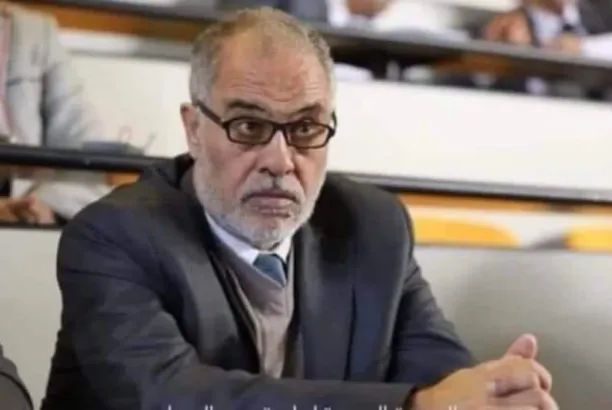
Written by Ayoub Al-Farisi, Member of the Monetary Policy Committee at the Central Bank of Libya.
It is almost taken for granted by non-specialists that countries sitting on vast reserves of oil and gas should naturally have the strongest and most stable currencies, while countries with scarce natural resources are destined for chronic monetary instability. Yet the economic reality in our region contradicts this assumption, raising a fundamental question among economists and the general public alike:
How do countries such as Jordan and Tunisia maintain relatively stable national currencies, while Libya—despite receiving billions of dollars in oil revenues—has repeatedly devalued its dinar in recent years?
To understand this paradox, we must examine the structure of the economy, the mechanisms for building foreign exchange reserves, and, most importantly, the institutional and political environments of Jordan, Tunisia, and Libya.
1. Jordan and Tunisia: Building Stability Despite Limited Resources
Jordan and Tunisia possess little to no significant oil reserves, but they do have something that some rentier economies lack: strong monetary institutions and diversified sources of foreign currency inflows.
Jordan: A Strict Peg and External Buffers
Since 1995, Jordan has maintained a strict fixed exchange rate, pegging the Jordanian dinar (JOD) to the U.S. dollar at 0.709 dinars per dollar. This stability is not the result of natural resource wealth but of a carefully designed monetary framework based on:
- Diversified and dynamic inflows: remittances from Jordanians abroad, strategic international aid and support, and tourism revenues.
- Strong institutions: The Central Bank of Jordan maintains very high foreign exchange reserves to fully back the money supply while using interest rates as a defensive tool to make dinar deposits more attractive than U.S. dollar holdings, thereby preventing widespread dollarization.
Tunisia: Structural Flexibility and Unified Decision-Making
Despite significant fiscal pressures and foreign currency shortages in recent years, the Tunisian dinar (TND) has remained resilient. This can be attributed to:
A diversified export structure:
The Tunisian economy spreads its risks. When tourism declines due to external shocks, exports of mechanical and electrical industries, textiles, olive oil, and dates continue generating foreign currency.
Unified monetary independence:
The Central Bank of Tunisia has maintained institutional unity and its ability to manage the exchange rate, intervening prudently in the market without creating structural distortions or massive parallel markets.
2. Libya: How Institutional Division and Dependence on a Single Resource Weaken the Dinar
By contrast, Libya’s economy tells a very different story in recent years. Although the underlying causes are relatively clear, biased analyses or misunderstandings have left many people confused, as exchange rate issues are often discussed—intentionally or otherwise—in isolation from politics, security, and institutions.
Although oil exports generate billions of dollars annually, the Libyan dinar (LYD) has undergone repeated devaluations and exchange rate adjustments, whether through official devaluations or the imposition of fees and monetary measures. This deterioration can be traced to three interconnected factors:
A. The Single-Resource Trap and Political Leverage
The Libyan economy relies on oil for approximately 95% to 98% of its foreign currency earnings and public budget financing. This overwhelming dependence has made the national currency hostage to two key variables:
- Fluctuations in global oil prices.
- Repeated shutdowns of oil fields and export terminals used as political bargaining tools, causing sudden disruptions in U.S. dollar inflows.
B. Institutional and Political Division
Libya’s challenge has never been the size of its wealth, but rather the management of that wealth.
Political and institutional fragmentation has resulted in:
1. Fragmented monetary and fiscal decision-making
The monetary system has experienced prolonged periods of administrative conflict between rival central banking authorities, preventing the development of a unified, long-term monetary policy.
2. Fiscal indiscipline
The absence of a unified national budget and effective governance has led to uncontrolled consumption spending and excessive currency issuance, creating imbalances between the domestic money supply and demand for foreign currency.
C. Market Distortions and the Expansion of the Parallel Market
Political uncertainty and security concerns have fueled the emergence of a large parallel foreign exchange market with significant gaps between official and unofficial exchange rates.
As a result, the monetary authorities have repeatedly been forced to take difficult measures, including officially devaluing the dinar or imposing exceptional fees and restrictions on foreign currency sales to narrow the gap, curb speculation, and protect remaining foreign exchange reserves.
These factors demonstrate that the fundamental difference lies in structural, political, and institutional realities.
Revenue Structure
Tunisia and Jordan:
- Diversified revenues (industry, tourism, remittances, foreign aid) or protected by a currency peg.
Libya:
- An overwhelmingly rent-based economy dependent almost entirely on oil and gas.
Shock Absorption Mechanisms
Tunisia and Jordan:
- Flexible alternative sectors and defensive interest rate policies.
Libya:
- Virtually nonexistent. Any disruption in oil production effectively cuts off the country’s primary source of foreign currency.
The Role of the Central Bank: Managing the Crisis Between Institutional Division and Speculation
Amid these structural imbalances, the monetary authority has not remained idle. The Central Bank of Libya has made considerable efforts in recent years to mitigate the consequences of this complex situation through three main strategies.
First, it has regulated the supply of foreign currency through documentary credit systems and personal foreign exchange allocations to absorb growing demand and contain the parallel market.
Second, it has addressed the chronic liquidity crisis and the risks posed by unofficial currency issuance by withdrawing distorted banknote categories and introducing newly printed currency to strengthen confidence in the banking sector.
Third, it has accelerated digital financial inclusion by expanding electronic payment systems in order to reduce dependence on physical cash.
Despite these defensive measures and difficult exchange rate adjustments aimed at restoring monetary balance, the Central Bank’s efforts remain temporary remedies unless accompanied by comprehensive fiscal discipline, the approval of a unified national budget, and the removal of Libyans’ livelihoods from political conflict.
Conclusion
Natural wealth, in the absence of political and institutional stability, can become a source of vulnerability rather than prosperity—a manifestation of the Dutch disease.
The experiences of Tunisia and Jordan demonstrate that the strength of a currency is determined not by the number of barrels beneath the ground, but by the strength of the institutions above it, independent monetary policies, and a flexible economic structure capable of withstanding political and economic shocks.
Libya’s experience illustrates that unifying institutional and monetary decision-making, while insulating the oil sector from political disputes, remains the only viable path toward restoring the stability and purchasing power of the Libyan dinar.
Does this mean that the economic situation in Tunisia and Jordan is better than Libya’s?
The answer is not straightforward.
Citizens in Tunisia and Jordan benefit from stable currencies, well-supplied markets, and relatively good public services, but they struggle daily to earn incomes sufficient to cover the high cost of living. Unemployment remains elevated, government employment opportunities are limited, and generous social support is lacking.
By contrast, the average Libyan citizen generally enjoys higher income and greater purchasing power but faces unstable income prospects, lower-quality public services, and a weaker institutional environment.
Oil wealth has shielded Libya’s standard of living from complete collapse, but institutional division has prevented that wealth from being transformed into sustainable prosperity.
Today, only the country’s remaining protective safeguards stand between Libya and a much deeper deterioration in living conditions and public services.