| Economic articles
Al-Shalwi: “The Ghadames Basin and Cross-Border Gas – A Sovereign Issue That Warrants Libya’s Scrutiny”
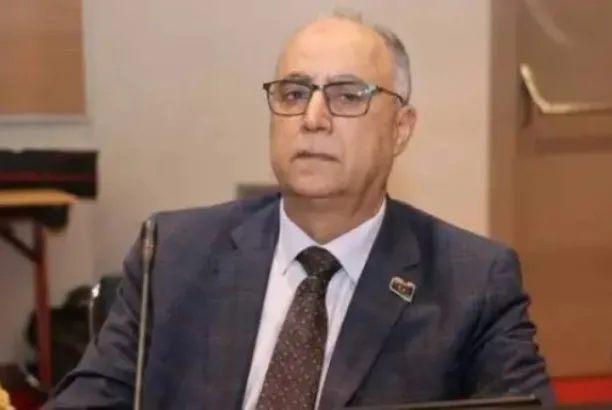
By Abdulmonsef Al-Shalwi, Oil and Economic Expert
Amid growing discussions surrounding maritime boundaries and Libya’s economic rights in both the eastern and western Mediterranean, it is important that onshore issues remain a national priority, particularly those concerning the Ghadames Basin and hydrocarbon resources extending across the border region between Libya and Algeria.
The issue goes beyond border demarcation to encompass the management of shared reservoirs, safeguarding each country’s production rights, and protecting natural resources from any exploitation whose returns may not correspond to the sovereign rights of the country concerned.
The Ghadames Basin: A Resource Beyond Political Borders
Geological studies indicate that the Ghadames Basin is one of North Africa’s important oil and gas basins, extending across parts of Libya, Algeria, and Tunisia. In this context, Libya’s Wafa field and Algeria’s Rhourde El Baguel field stand out within a cross-border geological system that warrants a comprehensive assessment of its reservoirs, reserves, and production rates.
The significance of this issue lies in the fact that political boundaries do not necessarily coincide with the geological boundaries of reservoirs. A single reservoir may extend beneath the territories of two or more countries, making clear technical and legal arrangements essential to safeguarding each party’s rights based on actual geological and engineering data.
Libyan Gas and Algeria’s Export Networks
Algeria has an advanced natural gas export infrastructure serving European markets through the TransMed pipeline, which passes through Tunisia and reaches Italy, and the Medgaz pipeline, which directly connects Algeria to Spain.
The TransMed pipeline has a nominal capacity of approximately 33–35 billion cubic metres annually, while Medgaz has a capacity of around 10.5–14 billion cubic metres per year, depending on the source and the operational capacity considered.
This infrastructure gives Algeria a strategic ability to meet European demand and strengthen its gas revenues. However, the existence of these networks alone does not establish that the gas exported through them originates from Libyan reservoirs. Establishing this would require tracing production sources and examining well data and gas flow records.
Are Libyan Reservoirs Being Depleted Across the Border?
Some claims have raised the possibility of exploiting gas deposits extending beneath the Libyan-Algerian border, including allegations that horizontal drilling has been used since 2012 to extract gas from the Libyan side.
If technically proven, this hypothesis would carry significant economic and sovereign implications. However, it requires published technical evidence or the findings of a specialized investigation before it can be treated as an established fact.
At the same time, there are developments that warrant attention. In April 2026, the National Oil Corporation (NOC) and Algeria’s Sonatrach announced an oil and gas discovery in Libya’s Ghadames region, within Contract Area 95/96, approximately 70 kilometres from the Wafa field.
The final depth of the A1-69/02 exploratory well reached approximately 8,440 feet, while production tests recorded 13 million cubic feet of gas and 327 barrels of condensate per day. The discovery was made under an exploration and production agreement signed in 2008, involving Sonatrach and two Indian companies.
These figures confirm that exploration activities are indeed taking place in the border region. They also highlight the importance of Libya maintaining a comprehensive database of its reservoirs, their extensions, and production levels, while distinguishing between legitimate activities conducted under existing contracts and any potential exploitation outside legal frameworks.
What Should Libya Do?
I believe it would be appropriate for the Libyan state, in coordination with the relevant sovereign, legal, and executive authorities, to prepare a comprehensive technical and economic dossier covering the following:
- Reviewing well data, coordinates, depths, and drilling directions, and verifying any allegations concerning cross-border horizontal drilling.
- Conducting a joint reservoir study of the Ghadames Basin, including estimates of reserves, production rates, pressure levels, and cumulative production from fields located on both sides of the border.
- Reviewing relevant oil agreements, identifying Libya’s rights and the obligations of its partners, and assessing whether existing arrangements adequately protect shared reservoirs.
- Examining the legal and technical options available if production is proven to affect Libya’s rights, including negotiations, technical cooperation, or recourse to appropriate legal mechanisms.
Final Remarks
Relations with Algeria, as with all neighbouring countries, should be based on cooperation, good neighbourly relations, and respect for sovereignty and mutual interests. This does not conflict with Libya’s right to scrutinize its resources and protect its national wealth through all legitimate means.
Natural gas is not merely an export commodity. It is a strategic resource that can support electricity generation, industry, and petrochemicals, while strengthening public revenues and Libya’s position in the energy market.
Therefore, the Ghadames Basin issue deserves a place on the agenda of experts and policymakers, not as a politically motivated accusation made in advance, but as a technical, economic, and sovereign matter whose data must be completed and findings verified, in preparation for addressing it in a manner that safeguards Libya’s rights and the interests of future generations.