Our source has exclusively obtained a letter from the Deputy of the Audit Bureau, Atiyat-Allah Abdulkarim, addressed to the Bureau’s President. The letter refers to a correspondence from the Director of the General Administration of Financial Affairs at the Bureau, which transferred 455,041 thousand dinars to the account of the Libyan Embassy in Cameroon to cover expenses incurred by the embassy on behalf of the Bureau.
The Deputy stated that this amount represents part of the expenses for the Bureau’s meeting, which was held at its own expense in Cameroon. He emphasized that the transfer had previously been rejected pending the formation of a committee to review all expenditures, assess the legitimacy of holding the meeting, and determine its approval from the public treasury.
Additionally, he called for clarification of the legal procedures relied upon for the expenditure and an investigation into those responsible for executing the payments despite prior objections.
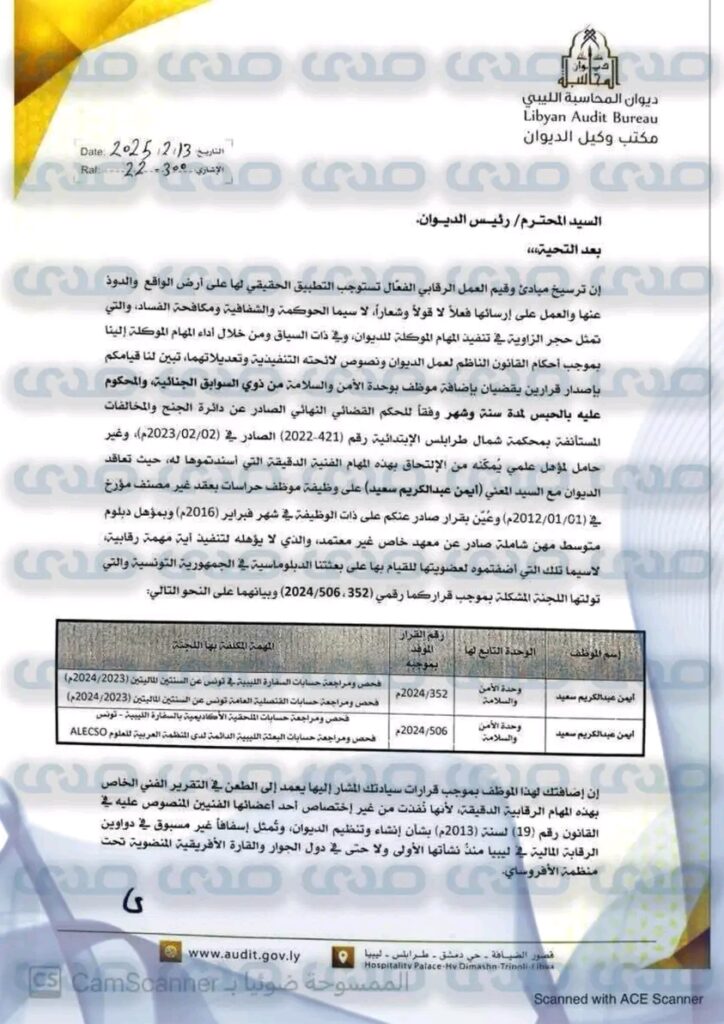
Our source has obtained an exclusive letter from the Deputy of the Audit Bureau to the Head of the Bureau concerning the issuance of two decisions appointing an employee with a criminal record to the Security and Safety Unit. The employee, who has been convicted and sentenced to one year and one month in prison, does not hold the necessary qualifications to perform the specialized technical tasks assigned to him, as stated in the letter. The appointment raises concerns about his capability to undertake any supervisory tasks, especially those related to the diplomatic mission in Tunisia, which were delegated to him as part of a committee formed by decisions numbered (352, 2024/506).
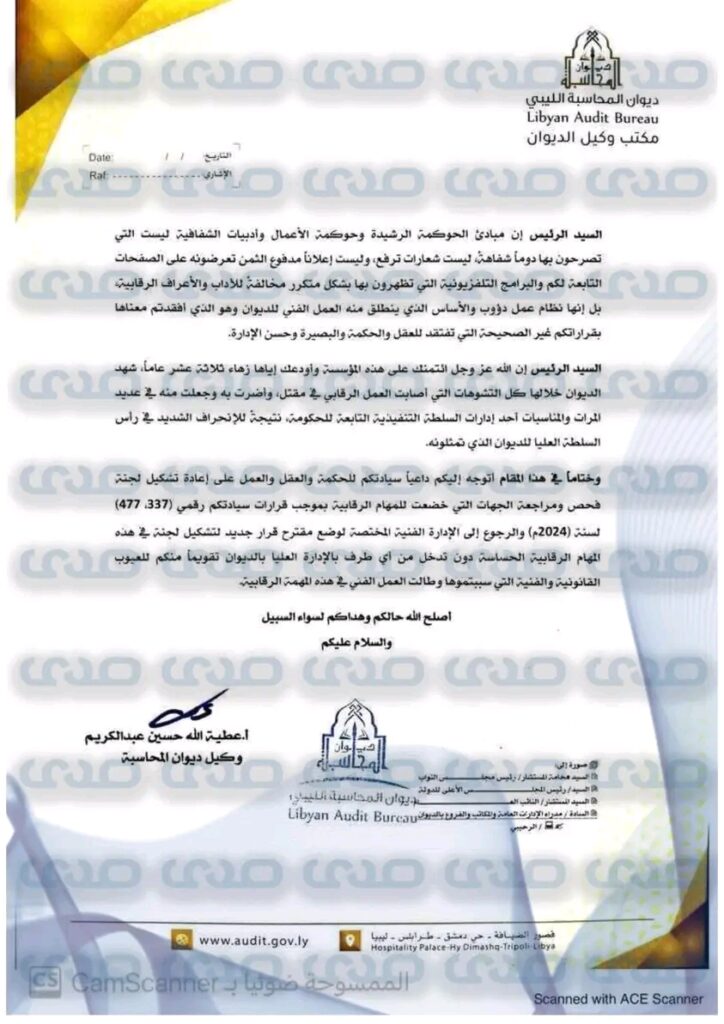
The Deputy added: “Your appointment of this employee through your decisions undermines the technical report regarding these sensitive supervisory tasks, as they were carried out by someone who does not meet the legal qualifications outlined in Law No. (19) of 2013 regarding the establishment and organization of the Bureau. This represents an unprecedented level of degradation in Libya’s financial oversight bodies, and is not even seen in neighboring countries or across African nations under the AFROSAI organization.”
The Deputy further stated: “We call for the restructuring of the inspection and review committee for the entities subject to the supervisory tasks under your decisions (337) (477) of 2024, and urge a return to the specialized technical department to propose a new decision for forming a committee for these sensitive tasks without interference from any senior management in the Bureau.”
Our source has exclusively obtained a letter from the Deputy of the Audit Bureau to the Head of the Bureau, in which he demands the withdrawal of the decision to send security and archive employees to Turkey for periods ranging from 25 to 15 days, according to the mentioned decision, to attend training courses.
According to the Deputy’s statement in the correspondence, the decision is flawed both legally and morally. Legally, the decision was not presented to the Higher Training Committee, which is authorized to decide on all training activities and to fully study the file, including its feasibility, the entity to be contracted with, and the selection methods for candidates.
Adding that, from a professional and ethical standpoint, their position at the Head of the Bureau requires them to oversee such matters and not waste the Bureau’s resources on such issues.
The Deputy also noted that the estimated cost of sending over 40 employees, including travel allowances, travel tickets, and the cost of training to be paid to the unspecified entity in the decision, is expected to exceed 1.7 million Libyan dinars.
Furthermore, he mentioned that there is an attempt to manipulate and falsify the decision by relying on a letter from the Director-General of Human Resources, as referred to in the decision. The memorandum from the Director of the General Department of Human Resources, number 40-28, mentioned in your decision, is still under review and has not yet been approved.
Our source has obtained an official letter from the Audit Bureau addressed to the Ministry of Social Affairs, stating that the Bureau has no objections to proceeding with the disbursement of the child and spouse grant for the fourth quarter of 2024, totaling 1.1 billion dinars.
The letter emphasizes the necessity of ensuring that bank account numbers match the registered family records in the grant disbursement system and that any non-matching or incomplete account details should be excluded.
Our source has obtained a letter from Atiyatallah Hussein Abdulkarim, Deputy of the Libyan Audit Bureau, addressed to its President, Khaled Shakshak. The letter highlights concerns over an increasing number of informal meetings between Audit Bureau officials, members, and employees with ministers, deputies, board members, and top state officials. These interactions, according to the letter, occur without adherence to formal protocols, undermining the official communication system, which should be documented via official correspondence or government email.
Allegations of Workplace Exploitation
The Deputy stated that some Bureau officials and members have gained personal benefits through these connections. Notable cases include:
A former senior Bureau official securing a position in a state-owned investment company.
Another official being appointed as a member of the Central Bank of Libya.
Relatives of Bureau officials being sent abroad for education or given diplomatic posts, with full salaries paid despite their study leave, while other employees were denied similar opportunities.
State-funded medical treatments being granted to relatives of certain officials, while ordinary citizens were deprived of such services.
Call for Investigation
In response to these concerns, the Deputy requested:
Assigning the Bureau’s Inspection Office to investigate all cases of workplace exploitation linked to the close ties between Bureau officials and state authorities.
Requesting the Anti-Corruption Authority to complete the financial disclosure forms for all senior Audit Bureau officials.
Forming a committee to develop new regulations governing official communication between the Bureau and state officials.
Sada Economic has obtained a letter from Atiyatallah Hussein Abdulkarim, Deputy of the Libyan Audit Bureau, requesting the Chairman of the Libyan Investment Authority and the Governor of the Central Bank of Libya not to allow Mr. Reda Mohamed Gergab, who is seconded to the Investment Authority and appointed as a member of the Central Bank’s Board of Directors, to assume these positions.
This request is due to a conflict with the Audit Bureau’s law and its violation.
Our source has exclusively obtained a letter from the Public Prosecution addressed to the head of the Audit Bureau, Khaled Shakshak, requesting details on the evaluation and safety measures of the Audit Bureau’s building, which is owned by the Libyan National Shipping Company.
The prosecution has asked the relevant department within the bureau to provide documentation related to the building’s safety assessment, the potential risks it poses to public safety, and any arrangements made with the company regarding this matter.
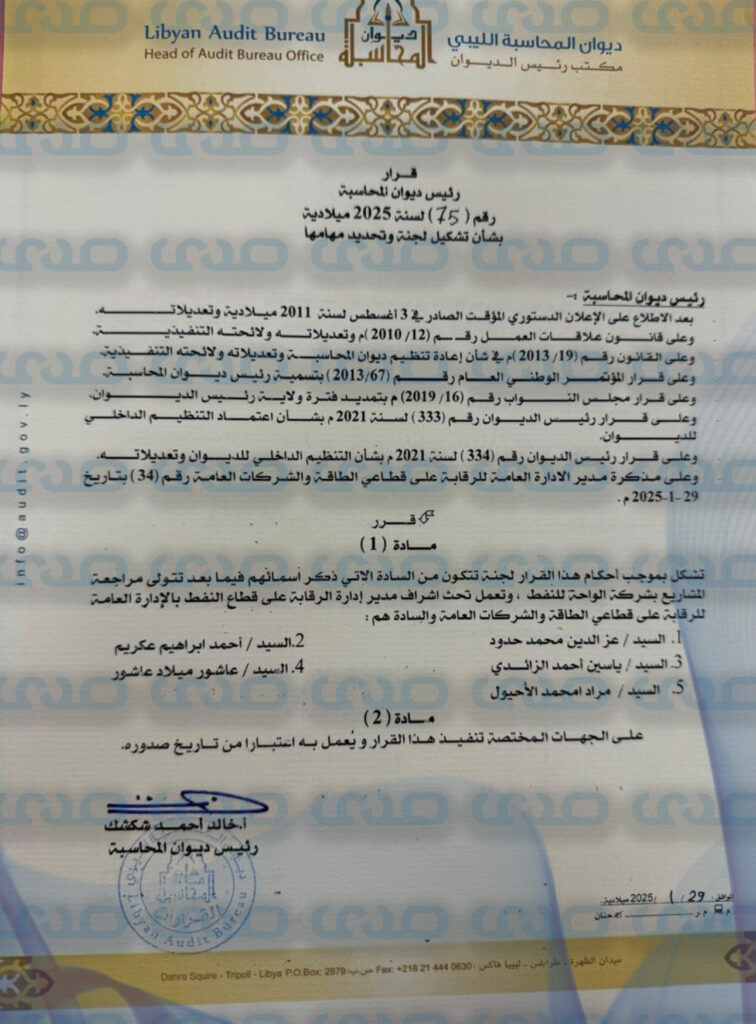
Our source has obtained the decision of the President of the Audit Bureau, Khaled Shakshak, to form a committee to review projects at Waha Oil Company.
The committee consists of: Azeddine Mohamed Hudud, Yassin Ahmed Al-Zaidi, Murad Mohammed Al-Ahyoul, Ahmed Ibrahim Akreem, and Ashour Milad Ashour.
Oil expert Masoud Shriha spoke to our source, questioning: “Is the swap prohibited by Libyan or international law? No, there is no international or Libyan law that prohibits the use of the swap mechanism. More than 90 countries worldwide use it.”
He added: “Are there standards to regulate the swap? Yes, there is a regulatory mechanism for swaps according to international classification, which is lacking in the institution’s swap operations. Is there misuse of the swap according to international standards? Yes, there are significant deviations in the use of the swap, based on the data we all see, and its costs are very high.”
He also stated: “Is there a solution for better management of the swap? Yes, there is a solution to address all fuel-related issues as a single portfolio. We tried to communicate with everyone present at the meeting, including the Prime Minister, Mr. Abdulhamid al-Dbeibeh. However, I was refused an audience because I am the responsible party for the lawsuit regarding the citizenship issue against Mr. Farhat, and my salary has been stopped again. This is also due to my articles regarding the company Litasco, which is supplying adulterated gasoline, as reported by Mr. Imad Ben Rajab.”
He continued: “What do you expect regarding the future of halting the swap? Will it curb the waste of public funds and resolve the bottlenecks? The future events are connected to the butterfly theory, meaning solving one issue will open the door to others. I believe that smuggling will never stop, though I hope I am wrong. All these brief statements require deep analysis, and it’s ready. The issue needs to be handled as a unified portfolio and cannot be fragmented.”
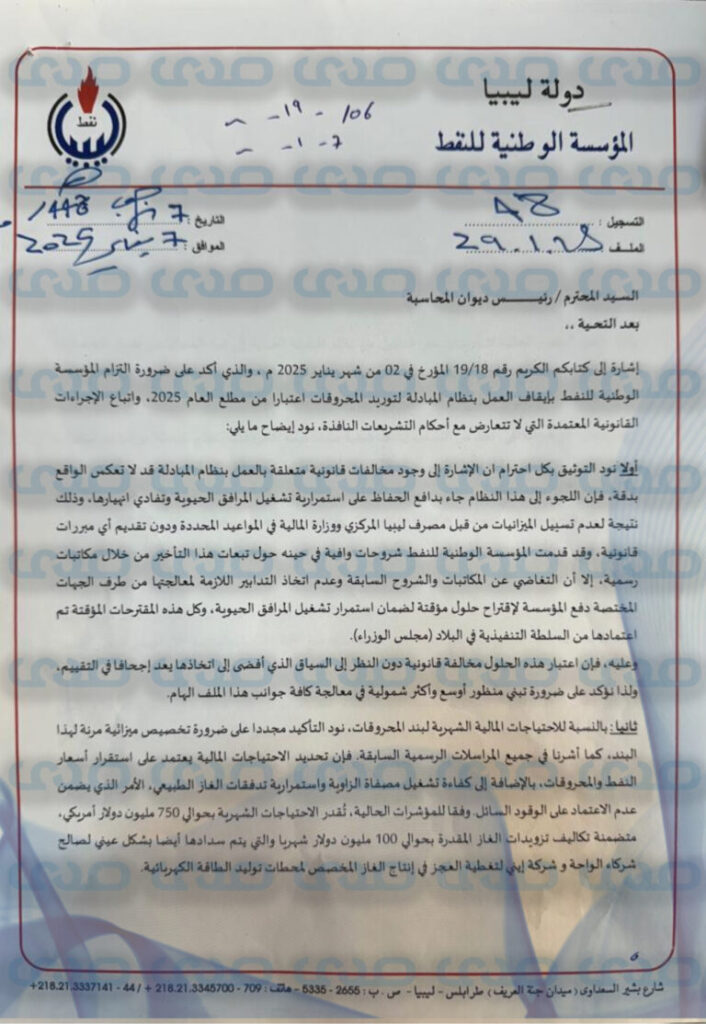
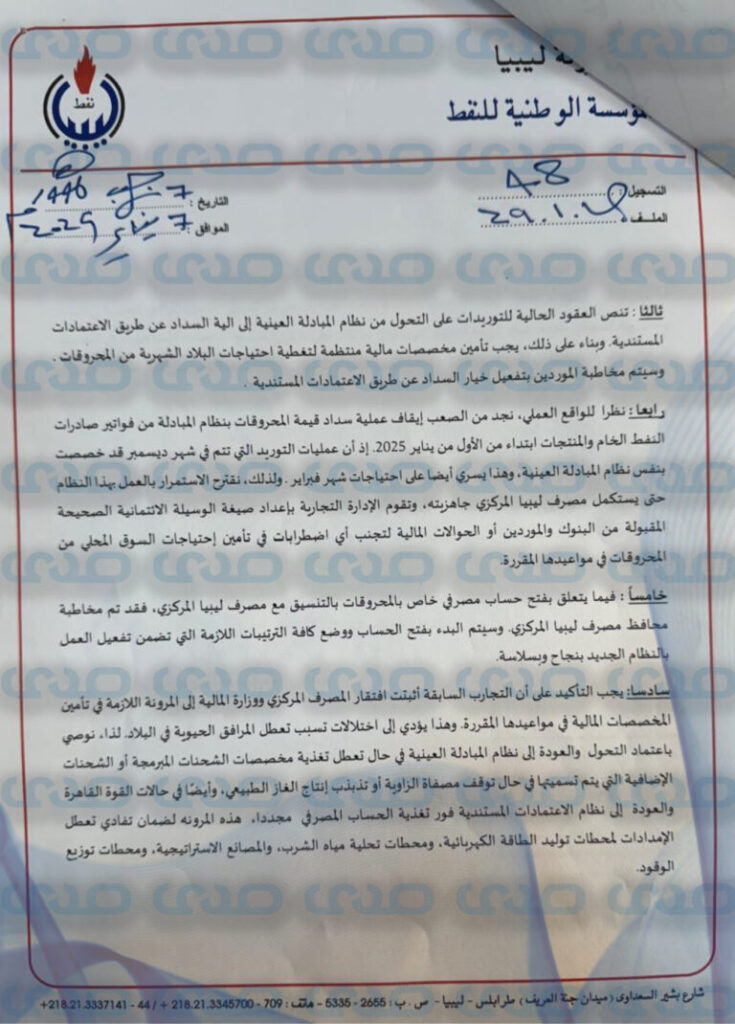
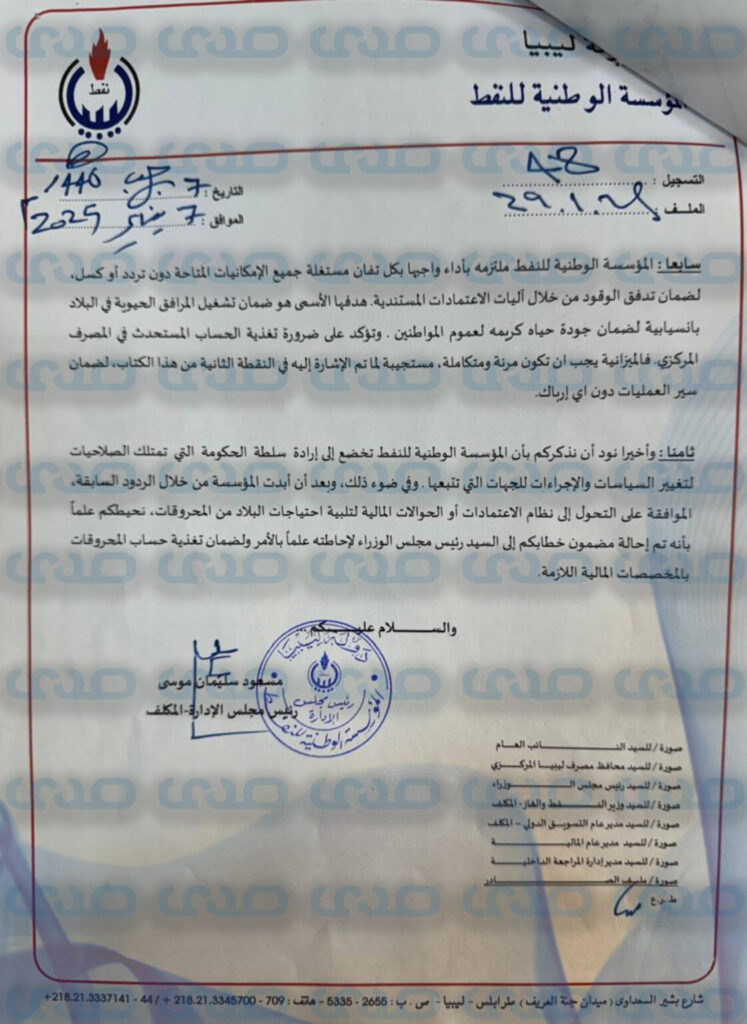
Our source has exclusively obtained correspondence from the National Oil Corporation (NOC) addressed to the Chairman of the Libyan Audit Bureau. In this correspondence, the NOC responded to the Audit Bureau’s request to stop using the fuel barter system beginning in 2025, explaining the difficulties in ceasing this system.
The NOC stated that references to alleged legal violations related to the barter system may not accurately reflect reality. The resort to this system was driven by the need to ensure the continuous operation of critical facilities and avoid their collapse. This situation arose due to the failure of the Central Bank of Libya and the Ministry of Finance to release budgets on time without providing any legal justifications. The NOC had previously provided detailed explanations regarding the consequences of these delays through official correspondence. However, the disregard of these communications and the lack of necessary measures by the relevant authorities forced the NOC to propose temporary solutions to guarantee the continuity of essential facilities. All these temporary proposals were approved by the country’s executive authority (the Council of Ministers).
The NOC continued by stating that deeming these solutions illegal without considering the context that led to their adoption is an unfair assessment. Therefore, it emphasized the importance of adopting a broader and more comprehensive perspective in addressing all aspects of this critical issue.
Regarding the monthly financial requirements for fuel, the NOC stressed the need for a flexible budget for this category. As mentioned in all previous official correspondences, determining financial needs depends on the stability of oil and fuel prices, as well as the efficiency of operations at the Zawiya Refinery and the continuous flow of natural gas. This ensures reliance on liquid fuel is avoided. According to current indicators, monthly requirements are estimated at approximately $750 million, including gas supply costs of about $100 million per month, which are also settled in kind for Waha partners and Eni to cover the shortfall in gas production designated for power plants.
The NOC explained that current supply contracts aim to transition from the barter system to payment via letters of credit. Therefore, it is crucial to secure regular financial allocations to meet the country’s monthly fuel needs. Suppliers will be notified to activate the payment option through letters of credit. However, given the practical realities, it is difficult to stop the payment for fuel through the barter system from crude oil and product export invoices starting January 1, 2025. For example, the December supply operations are allocated under the same barter system, and this also applies to the needs for February.
The NOC proposed continuing with the barter system until the Central Bank of Libya achieves readiness and the commercial management prepares the appropriate credit mechanism acceptable to banks and suppliers. This would prevent any disruptions in securing local market fuel needs on schedule.
The NOC added that regarding the opening of a special bank account for fuel in coordination with the Central Bank of Libya, the bank governor has been addressed, and the account will be opened with all necessary arrangements to ensure the successful and smooth implementation of the new system. It emphasized that previous experiences have proven the Central Bank and Ministry of Finance lack the required flexibility in securing financial allocations on time, which leads to disruptions that halt critical facilities in the country.
The NOC also recommended reverting to the barter system if scheduled shipments or additional shipments are disrupted due to the shutdown of the Zawiya Refinery, fluctuating natural gas production, or force majeure events. The NOC suggested returning to letters of credit once the bank account is replenished. This flexibility is necessary to avoid interruptions in the supply of electricity generation stations, water desalination plants, strategic factories, and fuel distribution stations.
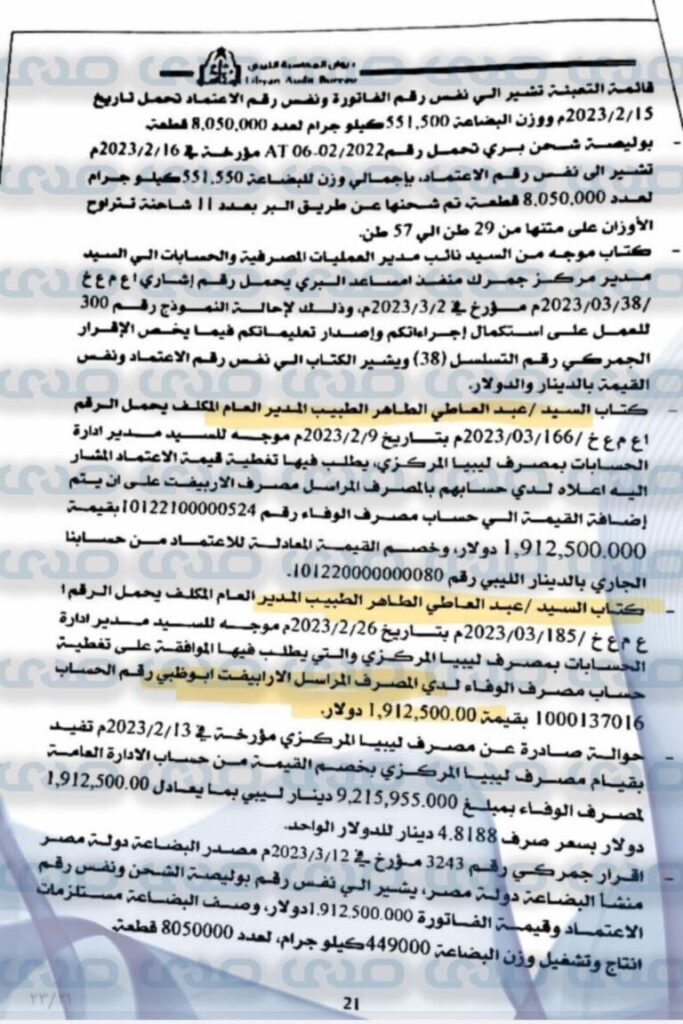
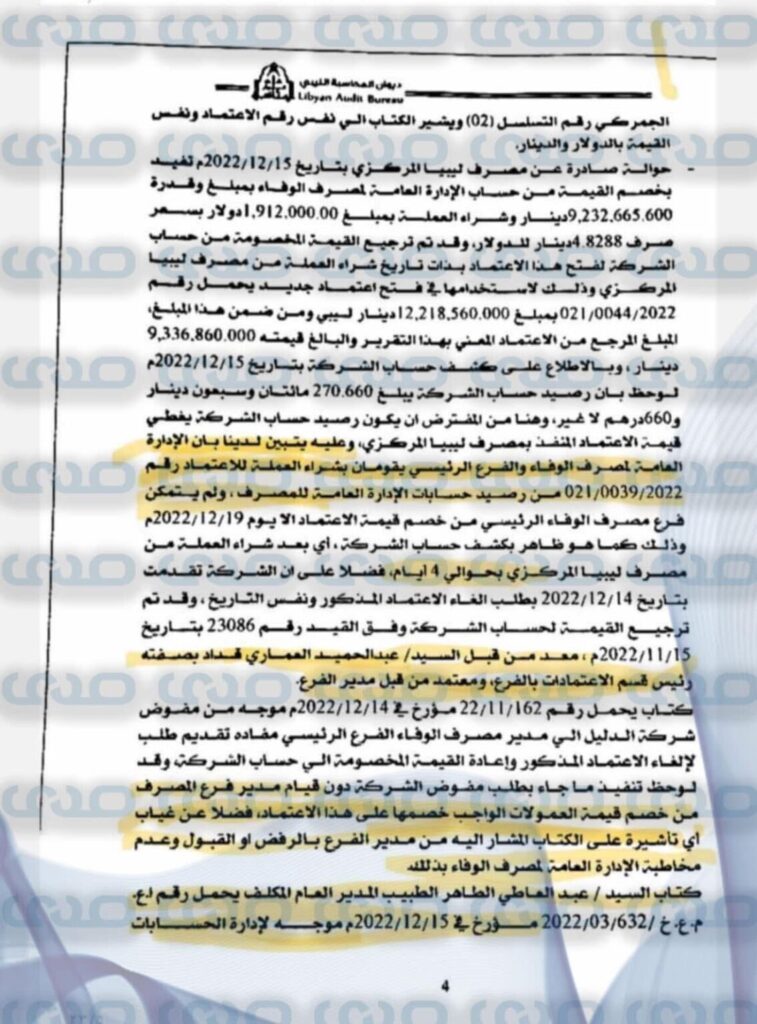
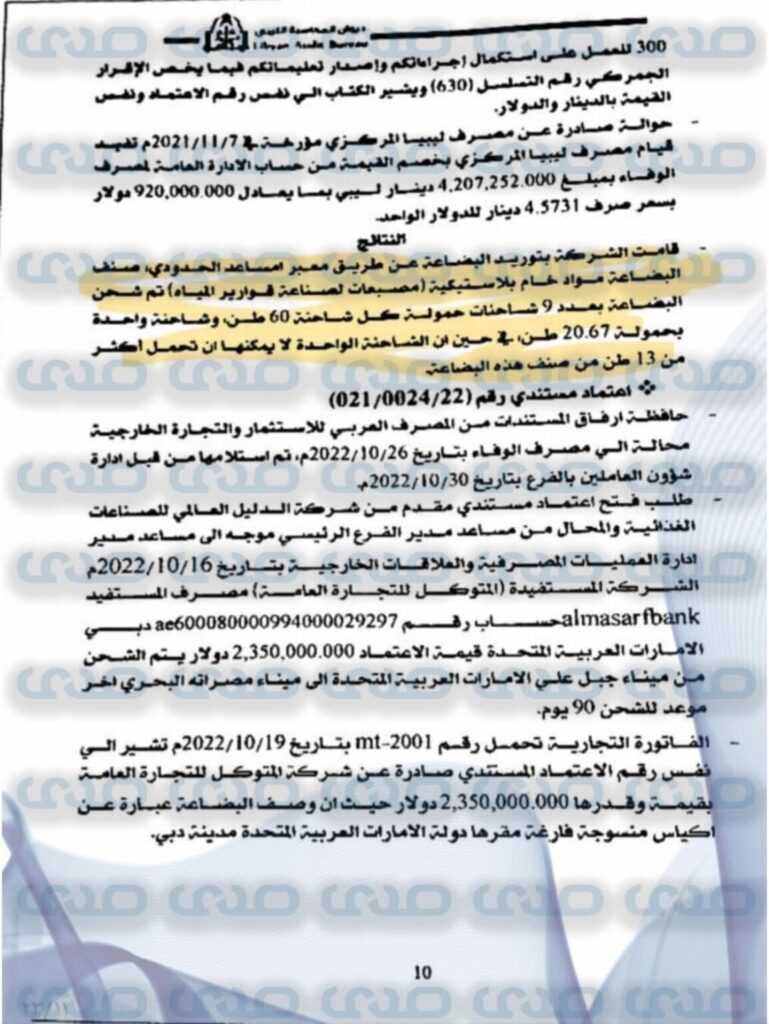
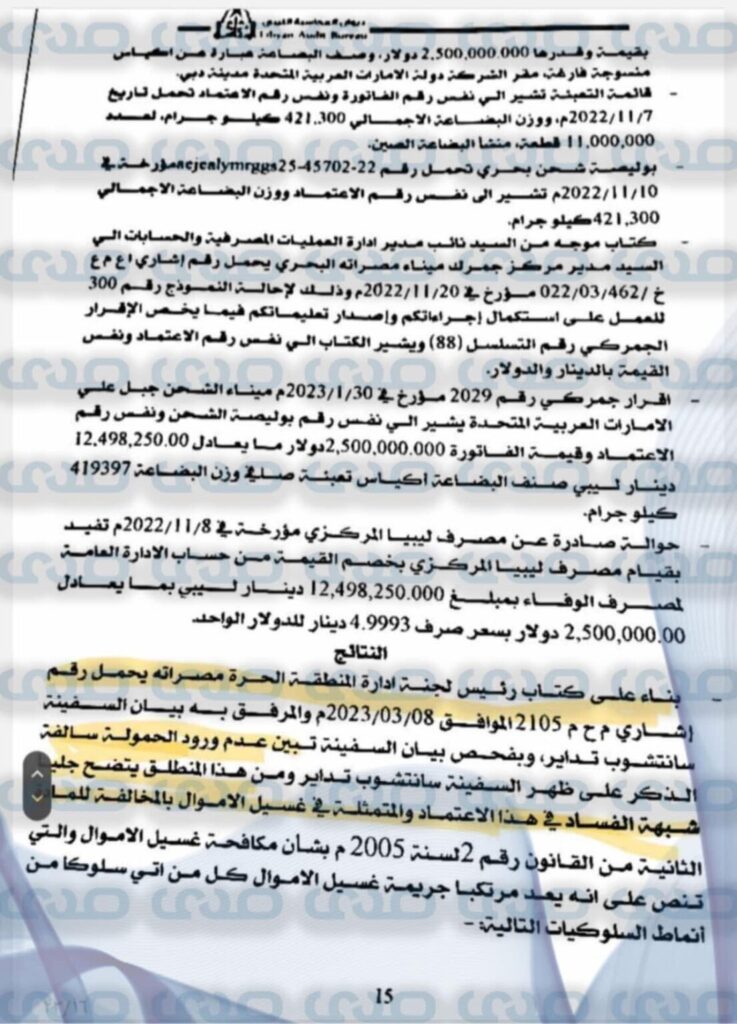
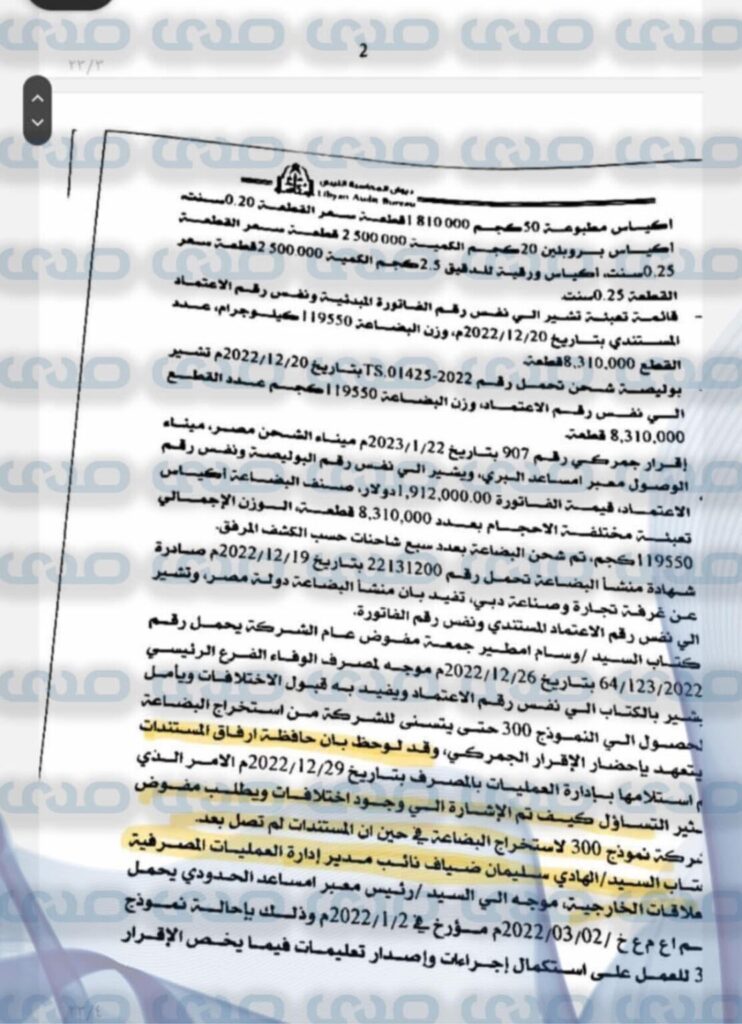
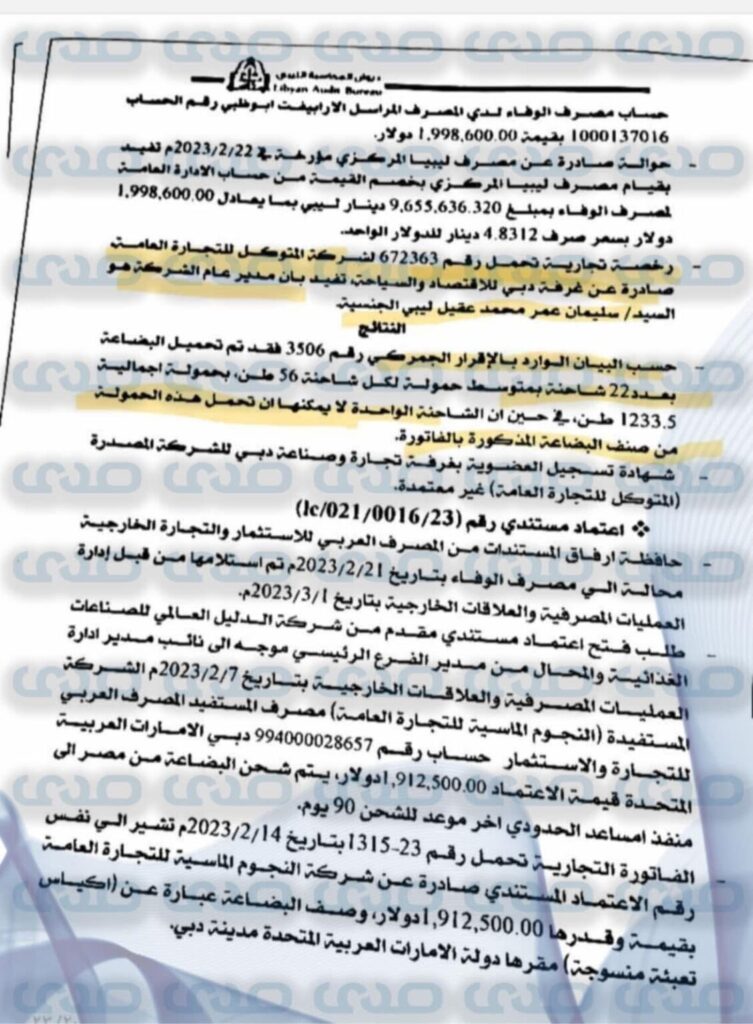
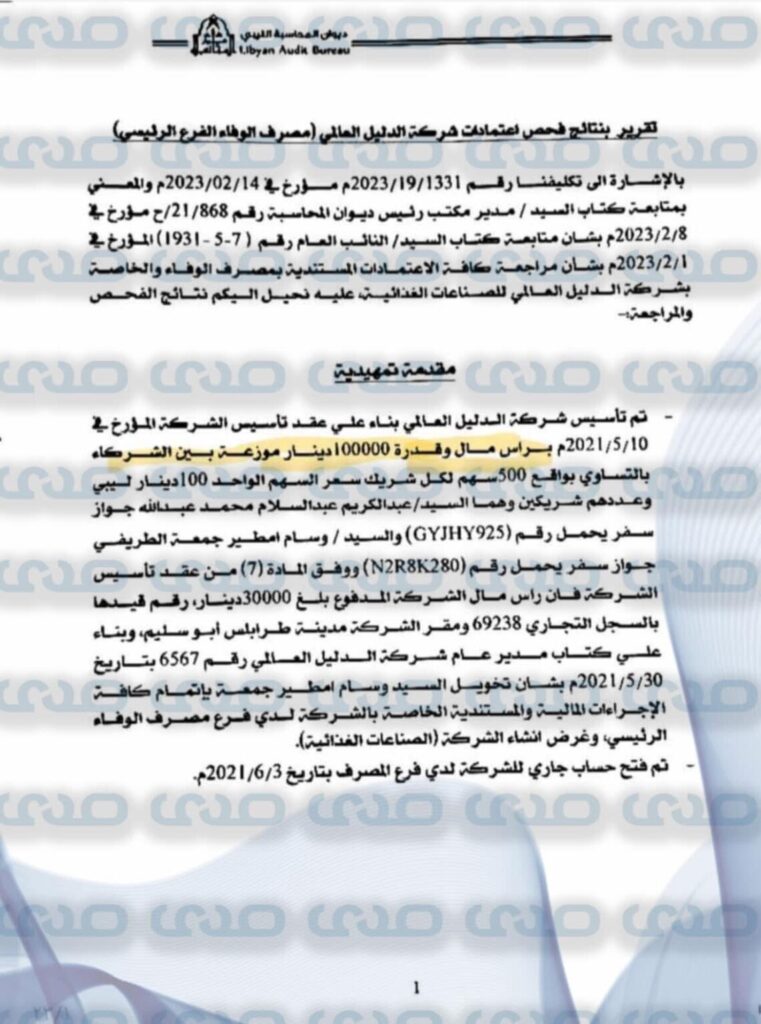
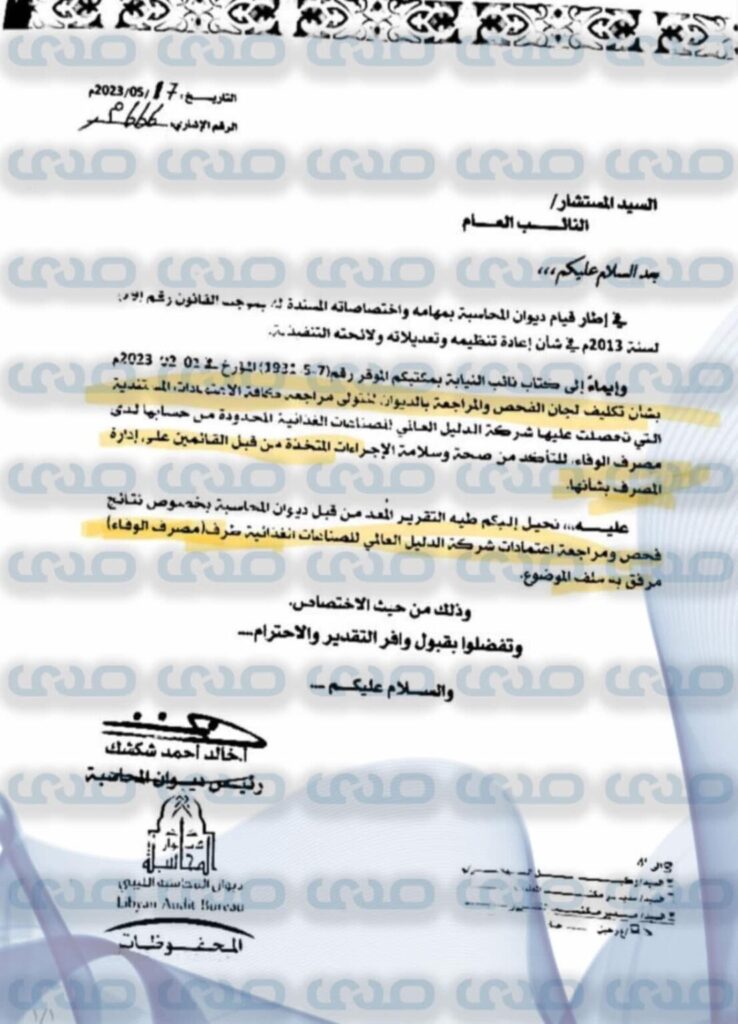
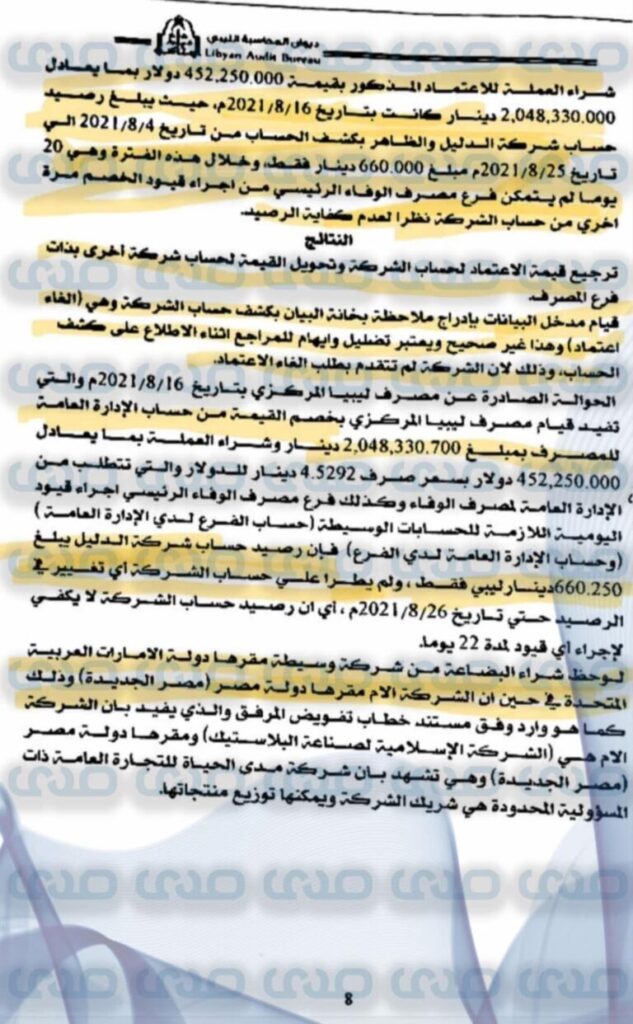
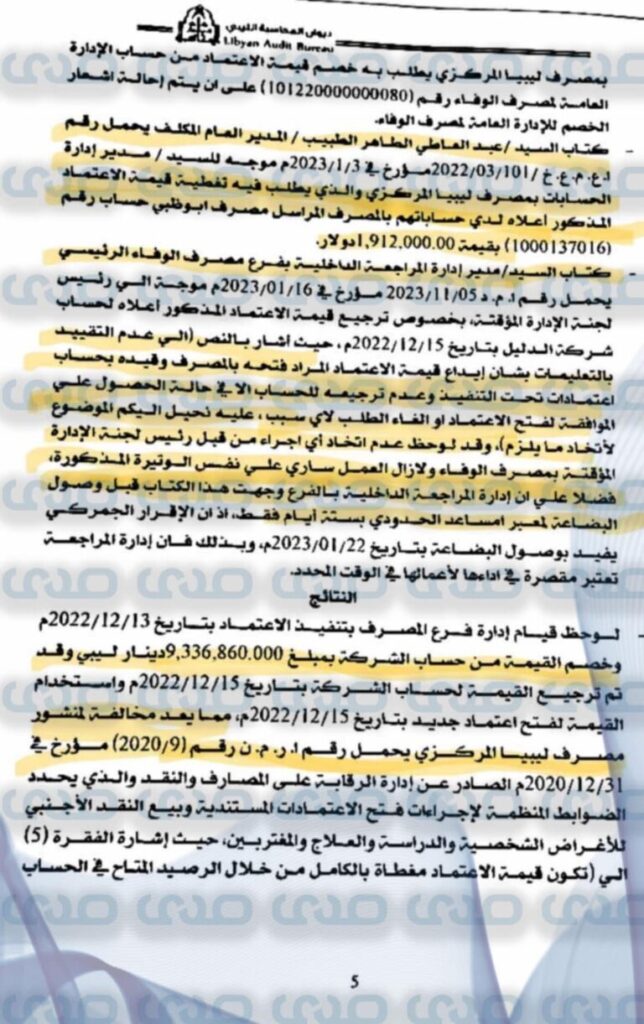
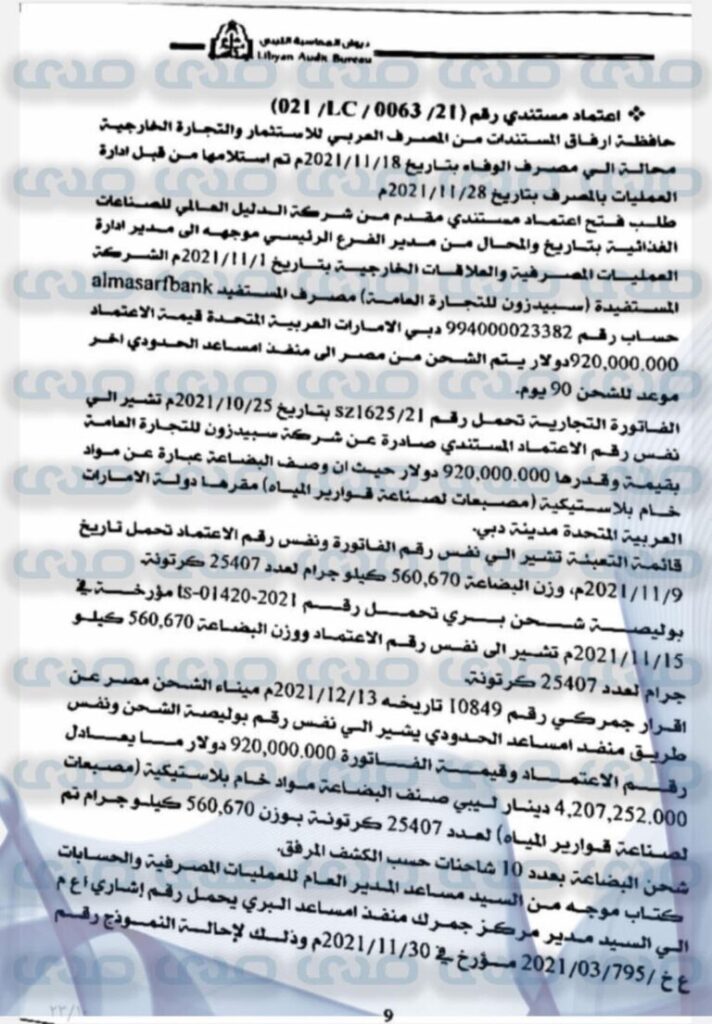
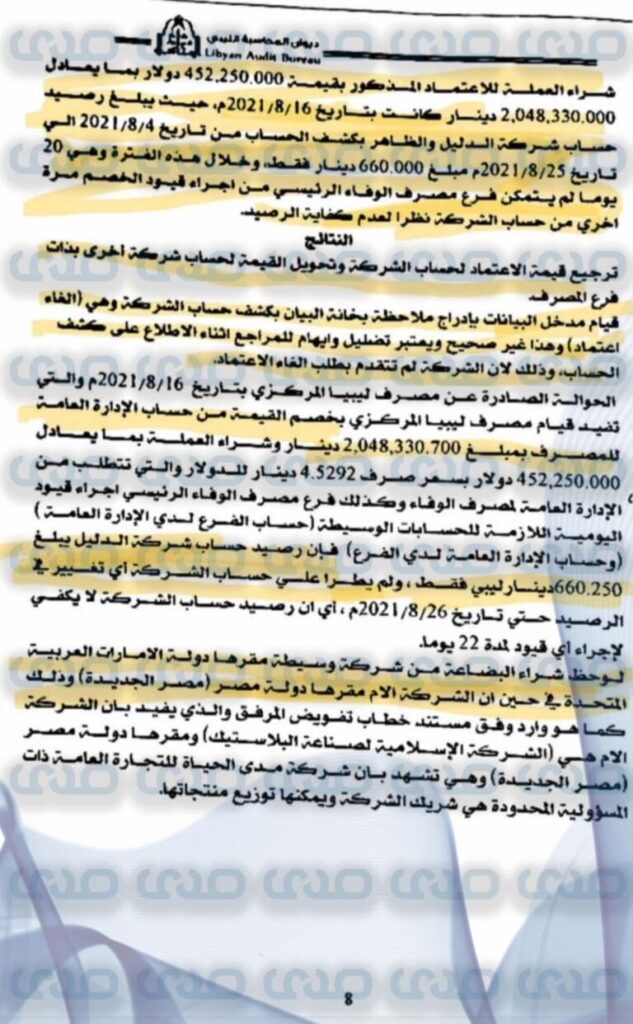
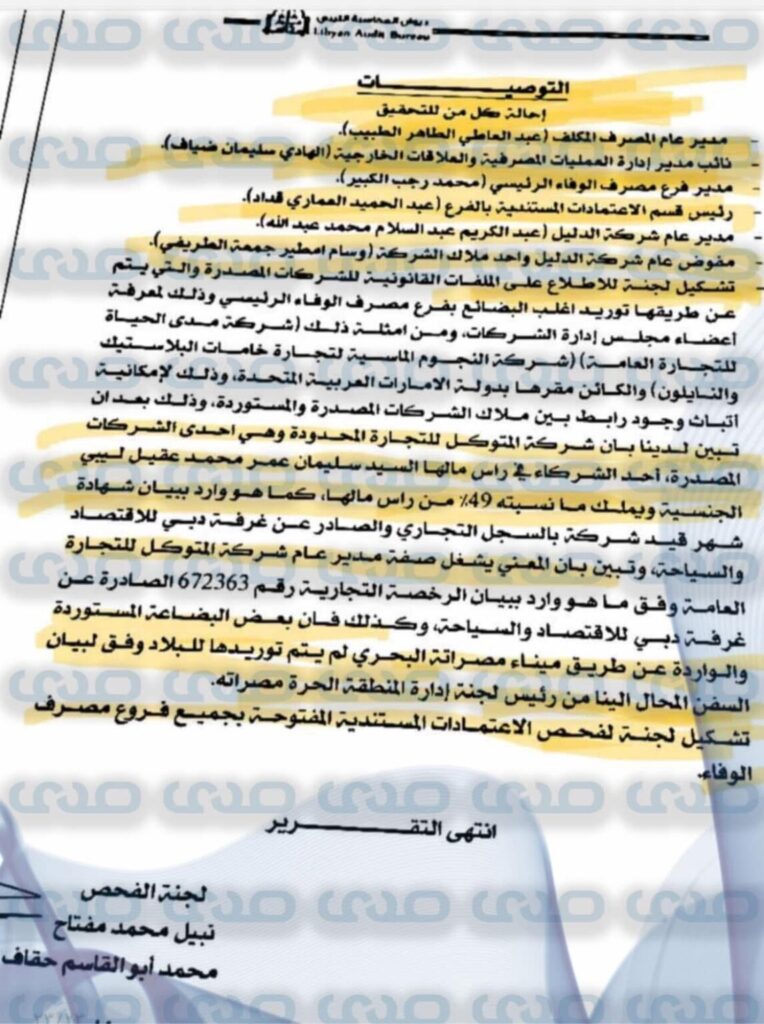
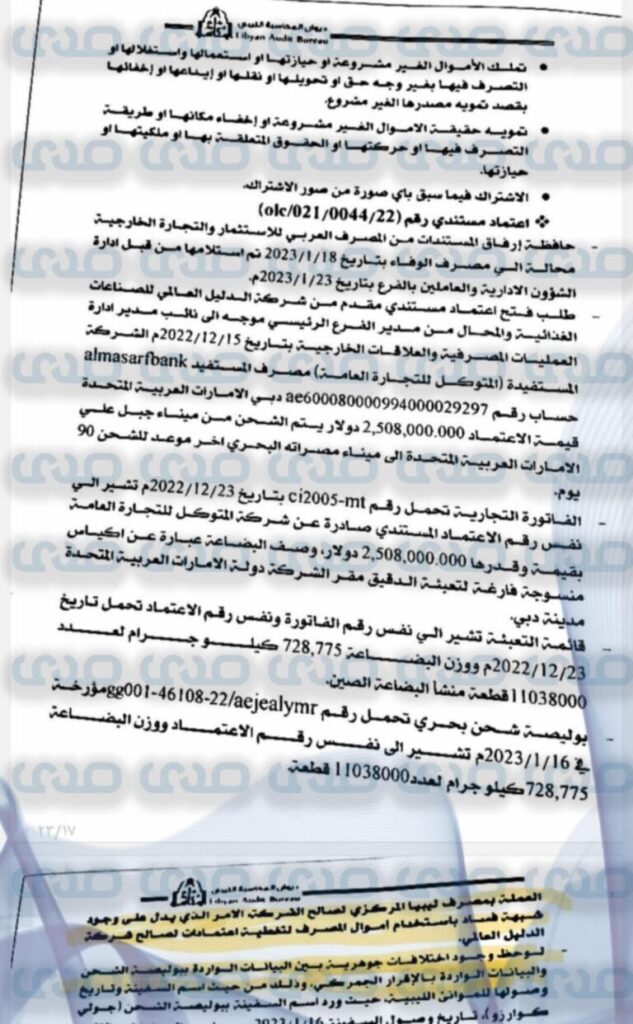
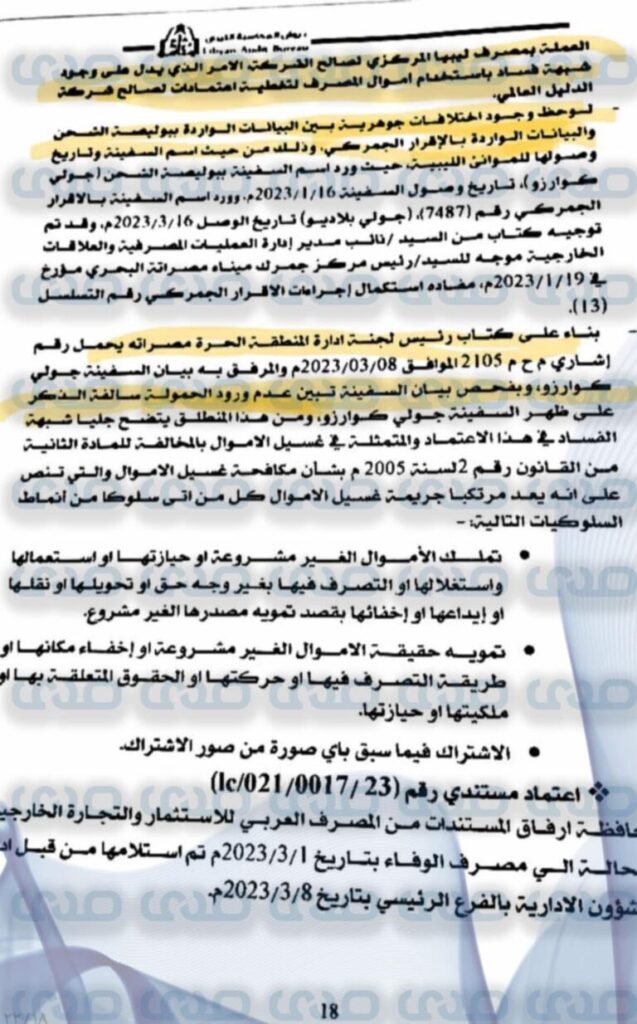
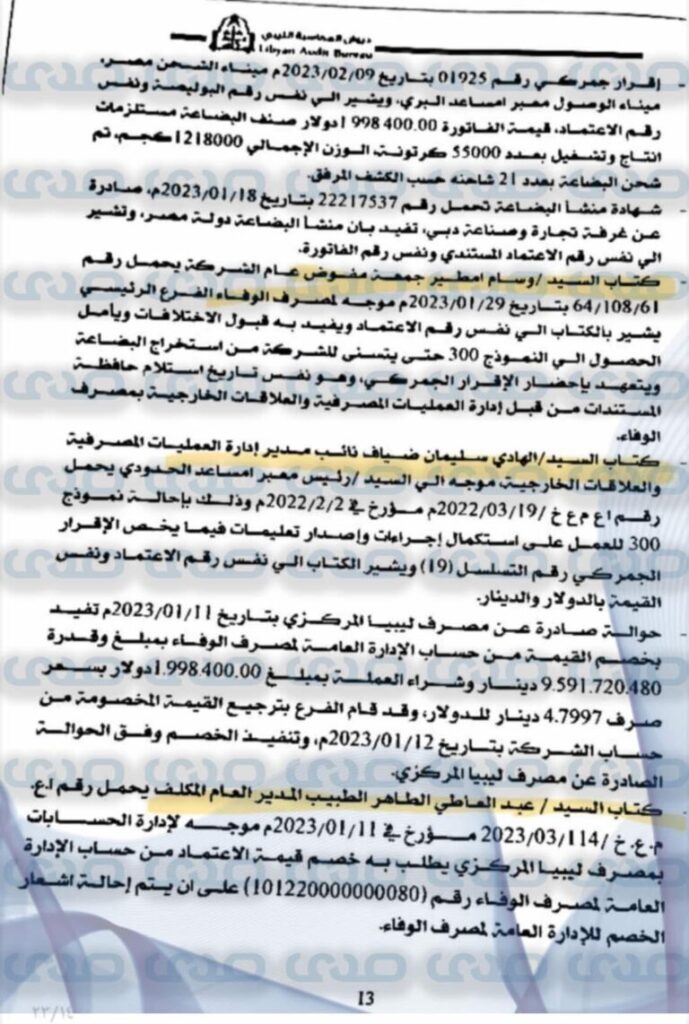
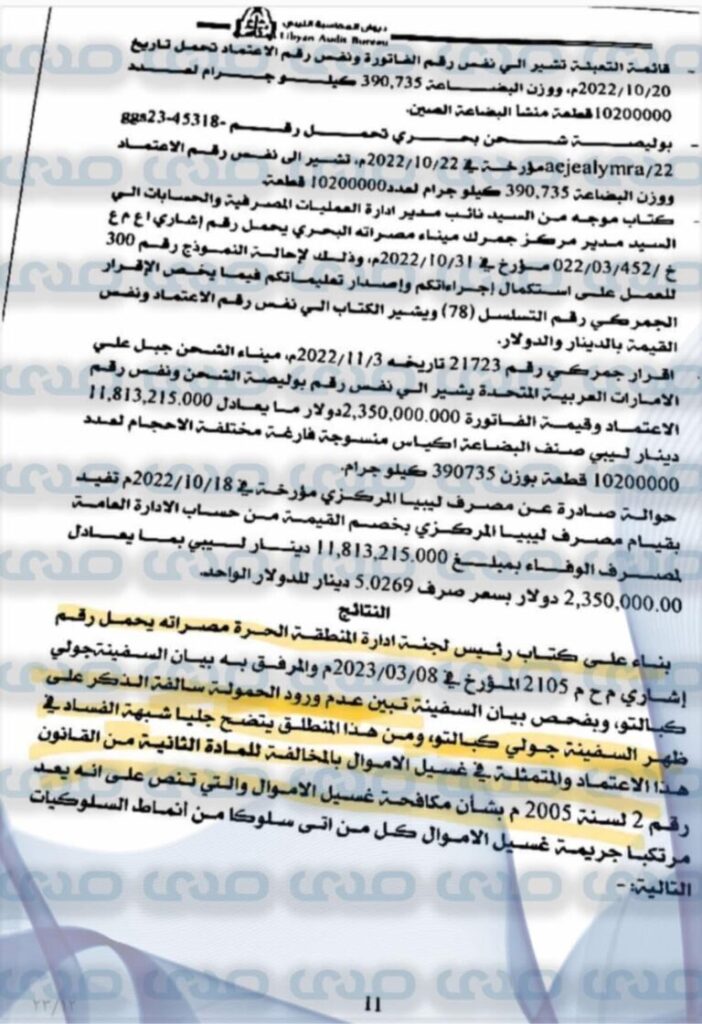
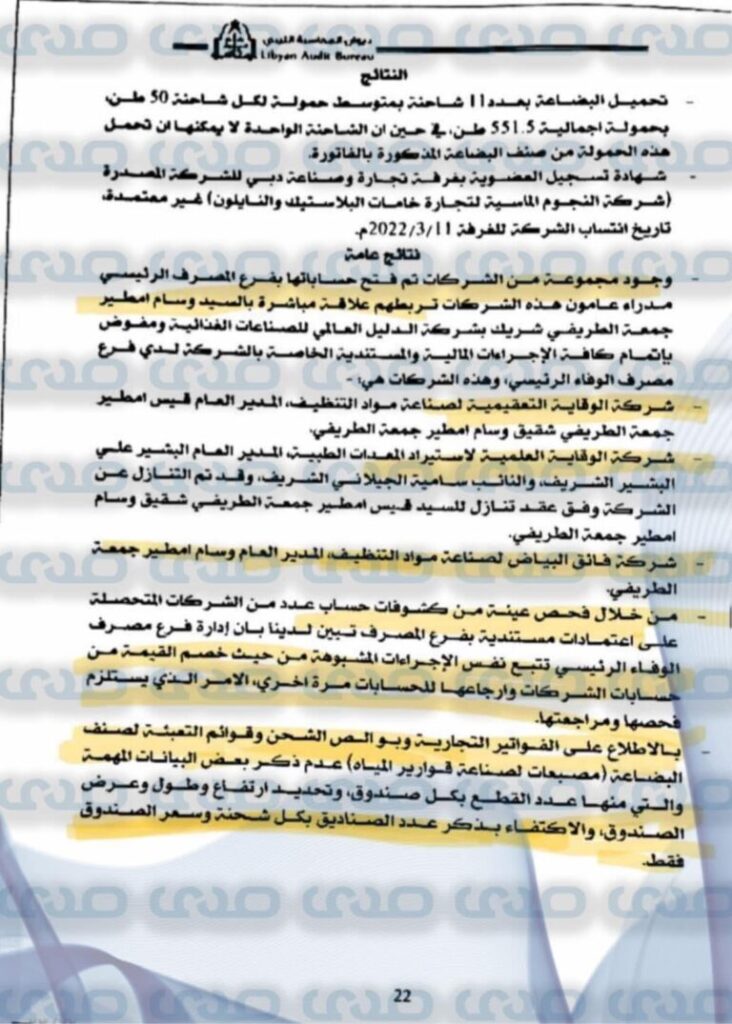
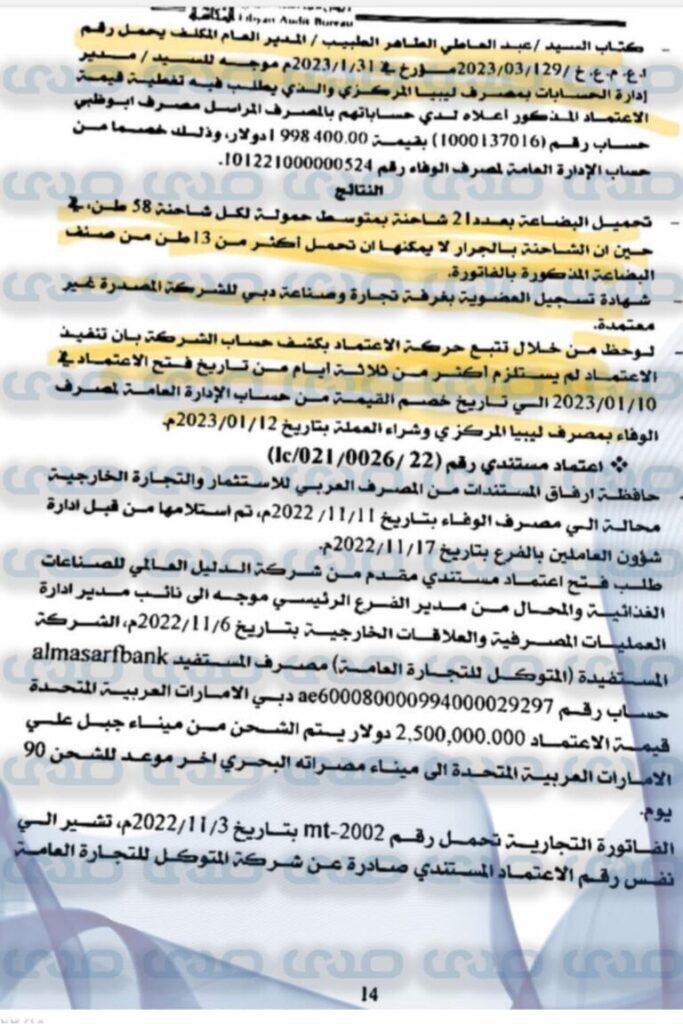
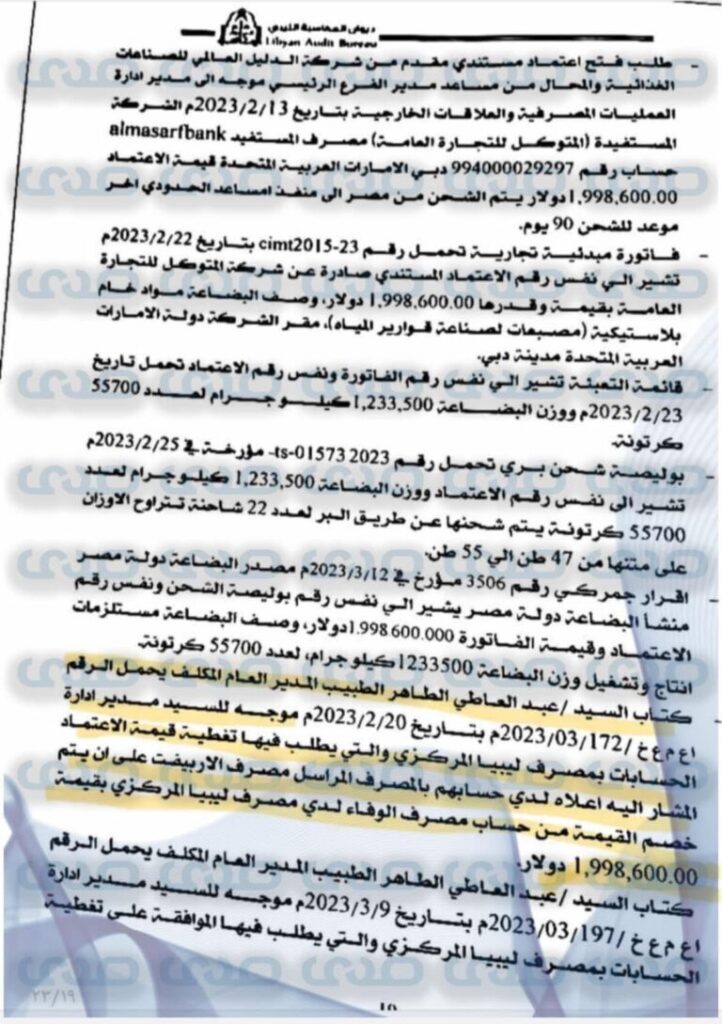
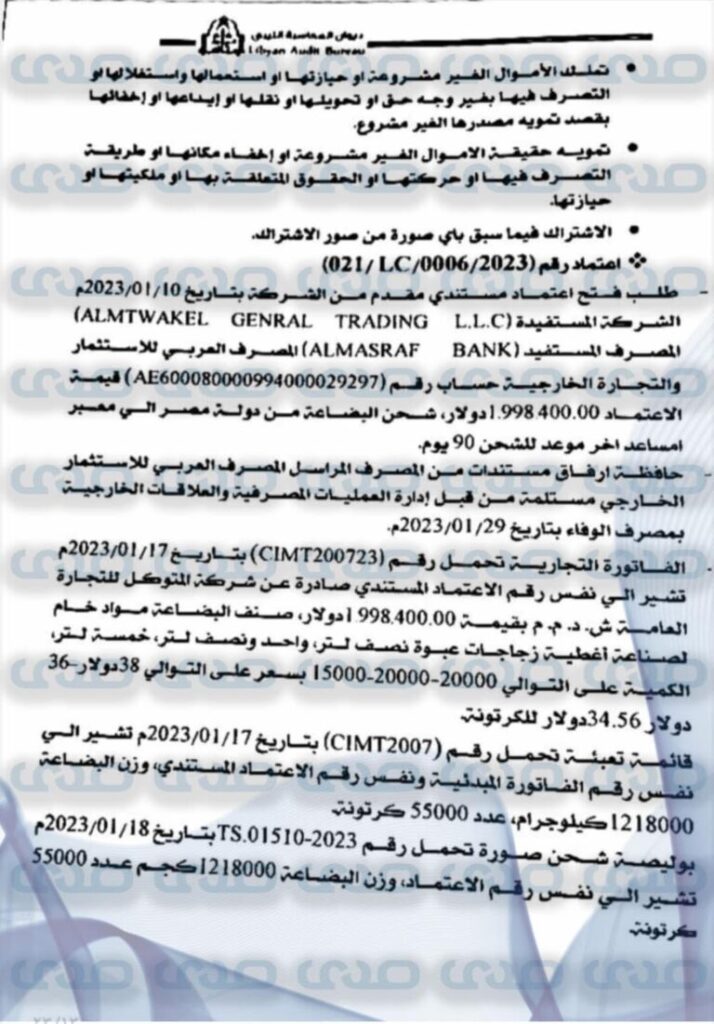
Our source has exclusively obtained a report from the Audit Bureau addressed to the Attorney General, detailing violations at Al-Wafa Bank involving documents, names, and numbers that suggest corruption and money laundering.
The documents reveal major violations and suspicions regarding the use of funds at Al-Wafa Bank, leading to the referral of responsible parties for investigation. They also disclose that some imported goods received through Misrata Port were not delivered to the country.
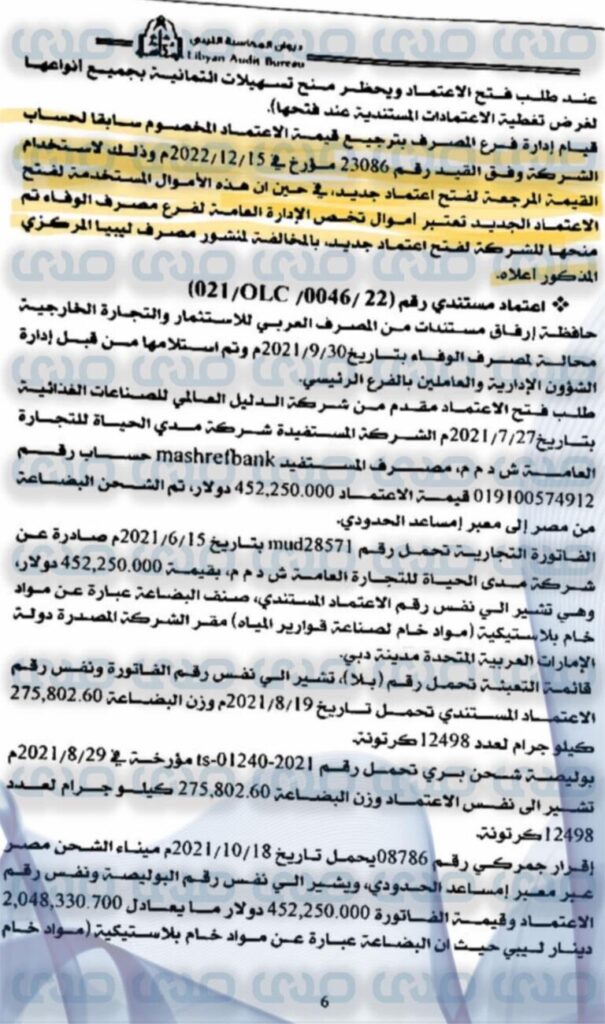
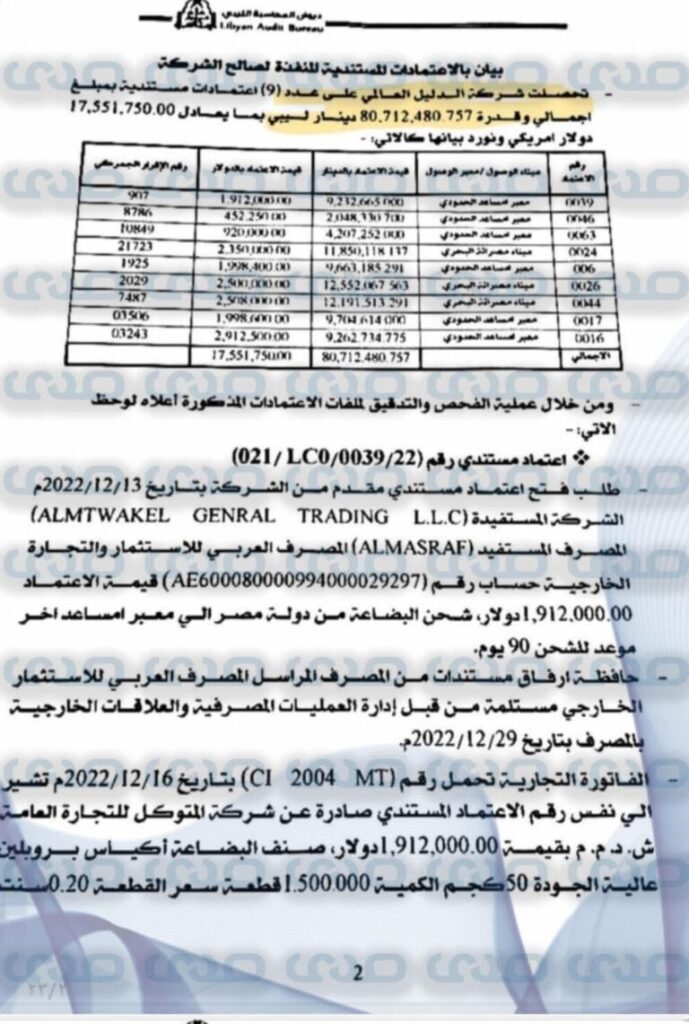
The report highlights the details of letters of credit issued to Al-Daleel Financial Company via Al-Wafa Bank’s branch, showing that the company obtained nine letters of credit amounting to a total of 80.712 million LYD, equivalent to $17.5 million.
According to the report’s findings, the bank branch executed the credits on December 13, 2022, deducting 9,336,860,000 LYD from the company’s account. The funds were returned to the account two days later, on December 15 of the same year, and were used to open a new credit, in violation of a Central Bank of Libya circular. Furthermore, the bank branch allowed the return of the previously deducted funds to the company’s account for the purpose of opening new credits, even though these funds belonged to the bank’s general administration.
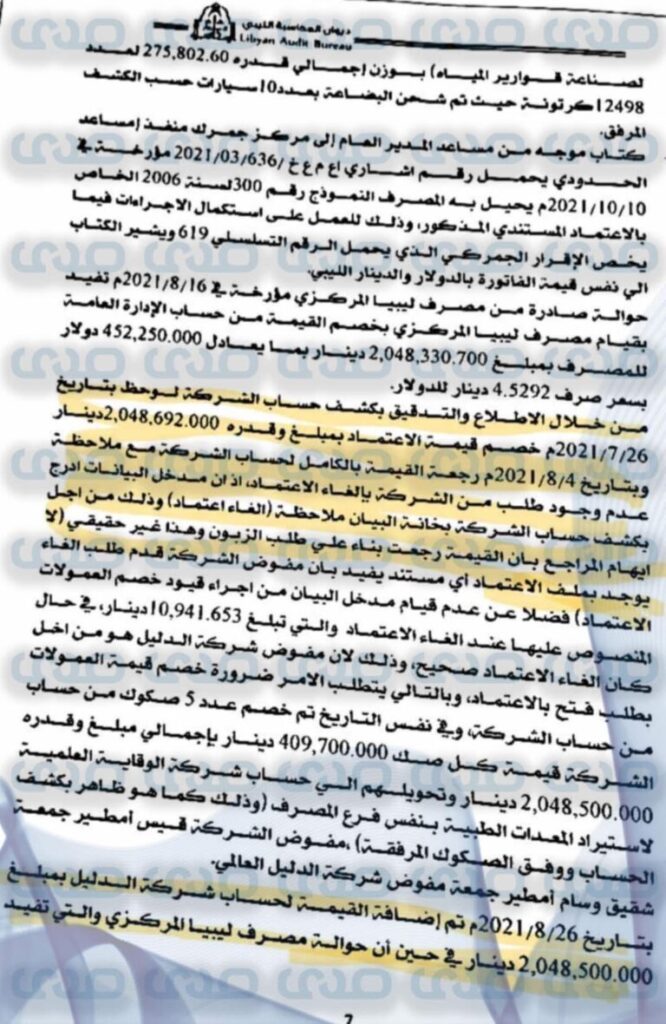
The report also notes an incident on July 26, 2021, where a credit value of 2,048,692,000 LYD was deducted from the company’s account, and by August 4, 2021, the full amount was returned without any request from the company to cancel the credit. A data entry employee falsely recorded the transaction in the company’s account statement under “credit cancellation” to mislead auditors into believing the return was based on a customer request, which was untrue.
The Audit Bureau’s report referred to the Public Prosecutor’s Office includes recommendations to investigate the following individuals:
Abdulati Al-Tayeb, General Manager of Al-Wafa Bank
Al-Hadi Dhiyaf, Deputy Director of Banking Operations and External Relations
Mohamed Al-Kabir, Manager of the Bank’s Main Branch
Abdelhamid Qaddad, Head of Letters of Credit Department at the branch
Wissam Al-Tarifi, General Manager of Al-Daleel Company
The recommendations also call for forming a committee to review the legal files of exporting companies supplying goods via Al-Wafa Bank’s branch, to identify the board members of these companies. Examples include “Forever Trade General Company” and “Diamond Stars Trading for Plastic and Nylon Materials,” headquartered in the UAE, to establish potential links between the owners of exporting and importing companies.
The report cites Al-Mutawakkil Company, one of the exporters, where a shareholder, Suleiman Omar Aqil, a Libyan national, owns 49% of the company’s capital.
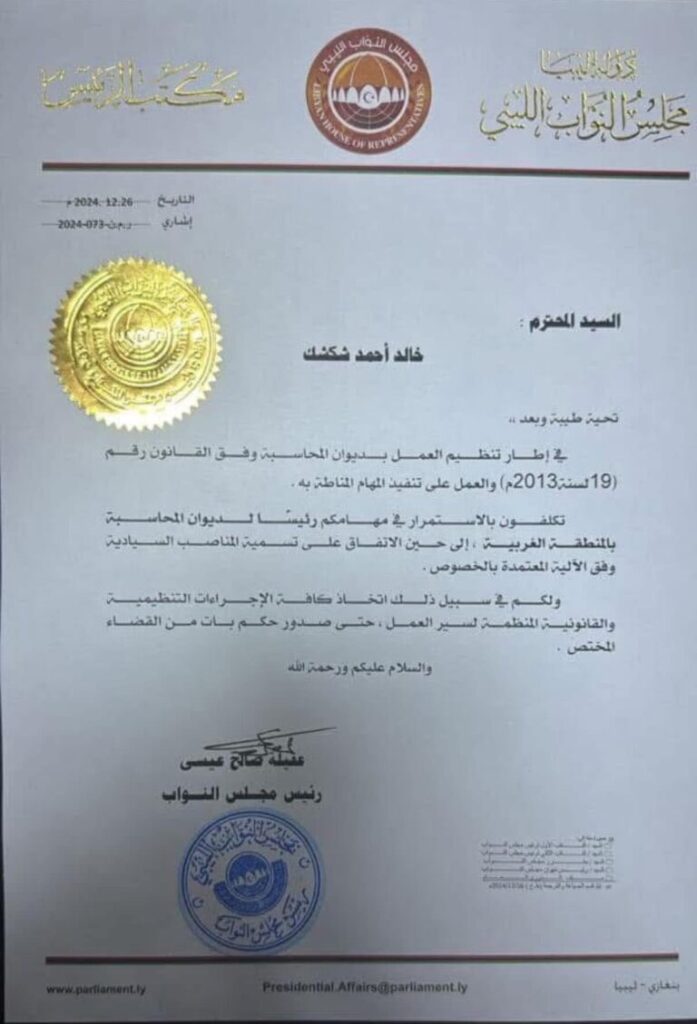
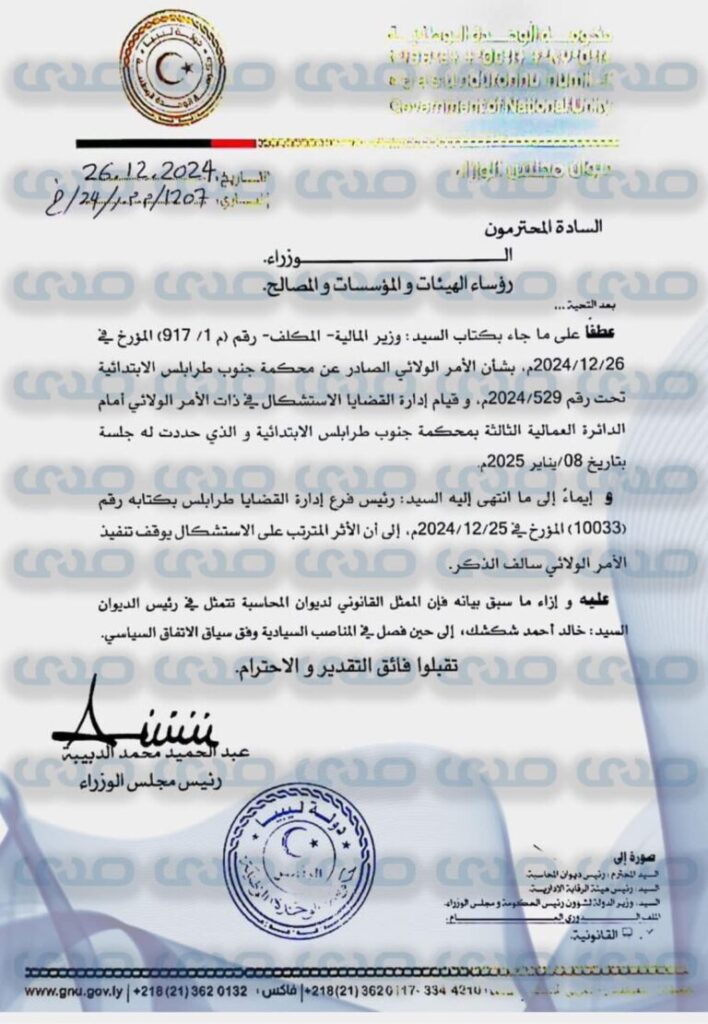
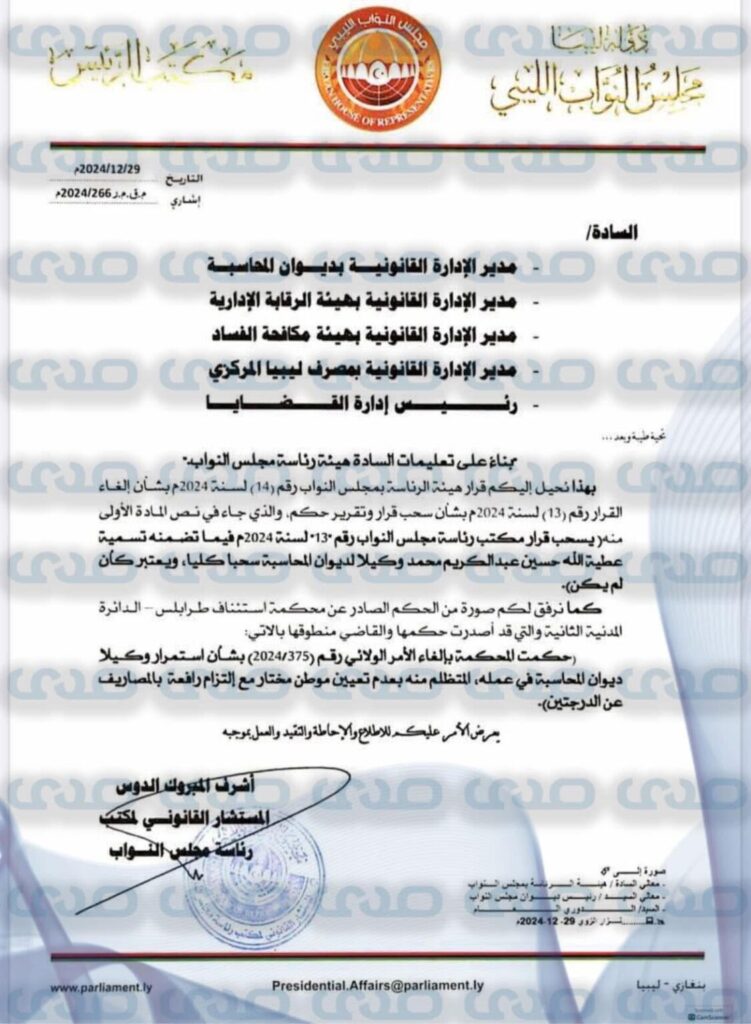
Our source has obtained a directive from the House of Representatives to several public entities, nullifying the ruling that allowed Al-Saaiti to continue as Deputy Head of the Audit Bureau.
The Speaker of the House of Representatives recently reaffirmed the decision to maintain Khalid Shakshak as the head of the Audit Bureau.
Additionally, the Prime Minister of the Government of National Unity, Abdul Hamid Dbeibeh, has issued a circular instructing officials under his government to continue recognizing Khalid Shakshak as the Audit Bureau’s chief.
Our source has exclusively obtained correspondence from the Deputy of the Audit Bureau addressed to several officials within the bureau regarding the ruling of the South Tripoli Primary Court.
Al-Saiti formed a committee to carry out procedures for receiving the responsibilities held by Khaled Shakshak, closing the outgoing register, and shutting down the decision system under his authority. This follows the South Tripoli Court’s ruling to suspend him from duty and remove his official capacity.
In turn, the Legal Administration addressed the Audit Bureau, instructing the suspension of the enforcement of the administrative order issued against the Audit Bureau head, Khaled Shakshak, pending a session at the Tripoli Court of Appeal scheduled for February 2025.
The legal advisor, Hisham Al-Harati, stated exclusively to our source: “The Audit Bureau’s representative or any administrative employee is not permitted to enforce a judicial ruling or order through an administrative correspondence.”
He added: “The enforcement of judicial rulings and orders is exclusively carried out by bailiffs in accordance with the procedures outlined in the Libyan Code of Civil Procedure. This cannot be done through administrative directives. Any action contrary to this constitutes an overreach of administrative employees’ authority and violates the provisions of Article 365 of the Libyan Code of Civil Procedure, which stipulates that enforcement must be conducted by bailiffs based on the request of the benefiting party or their legal representative.”
He further clarified: “Therefore, this responsibility does not fall within the duties of an administrative employee. Hence, administrative correspondences issued by the Audit Bureau’s representative or any administrative body do not constitute a lawful means to enforce judicial rulings. Any action undertaken in this manner is a clear violation of the Libyan Code of Civil Procedure and exposes the violator to legal accountability.”
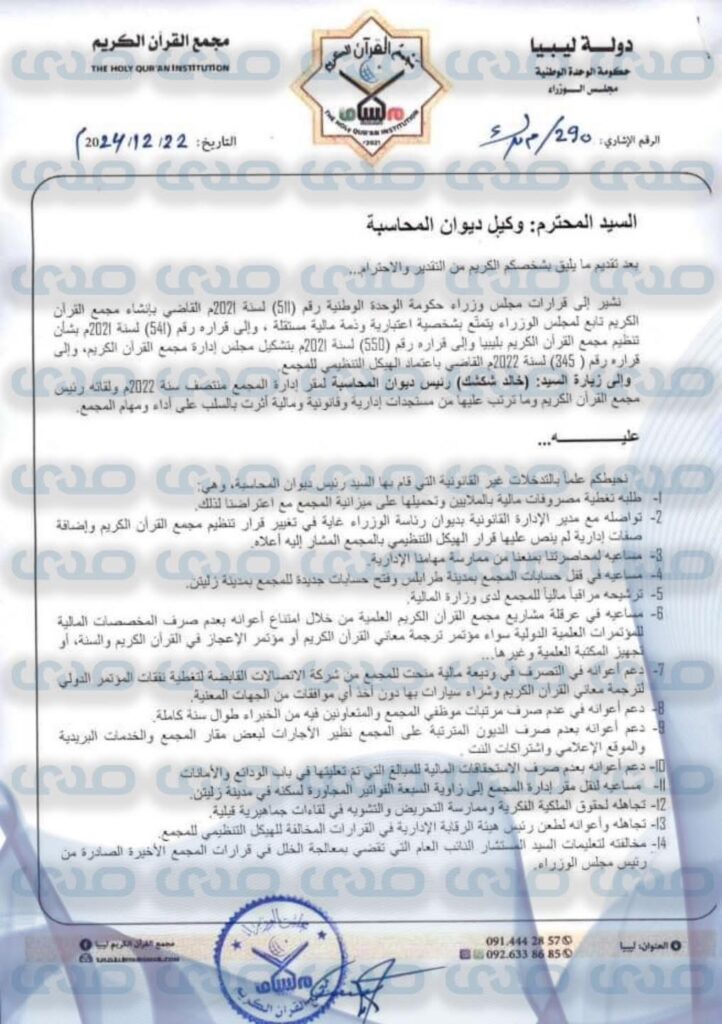
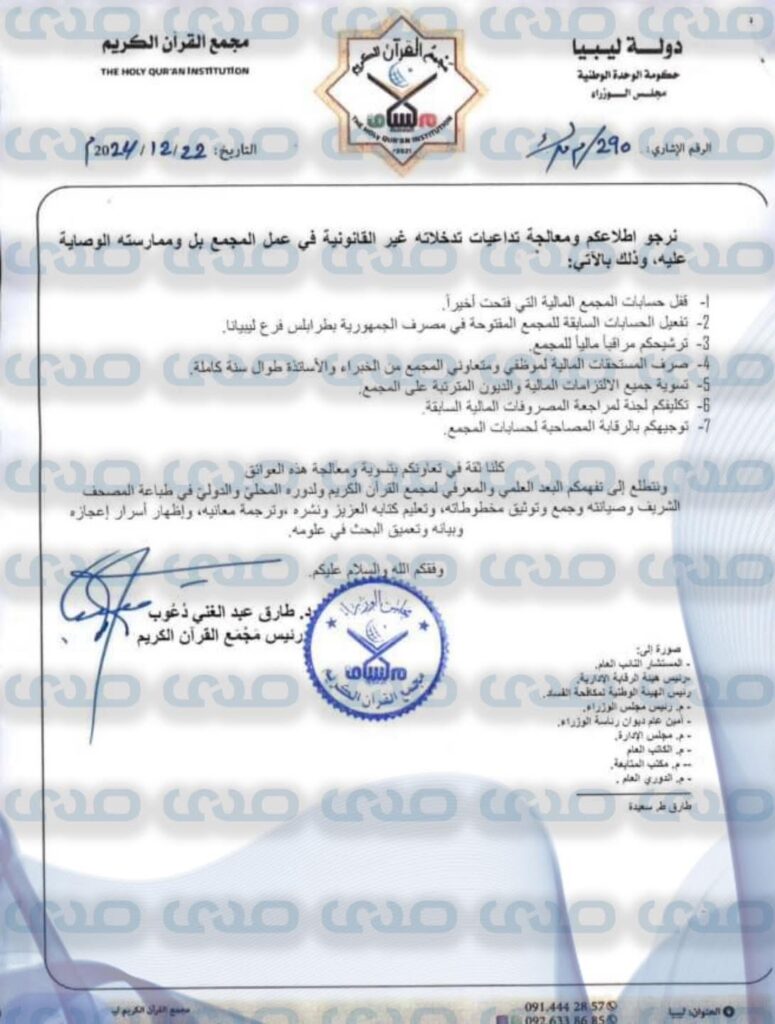
Our sourcce has exclusively obtained a letter sent to the Deputy Head of the Audit Bureau from the President of the Holy Quran Institution, detailing what he describes as “unlawful interventions” made by the head of the Audit Bureau, Khaled Shakshak, in the affairs of the Complex.
The letter highlights, among other matters, Shakshak’s request to cover millions in financial expenses and charge them to the Complex’s budget. The President of the Quran Complex urged the Deputy Head of the Audit Bureau to address the consequences of such actions.