| Economic articles
Al-Shalwi: Wealth Consumed by the Flame – World Bank Says Gas Flaring Reached Its Highest Level Since 2019 in 2025, Wasting 167 Billion Cubic Meters Worth US$54 Billion
By Abdulmonsef Al-Shalwi, Oil and Economic Expert
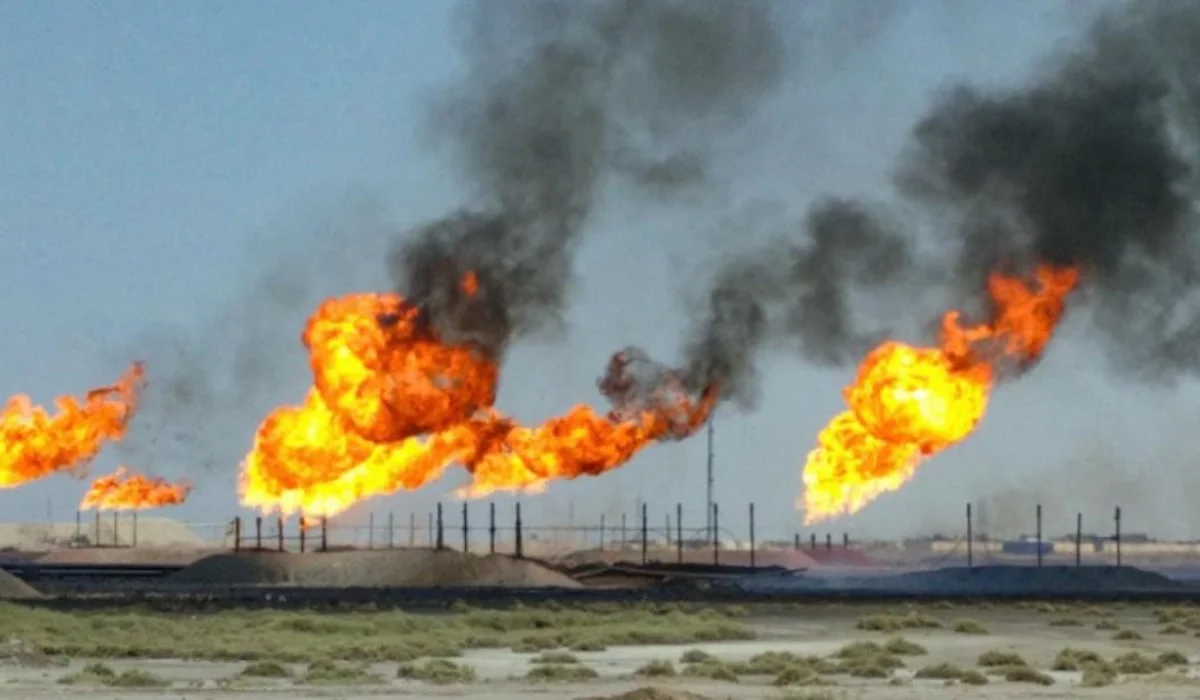
Associated gas flaring at oil production sites is no longer merely an environmental issue or a technical figure listed in sustainability and emissions reports. It has become a key indicator of resource management efficiency, investment planning, and a country’s ability to convert its hydrocarbon wealth into electricity, industry, government revenues, and employment opportunities.
This perspective is central to understanding the World Bank’s “Global Gas Flaring Tracker Report 2026,” which found that 167 billion cubic meters (bcm) of natural gas were flared worldwide in 2025, representing an estimated value of US$54 billion.
This marks the highest level of gas flaring since 2019 and the third consecutive year in which global flaring volumes have increased.
To put this into perspective, the report notes that this volume is roughly equivalent to Africa’s total annual gas consumption and exceeds the amount of liquefied natural gas (LNG) transported through the Gulf region during the same year.
This comparison is not intended to be sensational, but rather to illustrate the economic paradox: a valuable energy resource is burned at production sites while many countries continue to face electricity shortages, rising energy costs, and increasing demand for reliable domestic gas supplies.
Not All Gas Flaring Is the Same
The article stresses the importance of distinguishing between safety-related flaring and routine flaring.
Temporary flaring is often technically necessary during plant start-ups, shutdowns, maintenance, testing, emergencies, or sudden pressure increases. In such cases, flare systems are an essential component of industrial safety, protecting personnel, equipment, and facilities.
The real challenge, however, is routine gas flaring, which continues because of insufficient gas gathering, compression, processing capacity, limited pipeline infrastructure, equipment outages, lack of nearby markets, or because associated gas utilization was not incorporated into the original field development plans.
Therefore, the realistic objective is not to eliminate all flares, but rather to end routine flaring while minimizing operational flaring without compromising safety.
How the World Bank Measures Gas Flaring
The World Bank’s estimates rely primarily on satellite observations, providing an independent and standardized basis for comparing flaring activity across countries.
The 2026 report introduced an improved methodology using data from three satellites operated by the U.S. National Oceanic and Atmospheric Administration (NOAA), along with enhanced techniques for identifying flare locations and calibrating flare volumes.
Consequently, the Bank’s estimates may differ from measurements recorded at oil fields and facilities without necessarily indicating that either source is incorrect.
Satellites estimate gas volumes by measuring thermal radiation from flare stacks and applying mathematical models, whereas operators rely on on-site metering systems and material balance calculations.
A proper technical assessment requires comparing both data sources, understanding discrepancies, verifying measurement equipment, and accounting for variations in gas composition, combustion efficiency, and operating conditions.
What Does the US$54 Billion Figure Mean?
The author emphasizes that the World Bank’s estimate does not represent profits that could immediately be realized simply by extinguishing flare stacks.
Instead, it reflects the estimated gross value of the gas currently being flared worldwide.
Capturing this gas requires major capital investments in gathering systems, compressors, separation units, treatment facilities, pipelines, metering systems, control equipment, and maintenance.
Economic viability also varies depending on gas flow rates, gas composition, impurity levels, reservoir pressure, proximity to infrastructure and markets, and local demand.
Moreover, not every cubic meter of flared gas can be converted into marketable gas, since some losses occur during processing, and part of the recovered gas is consumed as fuel for compressors and production facilities.
Nevertheless, these challenges do not diminish the economic value of associated gas recovery. Rather, they highlight the importance of evaluating each project on its own technical and economic merits.
The World Bank estimates that ending routine gas flaring worldwide would require initial investments of between US$70 billion and US$100 billion—less than twice the estimated value of the gas wasted in a single year.
The Economic Value Extends Beyond Gas Prices
The losses from gas flaring extend well beyond the market value of the gas itself.
Recovered gas can be used for:
- Electricity generation.
- Fuel for oil production operations.
- Processing into condensates and natural gas liquids (NGLs).
- Petrochemical industries.
- Fertilizer production.
- Steel and cement manufacturing.
In some reservoirs, gas can also be re-injected to maintain reservoir pressure and improve oil recovery.
In remote locations, compressed natural gas (CNG) or small-scale LNG projects may also prove commercially viable where supported by technical and economic studies.
Providing gas to power plants can reduce dependence on more expensive liquid fuels, lower fuel import costs, and allow greater quantities of crude oil and refined products to be exported.
Therefore, the economic return from gas recovery projects should be assessed not solely based on gas prices but on their overall economic contribution, including electricity generation, fuel substitution, industrial output, operational efficiency, emissions reductions, and lower import bills.
Libya’s Progress Deserves Recognition
Turning to Libya, the author notes that the National Oil Corporation (NOC) announced significant progress in early 2026 through several projects that reduced gas flaring and enabled the utilization of more than 100 million cubic feet of gas per day.
These projects, implemented by Sirte Oil Company, Sarir Oil Operations, and Waha Oil Company, included:
- Redirecting gas to the coastal pipeline network.
- Restarting gas separation and compression facilities.
- Utilizing gas for gas-lift operations.
- Operating gas processing units to produce additional condensates.
The NOC has also announced plans to increase gas utilization to approximately 120 million cubic feet per day during 2026 while targeting a 60% reduction in gas flaring by 2030.
According to the author, these initiatives deserve recognition because they not only reduce emissions but also strengthen domestic gas supplies, support power generation and industry, improve operational efficiency, and maximize the value of Libya’s natural resources.
The Bouri Gas Project: Turning Waste into Value
One of the most important strategic initiatives is the Bouri Field Associated Gas Utilization Project.
The project carries an announced budget of approximately US$1.565 billion and is designed to process roughly 125 million cubic feet of gas per day, eliminating routine flaring at the field while increasing gas supplies to the domestic market.
The project reflects a shift in perspective—from treating associated gas as merely a by-product of oil production to recognizing it as a valuable economic resource capable of strengthening energy security, supplying fuel, improving production efficiency, and creating added value for Libya’s economy.
Increasing Oil Production Requires Parallel Gas Development
The author concludes that while Libya is rightfully seeking to increase crude oil production and public revenues, higher oil output must be accompanied by parallel investments in gas gathering, processing, and transportation infrastructure.
Without sufficient capacity, increased oil production from associated gas reservoirs will inevitably result in higher gas flaring rates.
From Flame to Value
The article concludes that the World Bank’s report is not merely about record levels of gas flaring. Its central message is that continued routine flaring represents the loss of a strategic resource capable of supporting electricity generation, industrial development, public revenues, and national energy security.
Every cubic meter of gas that is flared represents fuel that was never used, electricity that was never generated, industrial products that were never produced, and economic opportunities that were never realized.