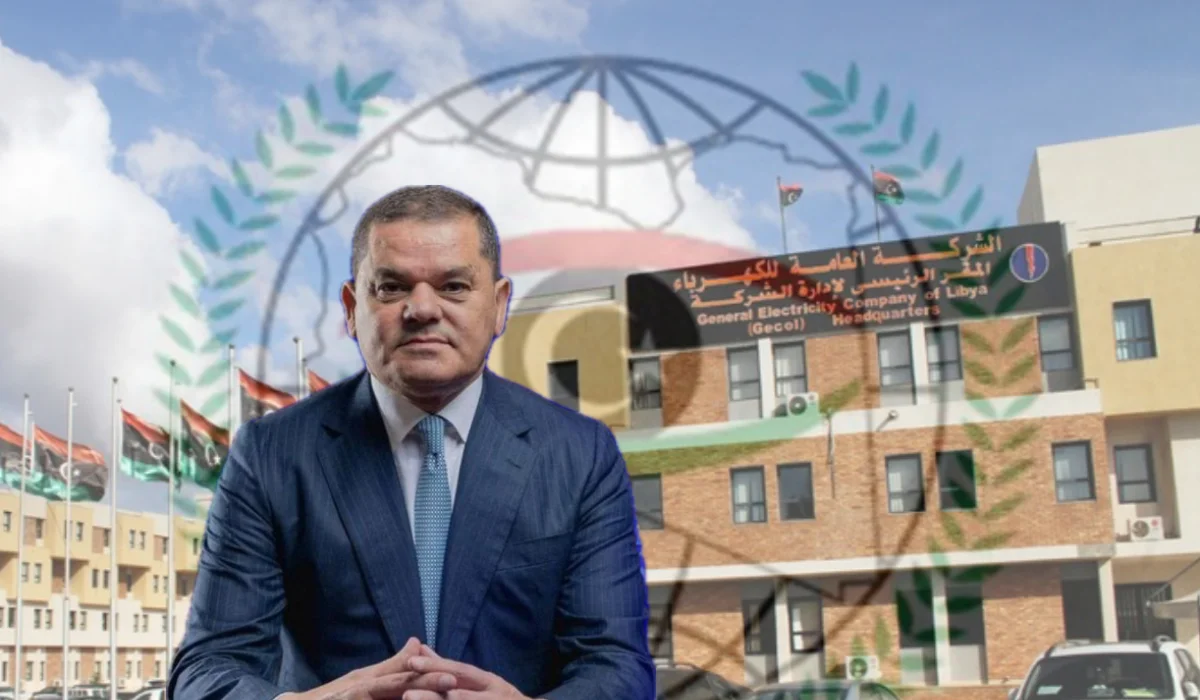
During the Fourth Ordinary Cabinet Meeting of 2026, Prime Minister Abdul Hamid Dbeibah stated that the unified development and financial agreement remains on track and will not be disrupted by attempts to undermine or derail it, which he said are aimed at returning Libya to square one.
Dbeibah said that Libya has endured 13 years of financial division, which has had a direct impact on state institutions, the quality of public services, and development opportunities across the country. He noted that addressing this legacy is a complex process that inevitably faces challenges, as the government is not merely responding to a temporary crisis but correcting a path that has been distorted for years.
He added that the dual financial system exhausted the state’s financial administration, opened the door to widespread waste, weakened oversight, and affected the fair distribution of resources. According to Dbeibah, current efforts are focused on restoring discipline to public financial management and unifying spending and oversight mechanisms to ensure greater efficiency, transparency, and equitable allocation of resources throughout Libya.
During the meeting, Dbeibah reacted angrily to the ongoing power outages, questioning why electricity cuts had returned. He said the government had worked hard to improve electricity supply and had even encouraged Libyans to sell their private generators after assuring them that the crisis had been resolved. He added that it was unacceptable for “a corrupt individual” to push the country back to square one.
Dbeibah also criticized the General Electricity Company of Libya (GECOL), announcing the formation of an investigative committee to examine the current electricity crisis. He described the company’s management as “a failed administration” and also criticized the Food and Drug Control Center, calling it ineffective and accusing it of allowing banned pesticides to enter the country. He further alleged that both institutions are managed by the same individual and accused the customs authority of corruption.
The article also notes that Dbeibah had previously stated that Libya’s electricity crisis had become a thing of the past and that the country would eventually be able to export electricity to neighboring countries. Before assuming office in 2021, he also pledged to permanently resolve the electricity crisis and later announced plans to establish a power transmission line that would supply electricity to Europe.