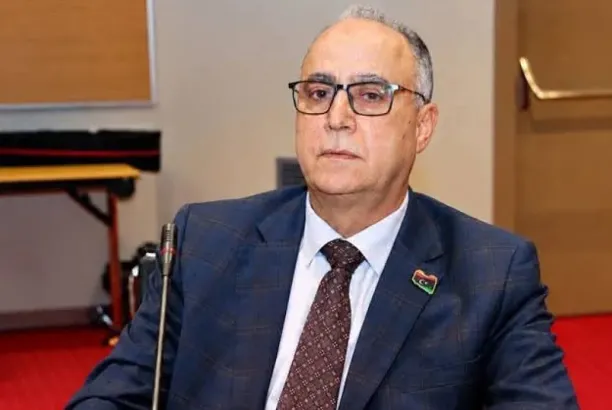
Businessman Husni Bey stated that Libya’s fuel subsidy crisis does not lie in the principle of subsidies itself, but in its current implementation mechanism, which has turned into a source of financial waste, fuel smuggling, and foreign currency depletion.
He explained that estimates based on international data and regulatory reports indicate that Libya loses between $5 and $6.7 billion annually due to smuggling and waste, while fuel import costs in 2024 exceeded $9 billion. The total energy subsidy bill—when including fuel, gas, and electricity—could reach $17 billion.
He pointed out that selling fuel domestically at prices far below its real cost has created a strong incentive for smuggling, stressing that the solution lies in replacing commodity subsidies with direct cash transfers to citizens. He proposed distributing 500 Libyan dinars per month per citizen, equivalent to 3,000 dinars for a six-person household.
He added that this proposal would help reduce smuggling, rationalize consumption, improve the balance of payments, support foreign exchange reserves and stabilize the dinar, while also reducing the fiscal deficit and redirecting resources toward investment and public services.
He further stated that cash support, if implemented gradually and without monetizing the fiscal deficit, would not lead to high inflation, expecting its impact on overall price levels to remain around 3%, while potentially reducing subsidy and smuggling costs by 30–40%.
He concluded that continuing the current subsidy system would increase pressure on foreign exchange reserves and widen the gap between the official and parallel exchange rates, considering subsidy reform one of the most important keys to stabilizing the Libyan economy.