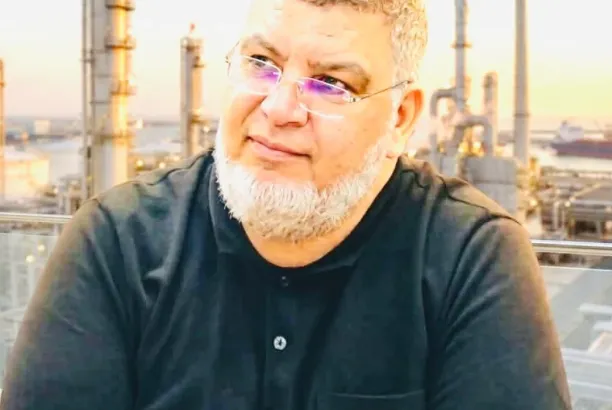
Written by: Member of the House of Representatives Dr. Abdulsalam Abdullah Nasiyah
The Eastern Mediterranean is no longer merely a maritime space where states compete over energy resources. In recent years, it has become one of the region’s most important arenas of geopolitical conflict. With the discovery of major natural gas fields off the coasts of Egypt, Palestine, and Cyprus, the region’s importance has increased, prompting coastal states, along with regional and international powers, to realign their alliances and interests around energy, maritime borders, and routes for exporting gas to European markets.
Major gas discoveries have contributed to reshaping the strategic calculations of countries in the region. Alongside the significant reserves discovered off the coasts of Palestine, Cyprus, and Egypt, Europe has increasingly viewed the Eastern Mediterranean as a potential source for diversifying its energy supplies and reducing dependence on other sources.
In this context, the East Mediterranean Gas Forum was established in 2019, with the participation of several countries in the region, with the aim of promoting cooperation in the gas sector and developing regional infrastructure and markets. Over time, gas ceased to be merely an economic issue and became part of a complex network of alliances, competition for influence, and disputes over maritime boundaries.
Where Does Libya Fit into This Equation?
This is where Libya’s importance comes into focus.
The maritime agreement concluded between Libya’s Government of National Accord and Turkey in November 2019, concerning the delimitation of maritime jurisdiction areas in the Mediterranean, was not merely a bilateral agreement between Tripoli and Ankara. It became part of the broader dispute over maritime boundaries and energy routes in the Eastern Mediterranean.
The agreement drew strong objections from Greece, Egypt, and Cyprus, while Turkey and the then-Government of National Accord regarded it as a tool for protecting their respective maritime interests.
From this perspective, it can be argued that Libya found itself—perhaps without having the ability to fully control the course of events—within a geopolitical conflict larger than its own capacity to maneuver.
The regional landscape can be viewed as an intersection of two main blocs:
The first is led by Turkey, which views the maritime agreement with Libya as an important strategic card in confronting maritime arrangements that Ankara considers detrimental to its rights in the Eastern Mediterranean.
The second primarily includes Greece and Cyprus, with clear areas of alignment with Egypt and other countries. This bloc rejects the arrangements resulting from the Turkish-Libyan agreement and argues that some of its provisions conflict with the rights of islands under the principles of international law of the sea.
As a result, Libya has become part of a regional equation extending beyond its immediate interests.
The fundamental problem is that Libya entered this equation while suffering from deep political and institutional division.
A divided state cannot easily manage a strategic issue on the scale of maritime boundaries, nor can it negotiate with regional and international powers from a position of strength—particularly when international agreements themselves become subjects of domestic and external dispute.
This is where the danger lies.
Instead of being a state with a clear policy toward the Eastern Mediterranean, Libya itself has become an arena for competition among regional powers.
This does not necessarily mean that everything happening in Libya is caused by the Eastern Mediterranean or by gas. The Libyan crisis is much older and more complex than that. However, it is also difficult to ignore the fact that Libya’s geographic position, its long Mediterranean coastline, and its connection to maritime and energy routes make it highly strategically significant in regional calculations.
Has Libya Become a Victim?
Perhaps the more accurate answer is that Libya has become an arena where the conflicts of others intersect because of its internal weakness, rather than a direct victim of the Eastern Mediterranean conflict.
The real danger lies not only in states competing over maritime boundaries, but in Libya’s internal divisions becoming a permanent gateway for foreign intervention, with the interests of regional powers becoming part of the equation of Libya’s internal conflict.
For this reason, Libya’s approach to the Eastern Mediterranean issue should not begin with the question:
Whose side should Libya take—Turkey’s or Greece’s?
Rather, it should begin with a more important question:
What is in Libya’s interest first?
In my view, overcoming this predicament must begin from within Libya.
Unifying state institutions, ending political division, consolidating sovereign decision-making, and building institutions capable of protecting the country’s borders and managing its resources are all essential conditions for Libya to defend its maritime and economic interests in accordance with international law.
Only then can Libya engage in the Eastern Mediterranean dialogue from the position of a state that makes its own decisions, rather than that of an arena contested by other powers.
Therefore, Libya’s guiding principle at this stage should be:
Libya’s stability first, then the Eastern Mediterranean.
Libya cannot defend its maritime borders, resources, and regional interests while it remains divided against itself.
The issue is not for Libya to choose between one bloc and another. Rather, it must first regain the ability to become an independent pole in its own right.
A strong foreign policy begins with a strong state at home, and sovereignty at sea cannot be stronger than sovereignty on land.