Tag: central bank

Exclusive: Central Bank of Libya Governor to Mohamed Al‑Huwaij: Allocation of Letters of Credit Was Sector-Based Amid the Absence of a Guiding Budget to Regulate the Market

Our source obtained a correspondence from the Governor of the Central Bank of Libya addressed to the Minister of Economy in the Government of National Unity, Mohamed Al-Huwaij, in which he confirmed that letters of credit were allocated to importing companies for various goods and purposes based on sectoral distribution.

This followed the Central Bank’s verification that the required official documentation had been provided, in light of the absence of a guiding budget from the Ministry of Economy to regulate quantities of goods in line with market needs.

Economic Analyst to Sada: Parliament’s Decision to Impose the Tax Is Correct and Will Close Corruption Files in Letters of Credit, Expectations for the Parallel Market

An economic analyst said, in a statement to our source, that the decision of the House of Representatives represents a step in the right direction and is one that has been awaited for years. Imposing the tax will close corruption files related to letters of credit and currency smuggling, bring an end to the black market, and reduce the depletion of dollars.

He explained that the tax targets luxury goods that were being smuggled abroad due to their low cost. With the new measures, there will no longer be unfair competition with foreign and neighboring markets, and imports will be aligned with the actual needs of the Libyan market.

He added that this will lead to a decline in demand and a drop in the dollar’s price in the parallel market. While there may be an initial wave of speculation pushing prices higher, the market will not hold, and the dollar will eventually collapse.

Exclusive: Central Bank of Libya to Sada: Tax on Foreign Currency Sales Abolished, New Figures

The Central Bank of Libya exclusively revealed to our source that the official exchange rate against the US dollar has been set at approximately 6.36 dinars per dollar, alongside the abolition of the tax on foreign currency sales.

The maximum selling margin for exchange companies has been set at 4% added to this rate. The cash selling margin is 4%, while sales conducted via checks and transfers carry a margin of 2.5%, meaning that sales through checks and transfers are priced lower than cash sales.

According to the Central Bank, this decision comes amid the continued absence of a unified state budget, the growth of public spending at an unsustainable pace, and the persistence of dual spending outside disciplined financial frameworks, without due consideration for the absorptive and financing capacity of the national economy. This situation necessitated the adoption of a set of measures aimed at preserving financial and monetary stability and ensuring the sustainability of public resources.

Central Bank of Libya to Sada: Official Exchange Rate Set at Around 6.36 per Dollar, Details Revealed

The Central Bank of Libya exclusively revealed to our source that the official exchange rate against the US dollar has been set at approximately 6.36 dinars per dollar.

The maximum selling margin for exchange companies has been set at 4% added to this rate. The cash selling margin is set at 4%, while sales via checks and transfers carry a margin of 2.5%, meaning that selling through checks and transfers is priced lower than cash sales.

Title:House of Representatives Corresponds with the Central Bank Governor and His Deputy Regarding the Adoption of the Decision Regulating the Production and Consumption Tax and Fees Effective

Our source exclusively obtained a correspondence from the House of Representatives addressed to the Governor of the Central Bank and his Deputy, informing them that the House has approved the decision regulating the production and consumption tax and fees on certain goods, capital assets, and foreign currency sales, to come into effect as of January 18.

This includes taking the necessary measures to collect the tax and fees into a unified account at the Central Bank upon opening and settling the value of letters of credit when their documents are traded and when foreign currencies are sold. The decision also applies to import operations conducted outside the banking system.

Exclusive: Central Bank Considers Limiting Salary Disbursements to “Instant Salary” Starting January, Details to Follow

Our source obtained, exclusively, a correspondence from the Governor of the Central Bank of Libya addressed to the Minister of Finance of the Government of National Unity, calling on entities that have not yet submitted their employees’ data to urgently do so for verification and matching. This comes as the Central Bank is considering restricting salary payments exclusively through the Instant Salary system starting in January.

According to the correspondence, the total number of salaries paid through the Ratibak Lahzi system up to December 2025 reached 1.139 million accounts, out of 2.2 million total government employee accounts. This figure was described as very low compared to the overall number of salaries.

The Governor noted that the primary objective of the system is to update and verify information and data for employees across all state sectors who receive salaries from the public treasury, in order to prevent duplication and control spending on the wage bill, which has come to represent nearly 60% of the state’s general budget. However, the Central Bank has observed delays by some entities in submitting employee data for verification, without justified reasons.

Exclusive: Central Bank: Settlement of All Outstanding Credits in the Credit System and Sale of Funds to Banks Totaling $2.3 Billion

The Central Bank of Libya revealed exclusively to our source that all outstanding credits within the credit system have been settled, and their value sold to banks by the end of business today, Thursday, amounting to $2.3 billion.

This comes in support of the smooth flow of goods ahead of the month of Ramadan, and in preparation for the launch of operations under the credit and purposes system next week.

Exclusive: Banking Source Expects Parallel-Market Dollar to Fall Below 8 Dinars Following Central Bank Measures

Our banking source told in an exclusive statement that the U.S. dollar is expected to fall below 8 dinars in the parallel market, as a result of anticipated measures by the Central Bank of Libya and the Ministry of Economy, along with the activation of exchange companies and their provision with foreign currency by the Central Bank.

The source said this will take place in accordance with the agreed mechanism, pending the announcement of the Central Bank’s procedures tomorrow or next Sunday, and the reopening of foreign currency platforms.

Exclusive: Central Bank to Continue Selling Foreign Currency to Cover Approved Letters of Credit; $500 Million Sold Today

The Central Bank of Libya confirmed exclusively to our source that it will continue selling foreign currency to cover approved letters of credit.

The Bank added that $500 million was sold to commercial banks today.

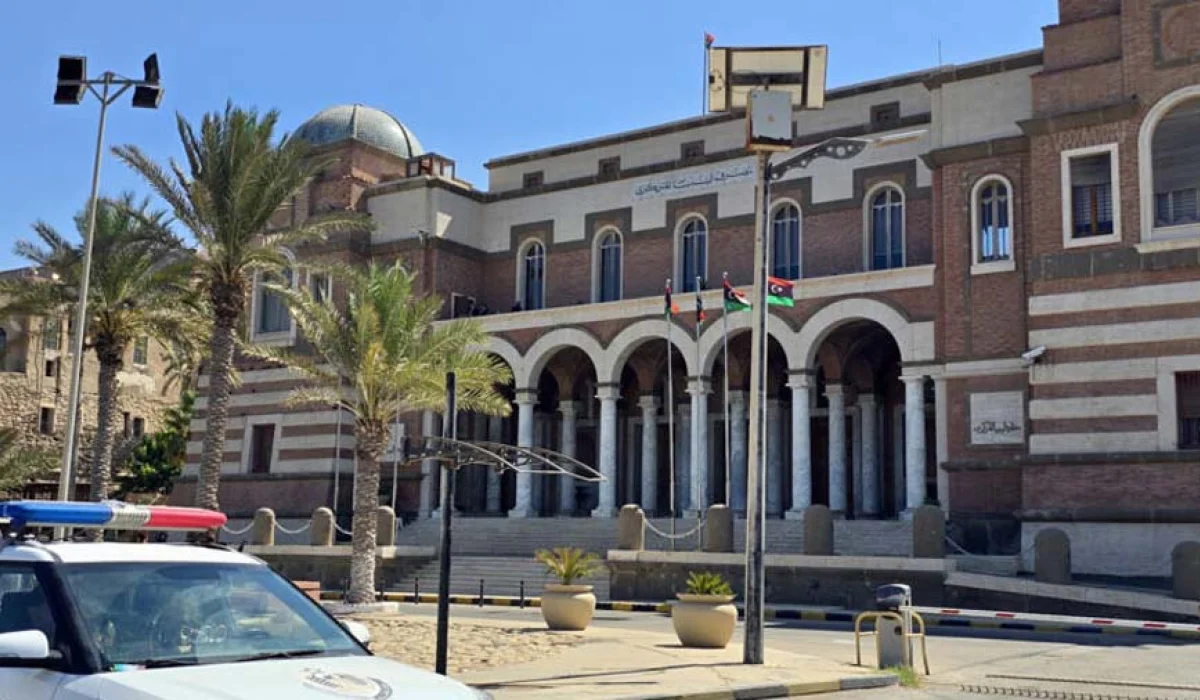
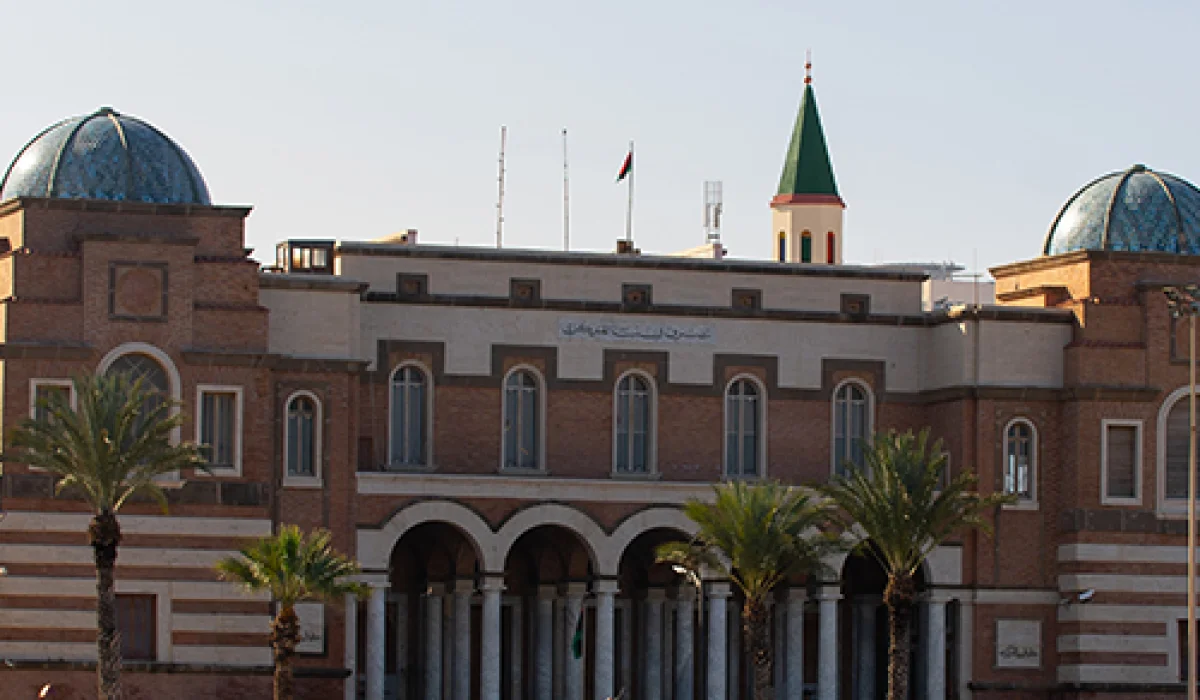
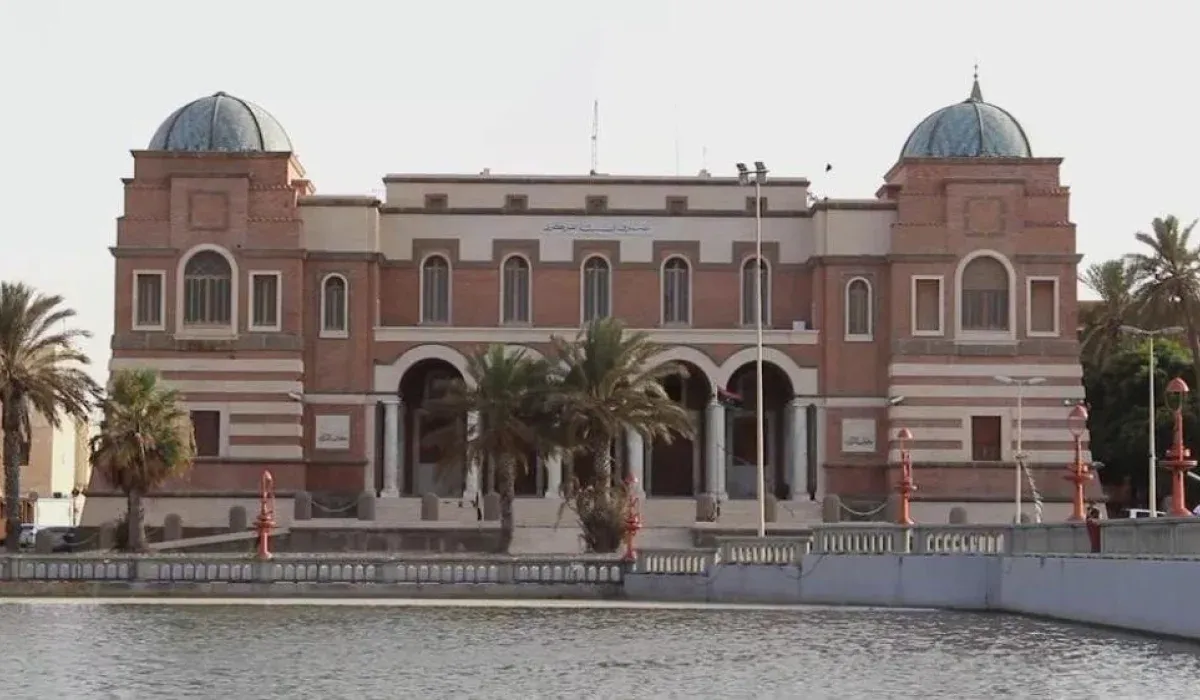
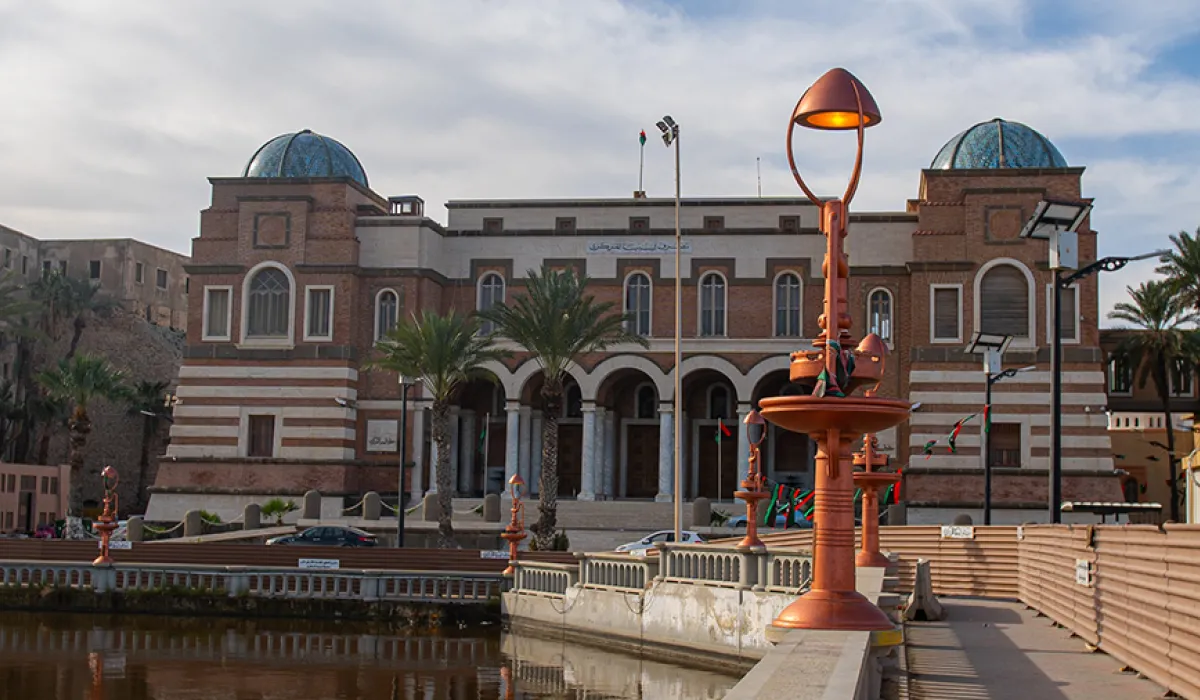
Central Bank of Libya

Exclusive: Central Bank Board Meeting Expected to Push the Dollar Below 8 Dinars

The Central Bank of Libya told our source exclusively that the Board of Directors will meet tomorrow for approval, and that the most important measures will target bringing the exchange rate in the parallel market below 8 dinars.

The Central Bank said the measures include launching the operations of exchange companies and allowing them to sell foreign currency based on demand, in accordance with the mechanism set by the Bank, including fast remittances, card loading, transfers, and other services.

It added that the exchange rate will be monitored in line with the ceiling set by the Central Bank, noting that market volatility is expected at the beginning, but that the rate will be brought below 8 dinars in the first phase.

Exclusive: Central Bank Board Meeting Expected Next Wednesday

Our sources exclusively revealed that a meeting of the Board of Directors of the Central Bank of Libya is expected to take place next Wednesday.

The Central Bank had previously revealed, in exclusive statements to Sada, that decisions regarding foreign currency would be issued this week.

The Central Bank said it will resume the sale of foreign currency and the acceptance of applications for letters of credit and personal purposes at the beginning of next week, with procedures for the operation of exchange companies expected to be ready before the end of the month.

Liquidity Crisis and the “Parliament Dollar”: Parliament Forms a Committee and Demands Urgent Answers from the Central Bank Governor

House of Representatives Speaker Aguila Saleh said during today’s session that the Governor of the Central Bank of Libya, his deputy, and the Board of Directors—as well as the Council of Ministers of the Libyan Government and the Chairman of the National Oil Corporation—had submitted apologies and requested that the session be postponed to the next meeting.

During the session, MP Al-Zayed Hadiya said that the governor had been invited many times and had repeatedly apologized for not attending, as had members of the Board. He added that the Chairman of the National Oil Corporation had been invited for the first time to attend and be heard regarding the ongoing issues.

Hadiya added that, according to Administrative Control Authority reports, there are discrepancies even in revenue figures between what the NOC chairman states and what the Central Bank reports. He noted that the country is approaching the month of Ramadan, while Libyan citizens are, frankly, taking 1,000–1,500 dinars only to see them “burned” on the black market down to about 700 dinars.

He continued by saying that, in his view, the crisis has begun to worsen, and public anger is being directed at the House of Representatives and the legislative authority that selected the governor and the Board. He said that repeated absences might be excusable once or twice, but continuous absence under current conditions is unacceptable. The governor, he said, should appear before the Central Bank and explain the real reasons for the crisis. He recalled that the governor had promised the Presidency Bureau in a previous meeting that liquidity would be available by last October, yet this did not materialize for citizens.

Hadiya further called for forming an investigation or fact-finding committee with the governor and the Board regarding the conditions of the Central Bank, reserves, letters of credit, and the size of Libya’s foreign reserves. He said many issues need to be discussed directly with them to reassure the public ahead of Ramadan.

Responding to calls for an investigation, Speaker Aguila Saleh said that the governor had not refused to attend. He expressed agreement with forming a committee for questioning—not for investigation—stating that the committee would discuss matters with the governor, ask questions, communicate with him on the exchange rate, and give him the opportunity to respond and be prepared.

In the same context, MP Jalal Al-Shuwaidi said he was surprised by the excuses offered by officials during crises. He remarked that officials attend without excuses when taking the oath, but during crises, excuses of illness and travel emerge. He excluded from his remarks the Libyan Prime Minister Osama Hamad, citing illness and travel as valid reasons, and expressed hope that the governor would attend the next session to clarify the problem and proposed solutions.

Amid heated exchanges with MPs, MP Asmaa Al-Khoja warned that dismissing the Central Bank governor at such a critical time would shake the Central Bank and plunge the public into a deeper crisis. She said forming a committee suggests a path similar to the dismissal of a previous governor and argued for forming a committee of experts rather than MPs. She added that summoning the NOC chairman was illogical, as the corporation reports to the Government of Dbeibah, from which confidence had already been withdrawn.

MP Issa Aribi said that the House had repeatedly invited the Central Bank governor, who continued to apologize for not attending. He noted that the country is facing a dollar crisis, with the exchange rate rising toward 10–11 dinars, no liquidity, and a 200-dinar “burn” on every 1,000 dinars—clear signs of a serious problem that necessitates the governor’s attendance.

Aribi added that the governor hears conflicting narratives from different parties and must appear before the public to explain the dollar crisis. He said that when the governor assumed office, the dollar was at 6–7 dinars, whereas it has now risen to around 10, and liquidity was not previously this bad. He noted that the governor meets repeatedly with the financial committee and traders, conveying different messages.

He further claimed that letters of credit worth hundreds of millions of dollars are being issued for non-essential items—such as dog food—without clarity on how or to whom. He said the governor must appear before the House to tell the truth. He also pointed out discrepancies between figures reported by the National Oil Corporation and those reported by the Central Bank, which require clarification to identify where the fault lies.

Aribi concluded that a committee must be formed, given the ongoing crisis and the approach of Ramadan. He warned that if the situation continues, the dollar could rise to 12 or 13 dinars, liquidity will remain scarce, and citizens will continue to suffer. He called for an investigation committee with the governor, his deputy, and the Board, and said that if they are unable to manage the situation, others who can should be brought in. He argued that managing public funds is a technical task and that if officials cannot keep the dollar at 6 or 7 dinars, they should resign.

Commenting on calls to form an investigation committee, MP Badr Al-Din Nuhayyib said that committees often delay matters. He called for summoning the governor to the next session and taking action against him and the Board if he fails to attend. He added that the dollar is rising, liquidity is absent, and the governor should form a currency committee to return registered currency to circulation, noting claims about billions in printed currency that have not entered circulation.

At the conclusion of today’s session, the House of Representatives voted by majority to form a technical committee to meet with the Central Bank governor, his deputy, and the Board to discuss issues requiring answers before the House, including the liquidity shortage, exchange rate, delayed salaries, and proposed remedies. The committee is to present its report to the House as soon as possible, and the officials are expected to attend the next session.

Exclusive: Central Bank to Sada: Decision Expected This Week on Foreign Currency, with Sales Resuming Next Week and Exchange Companies Ready by Month’s End

The Central Bank of Libya exclusively revealed to our source that decisions regarding foreign currency will be issued this week.

The Central Bank stated that it will resume the sale of foreign currency and the acceptance of applications for letters of credit and personal purposes at the beginning of next week, with procedures for the operation of exchange companies expected to be ready before the end of the month.

Central Bank announces the start of December salary disbursements via the “Ratik Lahzi” system, amounting to 2.2 billion dinars

The Central Bank of Libya revealed exclusively to our source that it has begun executing December salaries, starting on December 12, through the “Ratik Lahzi” system and extending to digital wallets.

The Central Bank also announced on its official page that the number of salaries processed through the “Ratik Lahzi” system has reached one million salaries, with a total value of 2.2 billion dinars, which will be credited to citizens gradually. It clarified that 2.229 billion dinars have been transferred to commercial banks, confirming that the system allows citizens to track salary disbursement procedures directly and transparently.