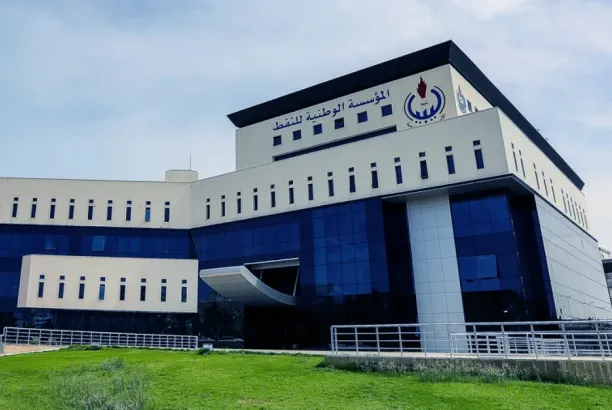
The 2024 report issued by the Libyan Audit Bureau revealed delays by the General Assembly of Brega Petroleum Marketing Company in approving the company’s operational budget for the 2024 fiscal year, as the budget was only formally approved during the third quarter of the year. The report also noted that expenditures charged to several budget items exceeded the allocations approved in the company’s estimated 2024 budget.
The report further disclosed that a committee assigned by the company’s management to furnish the guest house exceeded its authority and assumed the role of the tender committee by soliciting bids from companies, comparing them, selecting the preferred offer, and authorizing the payment of 3.16 million Libyan dinars, in violation of Article 3, Paragraph 1 of the Unified Contracting Regulation for the oil sector.
In addition, the report revealed that the company contracted Aoun Al Arab Consulting to prepare operational plans, restructuring frameworks, job descriptions, and procedural manuals for a total value of $632,562 through direct assignment, based on Resolution No. 219 of 2024 issued by the Board of Directors of the National Oil Corporation. However, the report stated that none of the provisions of Article 24, Paragraph 1 of the Unified Contracting Regulation for the oil sector appeared applicable to justify this direct contract, while no clear criteria or justification were provided for selecting the company specifically.
The report also pointed to discrepancies in most data related to imported quantities of gasoline, diesel, and aviation kerosene, in addition to inconsistencies between total imports recorded by the Supply and Marine Transport Department and those recorded by the Planning Department.
Furthermore, the report identified discrepancies between quantities received according to delivery reports and quantities supplied according to shipping manifests during 2024. The total shortages amounted to 28,353.22 metric tons of gasoline, 13,476.18 metric tons of diesel, and 305.071 metric tons of aviation kerosene. The report noted the absence of any officially approved standard loss ratio by the National Oil Corporation, reflecting weak oversight and control over supply operations.
The report also highlighted rising commercial and operational losses in gasoline and diesel, with gasoline losses reaching 7,310,716 liters and diesel losses totaling 2,848,837 liters.
Additionally, it noted the use of massive quantities of diesel in power generation stations without linking consumption to operational efficiency, reflecting weak monitoring mechanisms and an urgent need for accurate measurement systems, meter calibration, and digital tracking of transportation and distribution operations.
Despite all these findings, figures, and observations contained in the reports of the Audit Bureau and oversight authorities, supporters and image-polishers continue attempting to downplay the scale of the violations, even as official reports and documents increasingly speak louder than any media campaign or public relations effort.