| Post Of The Week
Al-Wahsh Writes: “Has the Central Bank Started Leading the Entire Economic Team?”
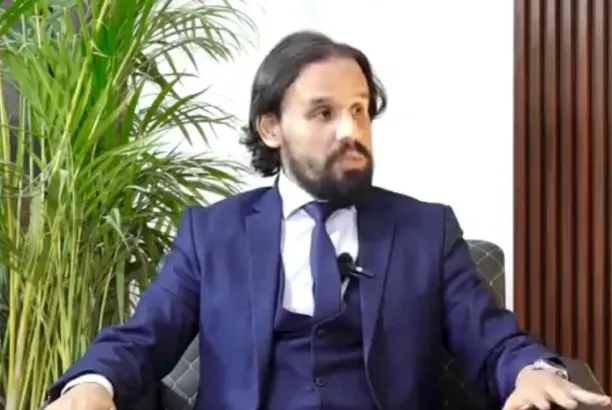
Economist Saber Al-Wahsh wrote an article saying: Has the Central Bank of Libya begun to lead the entire economic team?
To simplify the picture and understand what the Central Bank of Libya is doing today, we will use the analogy of economic policies as a football team inside a stadium, with a referee seeking to properly manage the match.
Fiscal policy represents the striker, as it has the greatest impact on economic activity through public spending and other tools. Monetary policy, led by the Central Bank, is like the right-back, trying to contain risk, control the flow of play, and prevent pressure from reaching the goal. Meanwhile, trade policy is the left-back, regulating imports, foreign trade, and the entry of goods into the market.
Over the past years, economic policies have not moved in a single direction. While monetary policy was trying to control the exchange rate and reduce pressure on foreign currency, the large expansion in public spending was generating additional demand for the dollar and increasing pressure on the parallel market. This effectively made fiscal policy move in the opposite direction of what monetary policy was trying to achieve, while trade policy was weak and effectively “out of the game.”
Today, however, the picture appears somewhat different, especially after understandings and agreements related to development spending, which are expected to make fiscal policy more aligned with economic stability goals—particularly if spending is directed toward productive and developmental pathways.
In this context, recent correspondence issued by the Central Bank of Libya can be better understood. The Bank is no longer limiting itself to monetary policy tools alone; it is now moving toward reorienting the rest of economic policies to operate under a single shared objective.
The correspondence regarding the referral of credit allocation lists to the Ministry of Economy does not appear to be a purely administrative or oversight procedure. Rather, it reflects a clear attempt to involve trade policy more actively in managing the economic crisis. The Central Bank has provided foreign currency and opened official channels for imports and transfers, but in return it wants an active role from the Ministry of Economy in monitoring markets and prices and ensuring that imported goods actually reach the local market and help ease price pressures.
As for the correspondence related to banning imports and re-exports outside the banking system, it reflects a clear understanding that a large part of the pressure on the exchange rate comes from trade conducted outside official channels. Any import outside the banking system automatically creates additional demand for dollars in the parallel market.
From here, the Central Bank’s approach becomes clear: it is pushing commercial activity gradually toward the formal system, after expanding payment, transfer, and foreign currency remittance tools within the banking sector.
In short, it can be said that the Central Bank is now trying to reorganize the entire “economic team,” so that monetary, fiscal, and trade policies move in the same direction instead of working separately or in opposing directions.
The main goal the Central Bank is trying to achieve is directing these policies toward controlling the exchange rate in the parallel market, reducing informal demand for foreign currency, and curbing inflation, which has become one of the biggest challenges facing the Libyan economy.
Therefore, it can be said that the Central Bank is no longer only managing monetary policy; it has effectively become the driver of a broader reorientation of all economic policies toward a unified goal of achieving greater monetary and economic stability in Libya.