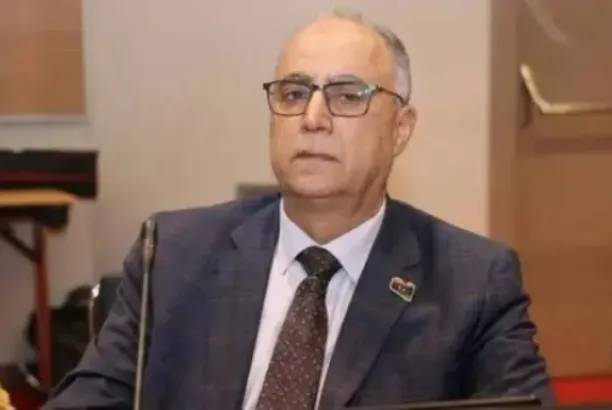
Written by Professor of Economics at the Faculty of Economics and Political Science – University of Tripoli “Hassan Bin Taher” an article
Whenever I listen to proposals related to reforming fuel subsidies, I find myself in a state of confusion, not because of the difficulty of understanding the proposed solutions, but because of my increasing conviction that the problem in Libya is no longer a subsidy program problem as much as it is a state problem.
To clarify, I do not align myself with one viewpoint against another, nor do I defend the continuation of the current situation, nor do I automatically adopt calls for cash replacement or subsidy lifting or other proposals. Rather, I am still searching for someone who can convince me and provide satisfactory answers to the difficult questions imposed by the nature of the Libyan reality.
As an economist—if the description is correct—I cannot defend the continuation of selling fuel at these symbolic prices, nor can I ignore the scale of waste, smuggling, and depletion that has begun to threaten the Libyan economy and burden public finances. At the same time, I cannot convince myself that any reform program, no matter how convincing it appears on paper, can achieve the promised results in a state that has not yet succeeded in controlling its borders, has not succeeded in eliminating smuggling, and has not succeeded in protecting its resources from the manipulation of centers of influence and power.
Here my confusion increases.
I clearly see that continuing the current situation leads us to further depletion, but I also fear that reform prescriptions, under this reality, may lead to even harsher outcomes for the ordinary citizen who can no longer tolerate any new experiment. Therefore, I have begun to lean toward the belief that what we see today as a fuel subsidy crisis is not primarily caused by a flaw in the program alone, but is to a large extent a reflection of the failure of the state itself.
When the state fails to manage borders, fails to combat smuggling, and fails to enforce the law, it becomes difficult for me to believe that it will suddenly succeed in managing any reform programs.
Perhaps for this very reason I am still searching for a convincing answer and still waiting for all sides to present what can dispel this confusion.
I no longer hold a predetermined position as much as I hold many questions, and I do not want to win an idea as much as I want to feel reassured that it will not make the situation of the Libyan citizen worse than it already is. I have also begun to lean toward the belief that a large part of intellectual and media effort should be directed toward confronting the core problem represented by the failure of the state and the weakness of its institutions, more than our constant preoccupation with the conflict between different subsidy alternatives. What is the value of changing the program if the environment that corrupted it remains unchanged? And what is the value of searching for a new mechanism if the state itself is unable to protect its outcomes?
For this reason, I find myself confused between a reality I cannot defend and a future I do not have enough confidence in to feel reassured about.